Cost & Insurance
Epoxy Garage Floor Cost in Jacksonville: 2026 Price Guide

By Jimmie Wilson, owner of JW Painting & Pressure Washing & Epoxy Flooring
More than 30 years of hands-on painting and finishing experience
Published · Updated
- 5.0 on Google · 82 reviews
- Based in Jacksonville, FL 32254
- Where Precision Meets Perfection
Short answer
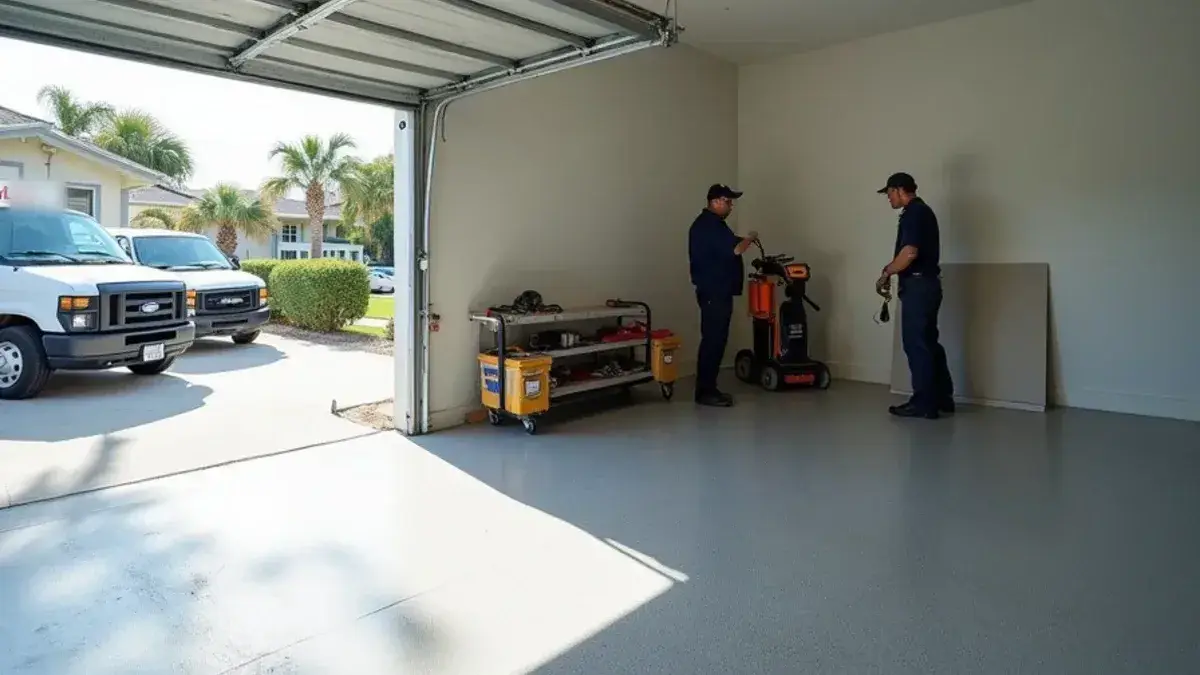
National 2025 cost guides put a professionally coated two-car garage at roughly $1,100 to $6,000, with typical jobs near $2,400 to $2,500. In Jacksonville, the slab decides where you land: grinding, crack repair, moisture and the coating system move the price more than square footage alone.
A garage coating is one of the few floor projects where the price swings by thousands of dollars for what looks like the same result. This guide shows what national cost guides report, what changes the number on a Jacksonville slab, and how to read a quote so you compare like with like.
What do cost guides say an epoxy garage floor costs?
Several national home-services sites publish garage coating prices. Their numbers cover different garage sizes and systems, so read them as ranges, not quotes.
| Source (2025 guides) | What it reports |
|---|---|
| Angi | Typical epoxy floor about $2,430, range $730 to $5,300; two-car garages (about 360 sq ft) $1,100 to $4,300 |
| HomeAdvisor | Most pay $1,609 to $3,425, average about $2,517; a 500 sq ft two-car garage $1,500 to $6,000 |
| Inch Calculator | Roughly $3 to $12 per square foot all-in; about $3,000 for a two-car garage at $7.50 per sq ft |
| Bob Vila (polyaspartic) | A 250 sq ft garage at $1,000 to $2,250 |
Two things stand out. First, the spread is wide because "epoxy floor" covers everything from one thin coat of paint-like resin to a ground slab with a base coat, full flake broadcast and a clear topcoat. Second, polyaspartic systems price higher per square foot than basic epoxy in every guide that compares them.
What makes one Jacksonville garage cost more than another
Square footage sets the baseline. After that, the slab itself drives most of the difference.
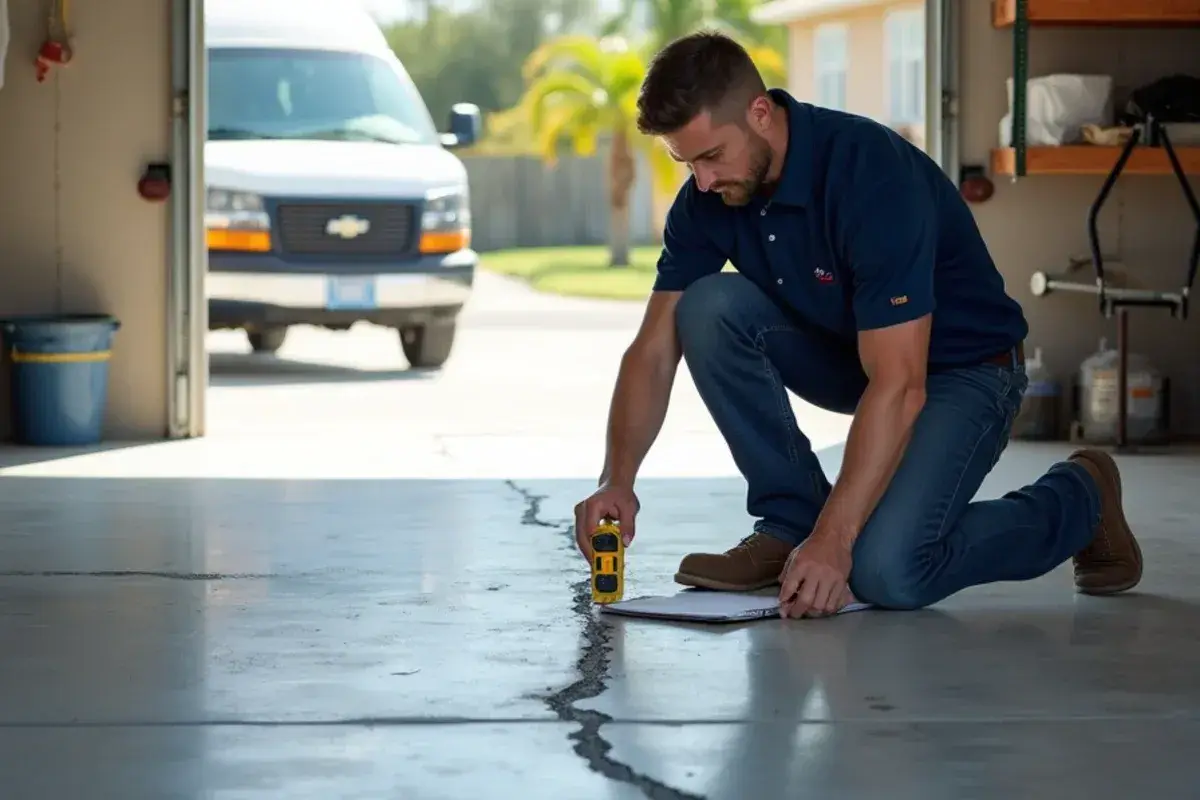
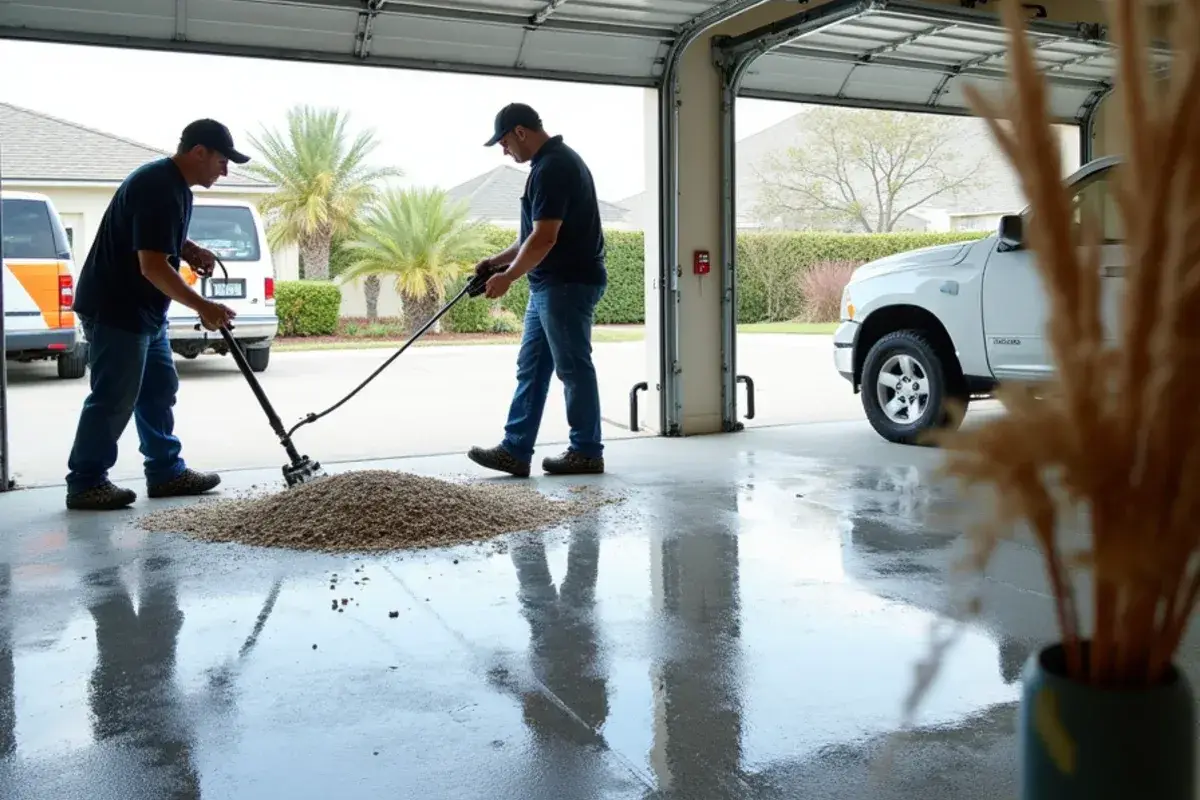
- Surface prep. Diamond grinding opens the concrete so the coating can grip. It takes equipment and time, and it is the step cheap quotes leave out. The concrete repair industry grades the texture coatings need on the ICRI concrete surface profile scale.
- Cracks, pits and spalls. Each needs to be cut and filled before coating. A 20-year-old slab with settlement cracks costs more to prep than a two-year-old one.
- Moisture. Concrete in our climate holds water. A slab that tests high may need a moisture-tolerant primer, which adds material cost.
- Old coatings. Removing failed paint or DIY epoxy means grinding it all off first, roughly doubling the prep.
- The system. Solid color, partial flake, full flake, metallic or a polyaspartic topcoat each carry different material costs and labor.
- Stem walls and steps. Coating the short concrete walls around the edge, or the step into the house, adds detail work.
Weather plays a smaller part. Coating makers set temperature and dew-point limits for application, and a muggy August afternoon can push a garage outside them. That rarely changes the price, but it can move the schedule by a day, so a quote that names the product also tells you which limits the crew has to respect.
A large garage in a newer subdivision such as Oakleaf Plantation may cost more in total because of the size, but less per square foot because the slab is young and clean.
Is a cheaper DIY kit worth it in Florida heat?
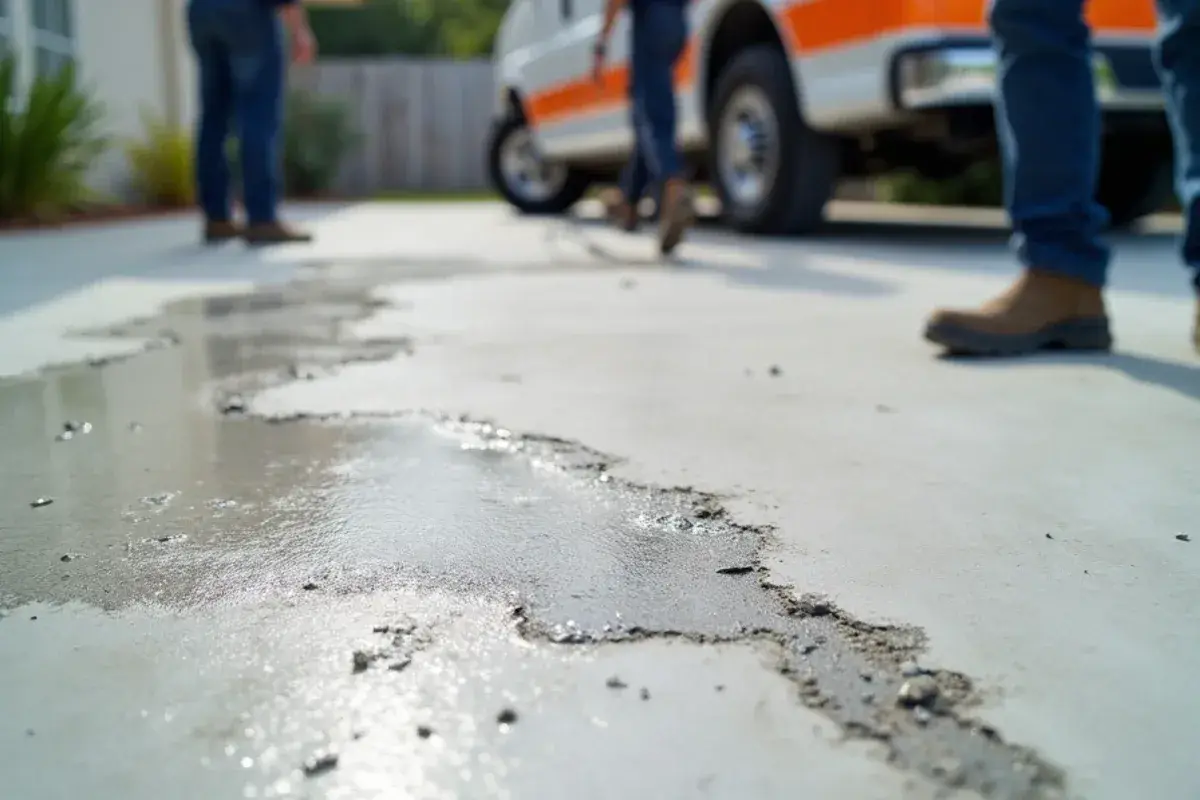
Usually not, if the goal is a floor that lasts. Peeling garage coatings usually trace back to one of two causes: a coating rolled over a slab that was only washed or acid-etched, or a thin one-part product that could not handle hot tires.
Hot-tire pickup happens when tires heated by driving soften the coating and pull it off where they park. Coating makers describe the cause the same way: heat and plasticizers from the tire attack thin or under-cured film. Fully cured, properly bonded, higher-build systems resist it far better. If you already have a peeling floor, our page on epoxy floor repair explains how failed coatings are removed before recoating.
A kit can make sense for a workshop floor that never sees a car, or as a short-term refresh before a sale. For a daily-driver garage, the money saved on the kit is often spent again within a few years.
How to read a garage coating quote
Ask each contractor to put the following in writing, then compare the lines rather than the totals.
Checklist
- How the slab will be prepared (diamond grinding, shot blasting or acid etch)
- How cracks, pits and expansion joints will be handled
- Whether the slab will be moisture-tested, and what happens if it reads high
- The product for each layer: primer or base coat, flake, topcoat
- How many coats, and the film thickness if they state it
- Whether stem walls and the house step are included
- How long before you can walk on it and park on it
- What happens to anything stored in the garage during the work
If one quote lists grinding, crack repair, a base coat, full flake and a clear topcoat, and another lists "epoxy, two coats," they are not the same job. Our garage floor epoxy page walks through each of those steps in the order we do them.
What we see on Jacksonville garage jobs
A typical job is a two- or three-car garage in a 2000s or 2010s subdivision with a sound slab, some oil stains and a few hairline cracks. Those are the most predictable jobs to price. Older slabs can take more prep, and garages near the river or creeks can read higher for moisture.
New construction brings its own wrinkle. In Nocatee and other new communities, owners often want the garage coated the week they close. Most coating makers ask for roughly 28 days of cure on new concrete, so we check the pour date and test before scheduling.
On systems, the honest trade-off is this. A full-flake epoxy floor with a quality topcoat hides dust and tire marks well and gives good texture underfoot. A polyaspartic topcoat costs more but cures faster and holds its color better in a garage that gets afternoon sun. A metallic finish looks striking but shows scratches, so we usually steer it toward living spaces rather than garages. Our epoxy flooring page compares the finishes in more detail.
Frequently asked questions
Is polyaspartic worth the extra cost over epoxy in Florida?
Yes, often, for garages that bake in the sun. Polyaspartic topcoats cure fast and resist yellowing from UV better than most epoxies, and the national guides price them higher per square foot. Many crews pair an epoxy or polyurea base with a polyaspartic topcoat, which balances cost against the heat and light a Florida garage gets.
Why do two quotes for the same garage differ so much?
Usually because they describe different jobs. One may include diamond grinding, crack repair and a full flake broadcast with a clear topcoat, while the other is a single thin coat over an acid wash. Ask both contractors to list the prep method, the number of coats and the product, then compare them line by line.
Can a new garage slab be coated right after closing?
No, not right away. New concrete keeps releasing water as it cures, and most coating makers ask for roughly 28 days before a resinous coating goes down. On new homes in places like Nocatee, we check the pour date and test moisture first, because coating a slab that is still drying invites bubbles and peeling.
Does an epoxy garage floor add value when I sell?
Yes, it can help a garage show well, but treat it as a use upgrade rather than an investment. A clean, bright, stain-resistant floor makes a garage easier to keep and nicer to walk through. National guides do not give a reliable resale figure, so budget for it as something you will enjoy owning.
The bottom line
National guides put most professionally coated two-car garages between about $1,100 and $6,000, with typical jobs in the low-to-mid $2,000s. Where a Jacksonville garage lands depends on the slab: its age, cracks, moisture and any old coating that has to come off. Get the prep written down, compare quotes line by line, and the price makes sense.
If you want a number for your own garage, call (904) 533-7260. We measure, test the slab and give you the scope and price in writing.
Related
Services and areas from this article
Talk to a Jacksonville floor crew
Questions about your own floor after reading this? Call (904) 533-7260 and describe what you're seeing.
JW Painting & Pressure Washing & Epoxy Flooring · Jacksonville, FL 32254 · (904) 533-7260
Mon–Sat 7am–8pm · Sun closed