
Floor installation · Jacksonville, FL
Tile Flooring Installation in Jacksonville, FL
Tile laid tight on a Jacksonville slab, with no room to move, is the floor that pops up in a ridge one hot afternoon. JW handles tile flooring installation over a slab flattened for the tile size. Crack-isolation or uncoupling membranes go where needed, and movement joints follow the TCNA Handbook.
- 5.0 on Google · 82 reviews
- Based in Jacksonville, FL 32254
- Where Precision Meets Perfection
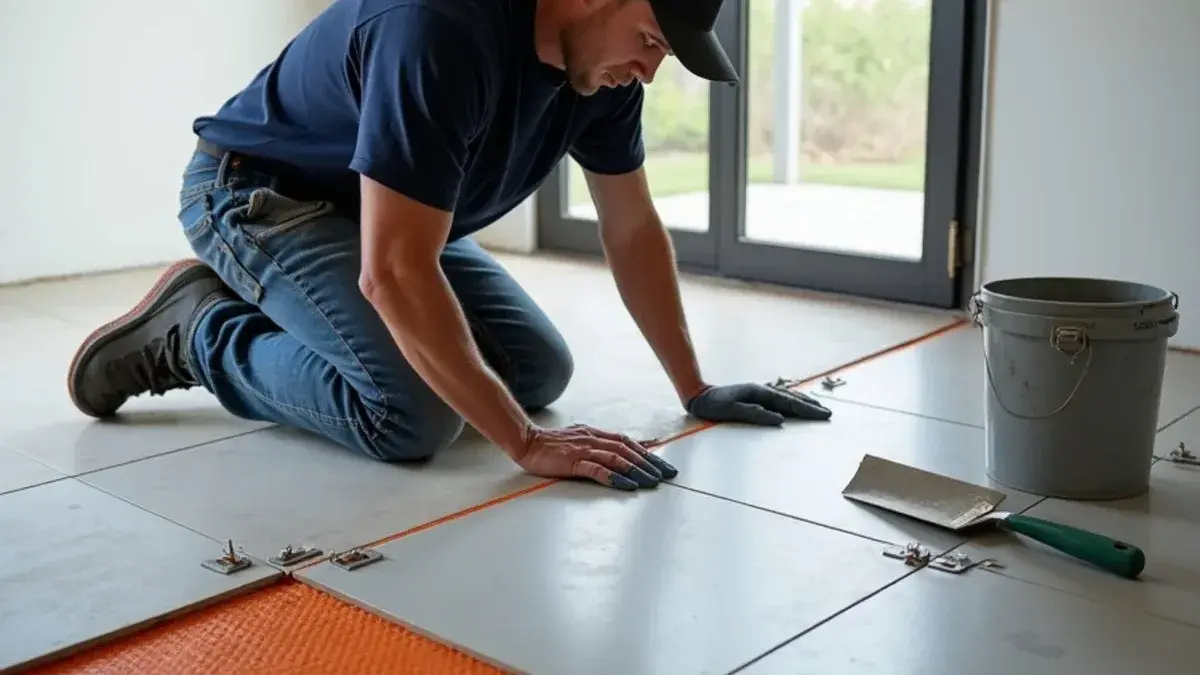
Tile flooring
Porcelain and ceramic tile floors, set for Jacksonville slabs
Porcelain is not just a fancier name for ceramic. Under ANSI A137.1, porcelain is ceramic tile that absorbs 0.5% of its weight in water or less, tested by ASTM C373. Tile certified by the Porcelain Tile Certification Agency carries a mark saying so. That low absorption is why porcelain suits entries, baths and rooms beside the pool door.
Ceramic tile still works well in dry rooms and on a budget. For glazed tile of either kind, check the wear class on the box. Those classes trace back to ASTM C1027, a test of how well a glaze resists visible abrasion.
We set the sizes people want now: wood-look porcelain planks, 24-inch squares and larger. Bigger tile needs a flatter floor and more care at the edges, and the prep below is written around that. If you only have a few broken tiles, tile repair is the better fit than a new floor.
- Tear-out of old tile, mortar bed or carpet down to bare concrete
- Flatness check against the tolerance for your tile size
- Crack-isolation or uncoupling membrane over slab cracks or the whole floor
- Perimeter and field movement joints laid out before the first tile
- Thin-set mortar checked for coverage by lifting tiles during the set
- Grout, color-matched sealant at joints, thresholds and trim
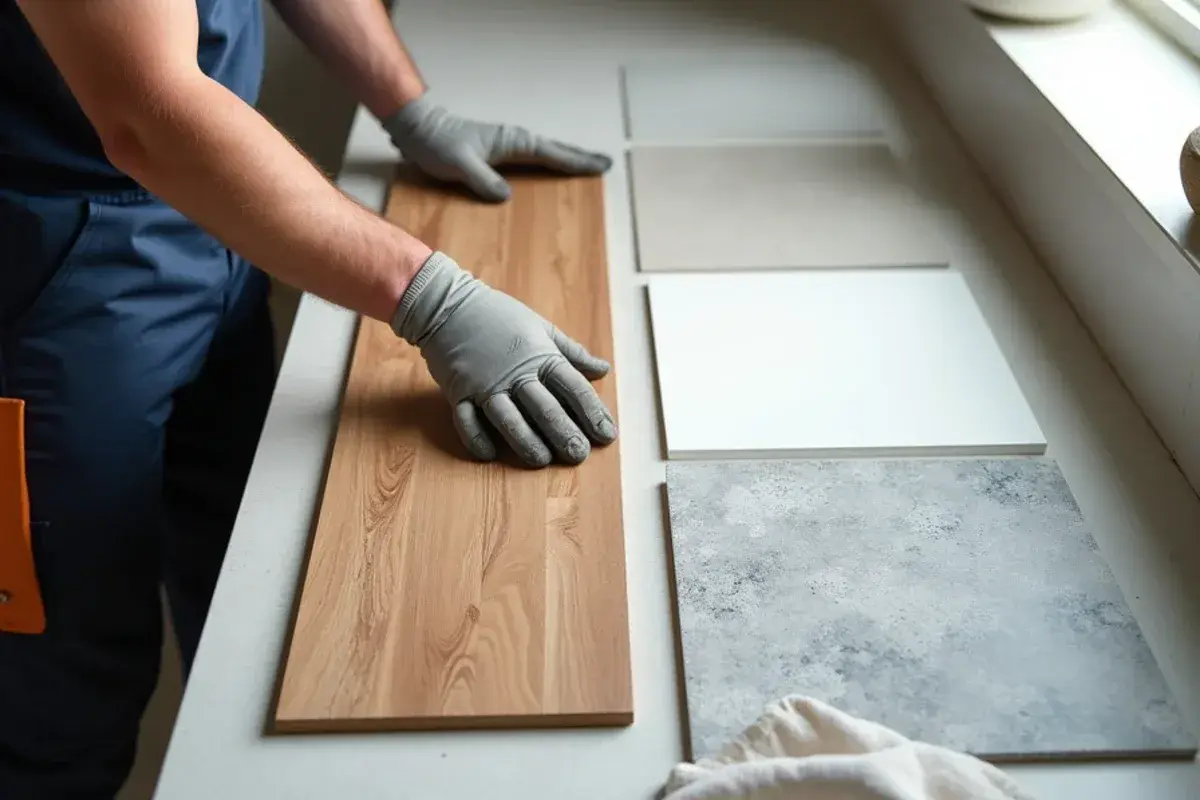
What we look for
Why does tile tent, crack or sound hollow over concrete?
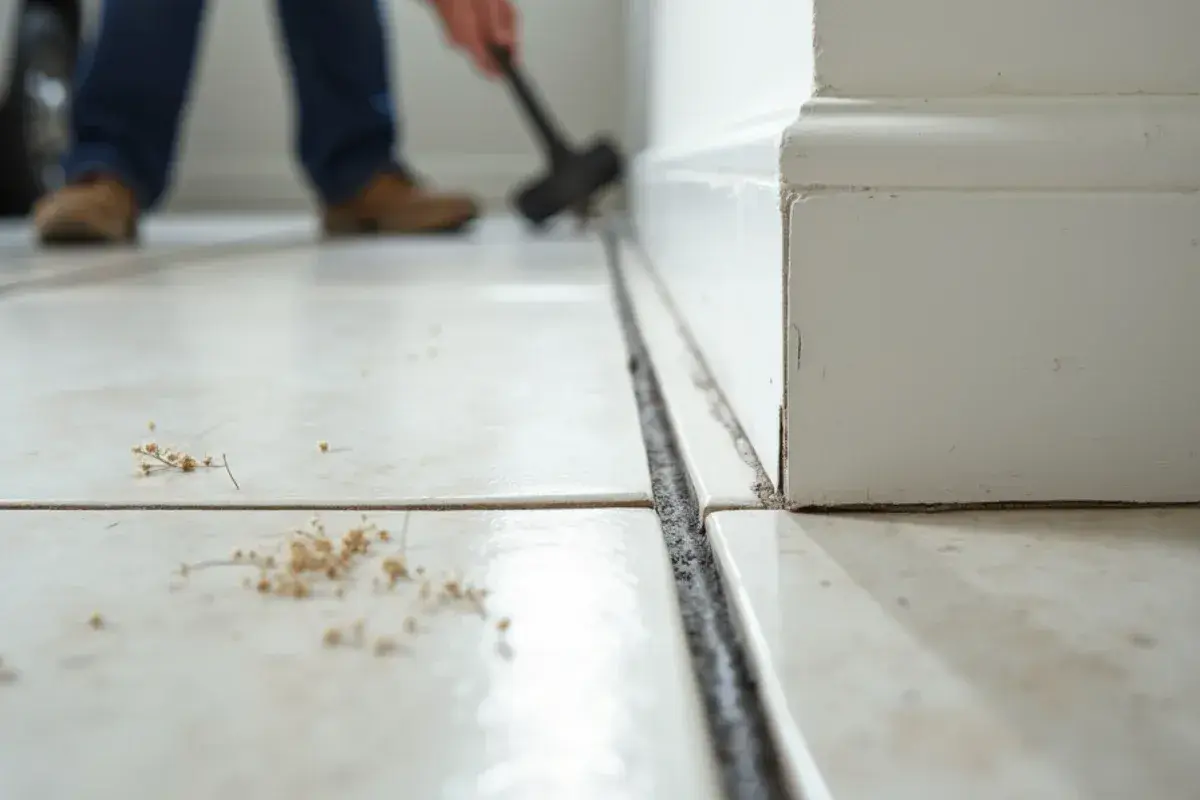
Concrete and tile both grow and shrink with heat and moisture, at different rates. If the tile has no place to relieve that stress, it pushes against itself until a row lifts off the slab in a tent. Tile grouted hard against the walls, with no soft joint at the edge, is the classic setup.
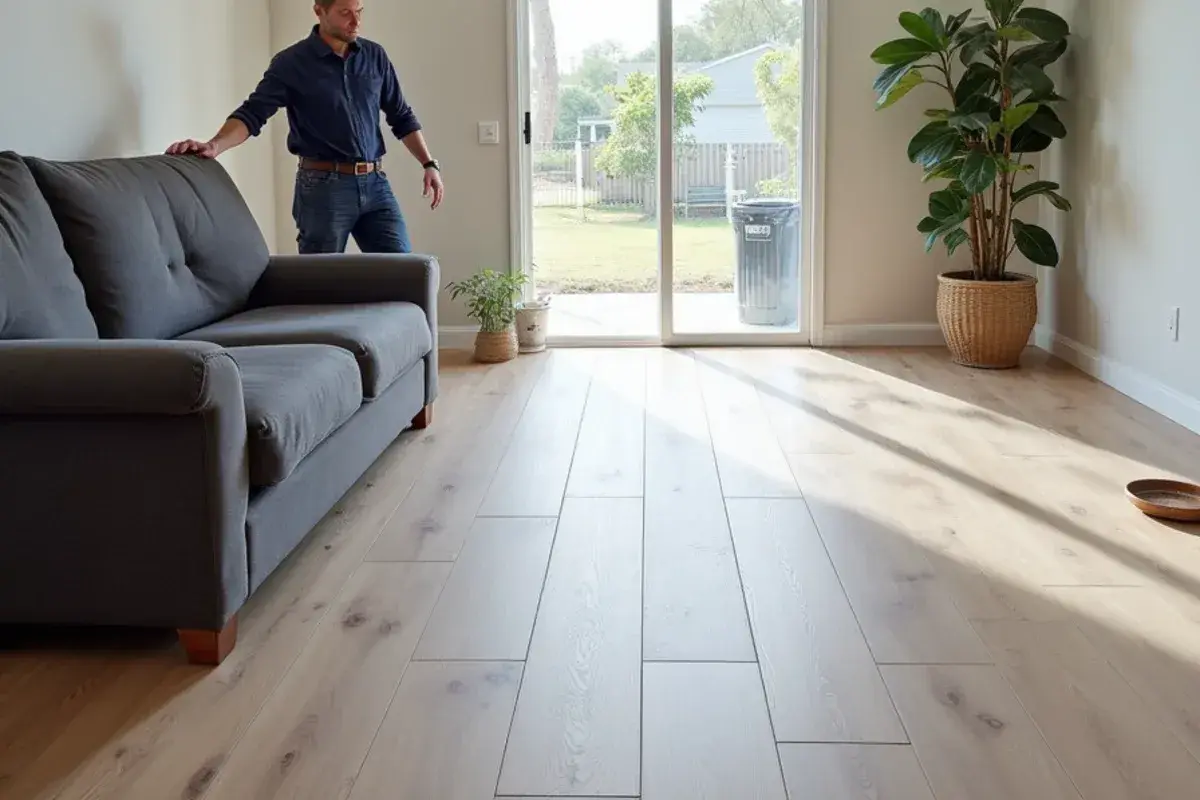
The TCNA Handbook’s EJ171 detail calls for movement joints at the perimeter and every change of plane. In the field, joints go roughly every 20 to 25 feet each way, tightening to 8 to 12 feet where tile gets direct sun or moisture. A tiled great room facing a sliding door falls in the tighter range.
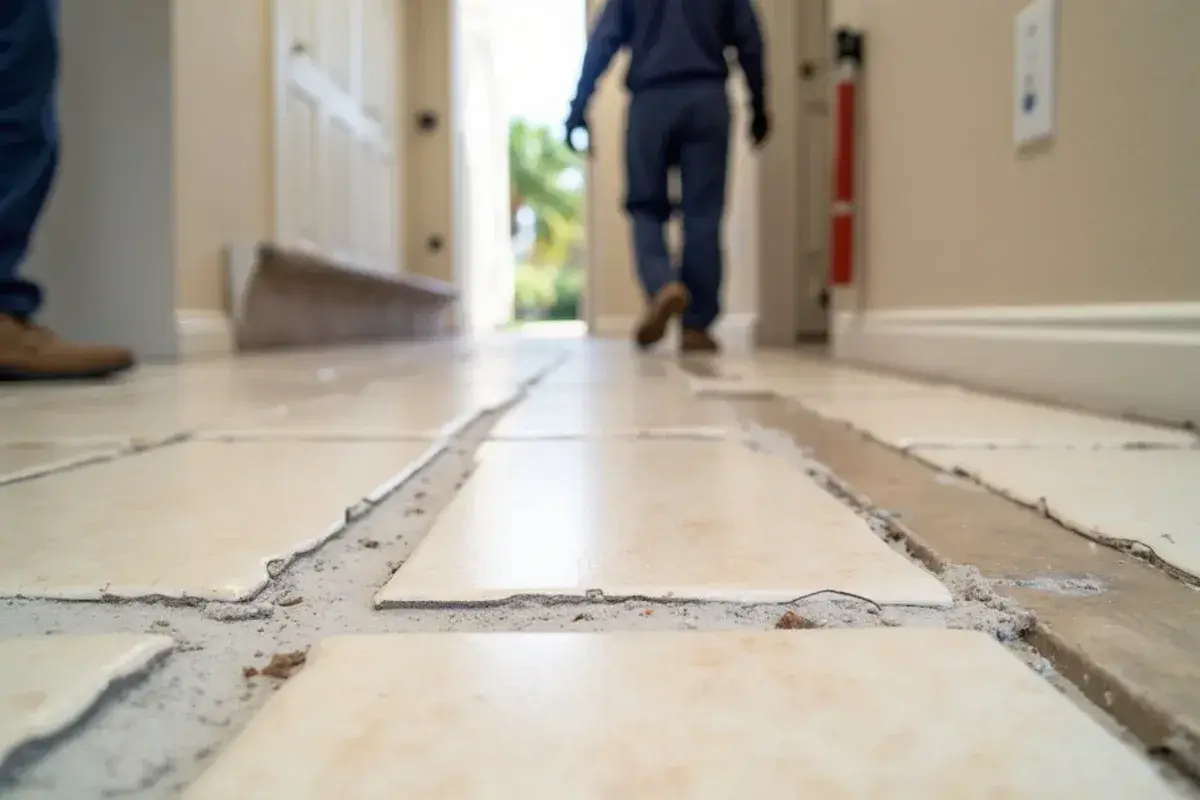
Thin mortar coverage is the other cause. A tile with voids beneath it rings hollow, then cracks under a dropped pan. Signs that a tile floor is already in trouble:
- A hollow, drummy sound when you tap tiles with a coin
- A low ridge forming down a hallway or across a doorway
- Cracks running through several tiles in a straight line
- Grout crumbling along one line while the rest stays sound
Our process
From bare concrete to finished grout: the tile sequence
Tile is unforgiving of a skipped step, because every flaw is locked under a hard surface. This is the order we hold to.
1Sound and map the slab
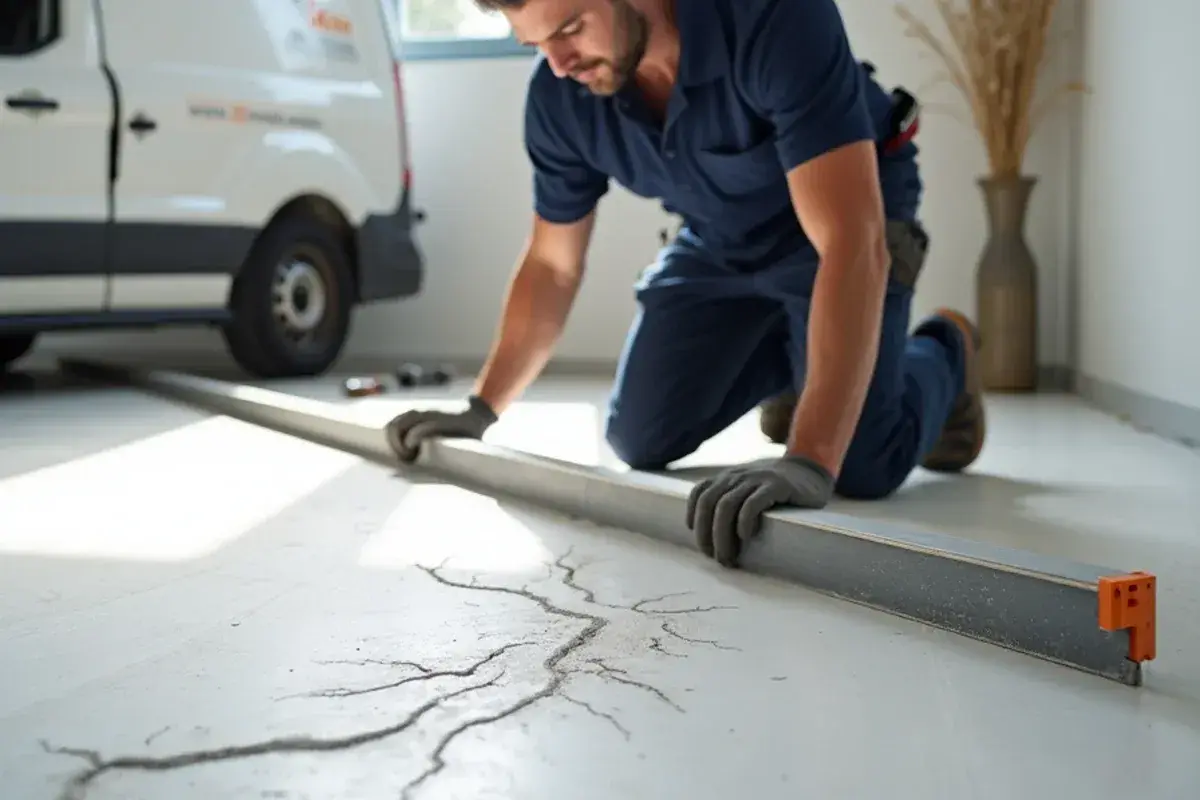
After tear-out we tap, look and straightedge the bare concrete. Cracks are marked in chalk so the membrane plan follows them. Moisture gets checked too, since a wet slab affects membrane and mortar choices.
2Plan the joints
Before any mortar is mixed, we draw the layout with centered rooms and balanced cuts at doors. Movement joints are marked at the perimeter and in the field where EJ171 calls for them.
3Flatten for the tile size
ANSI A108.02 asks for a flatter floor once any tile edge reaches 15 inches: no more than 1/8 inch in 10 feet. We grind high spots and pour self-leveler in low ones instead of building up mortar.
4Lay the membrane
A crack-isolation membrane meeting ANSI A118.12 goes over cracks or the whole floor. Over a moving slab, an uncoupling mat lets the slab shift without dragging the tile along.
5Set and check coverage
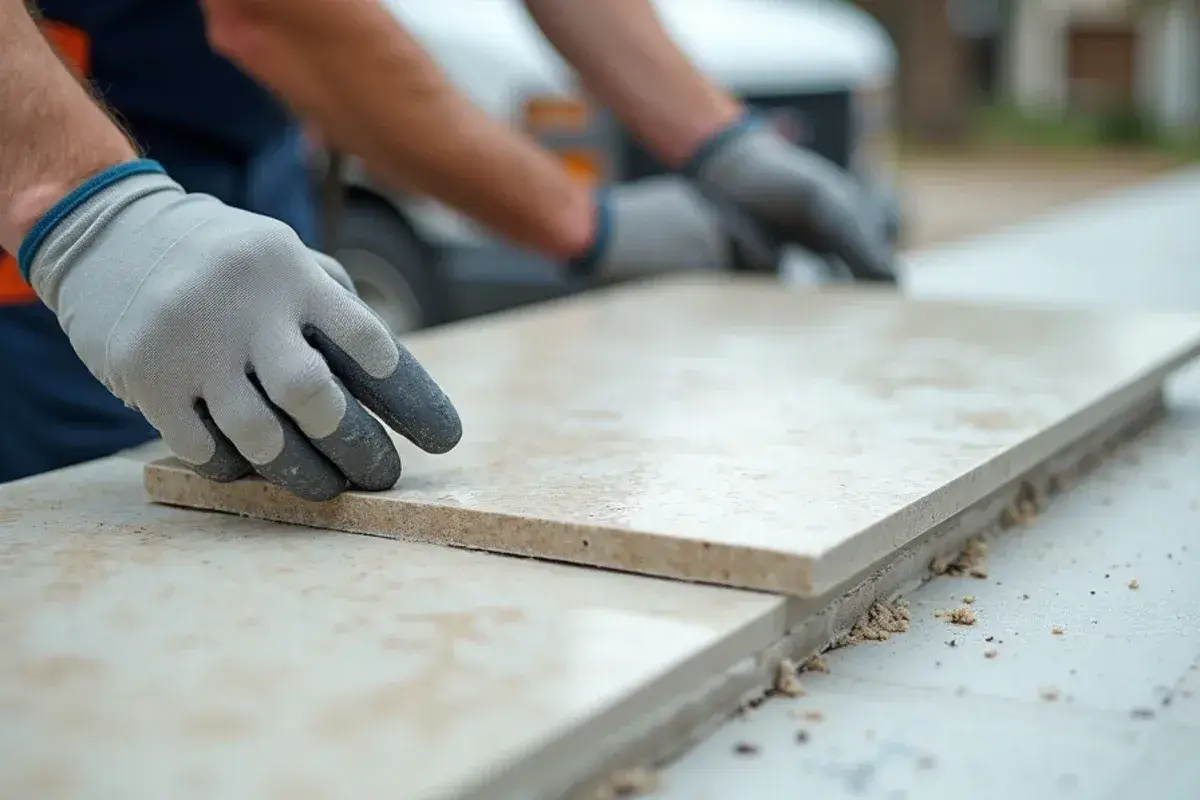
Tile is back-buttered and set in thin-set. We lift tiles as we go to confirm mortar contact: ANSI A108.5 calls for at least 80% in dry rooms and 95% in showers and wet areas.
6Grout, seal and check lippage
Joints are grouted and the movement joints filled with flexible sealant, never grout. Then we check edge height between tiles with a straightedge and walk the floor with you before we leave.
Price and paperwork
Tile floor pricing, slip ratings and Florida rules
What changes the cost of a tile floor
Tile size and material move the price first. Large-format and wood-look planks take more flattening and more careful setting than 12-inch squares. Porcelain is denser and harder to cut than ceramic, so cuts around cabinets, columns and doorways take longer.
The slab sets the prep bill. A floor that needs grinding and self-leveler to reach the 1/8-inch tolerance costs more than one that is already flat. Old tile in a thick mortar bed is heavy, slow demolition compared with pulling carpet.
Membranes add material and labor, either over isolated cracks or across the whole floor. Patterns matter: herringbone and diagonal layouts mean more cuts and waste than a straight lay. Thresholds, stair nosings, baseboard reset and moving furniture each show up as their own line on the written quote, so nothing is hidden in a lump sum.
Slip resistance, permits and licensing
ANSI A137.1 sets a wet dynamic coefficient of friction of at least 0.42, measured under ANSI A326.3, for level interior floors expected to be walked on wet. Ask for that number on any tile headed for a kitchen, bath or pool entry.
Florida jurisdictions using the residential code generally exempt tiling from building permits, as the building official decides. State law bars local governments from requiring a license for tile work. Structural slab or framing repairs need a state-certified contractor. FEMA treats ceramic tile in thin-set on a slab as a flood damage-resistant floor assembly.
Why JW
What JW brings to a tile job
JW is rated 5.0 across 82 Google reviews. People write about crews arriving on time, job sites left clean, fair prices and steady updates. Tile is part of that record: one family hired us to replace the tile in their master bathroom, and another wrote about bathroom repairs.
The same crew installs floors and applies coatings, so a tiled kitchen and a coated garage can be one schedule with one point of contact. We also paint and pressure wash in-house. Baseboards and door casings get touched up after the tile goes in, and a patio or entry can be cleaned to match the new floor. Owner Jimmie Wilson sets the standard on site, with more than 30 years of hands-on finishing experience.
Customers on our tile work
We recently hired JW to replace the tile in our master bathroom, and we couldn’t be happier with the results! From start to finish, the process was smooth, professional, and completed right on schedule. His attention to detail truly lives up to his motto: “Where Precision Meets Perfection.” It’s clear he brings a lifetime of passion and expertise to his work—the craftsmanship is flawless. He treated our home with care, kept the workspace clean, and made the whole experience stress-free. If you’re looking for someone who genuinely enjoys their craft, treats you like family, and delivers exceptional quality, look no further. Highly recommend!
Jimmy did a good job on repairs in my bathroom. Jimmy's a trustworthy Christian and we were comfortable leaving him alone working in our house.
Service areas
Where JW sets tile, from the beaches to Black Creek
Our base is Jacksonville’s 32254 ZIP, and tile jobs come from all around it. What pushes people toward tile differs from place to place.
Questions
Porcelain, membranes and joints: your tile questions
Porcelain or ceramic: which is better on Florida floors?
Porcelain, for most rooms that see water or sand. ANSI A137.1 defines porcelain as tile absorbing 0.5% water or less, so it shrugs off wet feet at a pool door or beach entry. Ceramic is fine for dry bedrooms and saves money. Either way, check the wet slip rating, aiming for a DCOF of at least 0.42 indoors.
Why does tile crack or tent on slabs, and how do you prevent it?
Tile tents when the slab and tile move at different rates and nothing absorbs the stress. We prevent it three ways. Movement joints go at walls and in the field per TCNA EJ171, tighter where sun hits. A crack-isolation or uncoupling membrane goes over a moving slab. And we lift tiles during the set to confirm full mortar contact.
Do you use an uncoupling membrane?
Yes, when the slab calls for one. An uncoupling mat lets the concrete move beneath the tile instead of cracking it, which helps over shrinkage cracks and in sunny rooms. Over sound slabs, a crack-isolation membrane meeting ANSI A118.12 may be enough. Membrane makers note that a membrane does not replace perimeter and field movement joints, so we still install those.
Can you install large-format or wood-look tile?
Yes. Both are common requests. Under ANSI A108.02, any tile with an edge of 15 inches or more needs a substrate within 1/8 inch in 10 feet. We level before setting. Long planks are offset no more than one-third of their length unless the maker says otherwise, which limits lips caused by the slight bow in long tiles.
How flat should the finished tile surface be?
Very flat at the edges. ANSI A108.02 allows lippage of about 1/32 inch between tiles, plus the tile’s own warpage, when joints are under 1/4 inch. Wider joints allow about 1/16 inch. Low-angle light from a sliding door or hallway sconce exaggerates any lip, so we check edges with a straightedge before the grout goes in.
Which grout belongs on a floor, and does it need sealing?
It depends on the room. Cement grout is porous, so it takes a penetrating sealer once fully cured and a fresh coat every few years. Epoxy grout is nonporous and needs no sealer, which suits kitchens, baths and sandy beach entries, but it costs more and sets fast in summer heat. Your quote names the grout and the sealing plan.
Related services and reading
Popped & Cracked Tile Repair
Tented, cracked and hollow tiles reset or replaced, matched to your floor where possible.
Learn moreLuxury Vinyl Plank Flooring
Rigid-core plank floated over a tested slab, with barrier, expansion space and sealed wet edges.
Learn moreWater-Damaged Floor Replacement
Ruined floors pulled and replaced once the slab or subfloor reads dry, itemized for your adjuster.
Learn moreIs tile the right floor for your next room?
Call (904) 533-7260 to set up a measure. Tell us what is down now, the tile you are considering and whether the room gets direct sun.
JW Painting & Pressure Washing & Epoxy Flooring · Jacksonville, FL 32254 · (904) 533-7260
Mon–Sat 7am–8pm · Sun closed