Emergency
Why Your Tile Is Popping Up (Tile Tenting) and What to Do Today

By Jimmie Wilson, owner of JW Painting & Pressure Washing & Epoxy Flooring
More than 30 years of hands-on painting and finishing experience
Published · Updated
- 5.0 on Google · 82 reviews
- Based in Jacksonville, FL 32254
- Where Precision Meets Perfection
Short answer
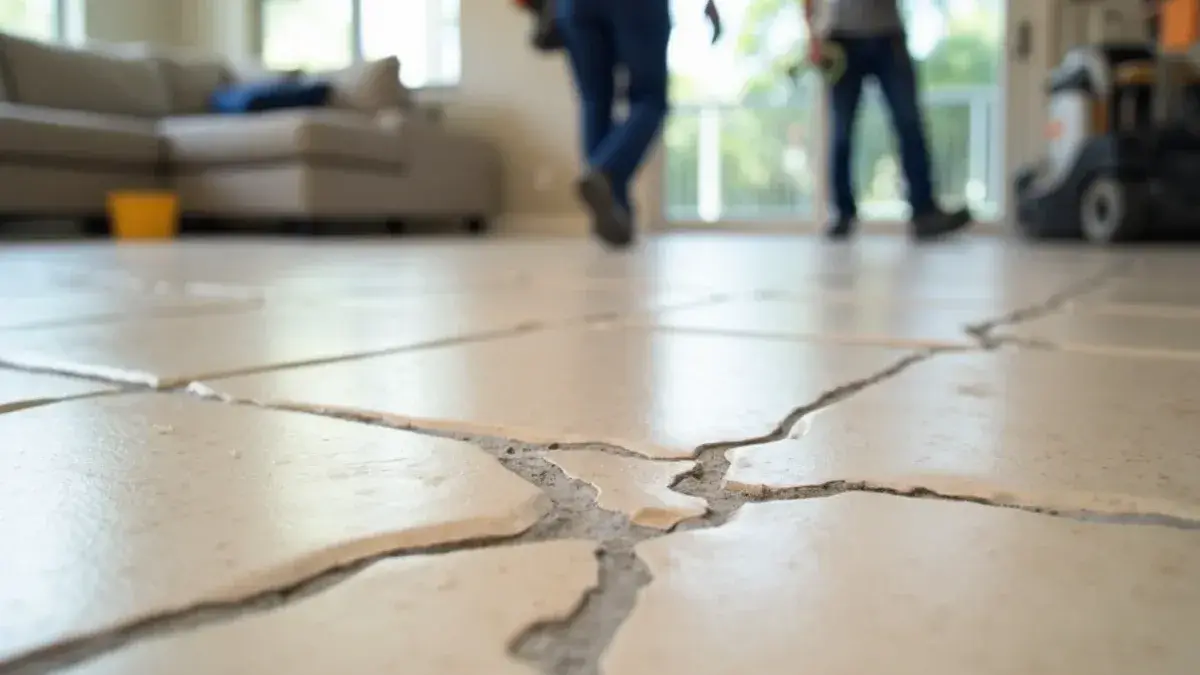
Tile pops up, or tents, when the floor has no room to expand. Heat, moisture and a shrinking slab push tiles together until the weakest bond lets go, usually mid-floor. Today, keep people off it, photograph it and look for a water source. A lasting repair adds movement joints, not just glue.
Tile that pops up usually announces itself. Some homeowners hear a crack like a dropped plate in the middle of the night. Others notice a hollow sound underfoot for weeks before a ridge of tiles finally lifts.
Either way, it is called tile tenting, and it is fixable. This guide explains why it happens, what to do today and which repairs hold.
What is tile tenting, and why does it happen?
Tenting is a buckling failure. Tiles push against each other until a row loses its bond and lifts into a peak, like a tent. TileLetter, the tile trade magazine, notes that without movement joints the assembly has no room to expand, and the tile usually pops up in the middle of the floor.
Several forces usually stack up at once.
- Missing movement joints. TCNA Handbook EJ171 calls for flexible joints at the perimeter, at changes of plane and in the field. Without them, the floor has nowhere to relieve pressure.
- Tile expansion. Tile grows slightly with heat and moisture. A tile consultant at CTaSC notes that more porous tile, such as non-vitreous ceramic, expands more than dense porcelain.
- Slab shrinkage. Concrete keeps shrinking as it cures and dries. Tile bonded to it is squeezed tighter over time.
- A weak bond. Tile with poor mortar contact lets go first. Once it releases, the stored pressure lifts it.
- Moisture from below. CTaSC also points to moisture moving up through a slab with no vapor retarder as a driver of expansion.
What to do today
Tenting is rarely a structural emergency, but it is a safety problem. Work through these steps.
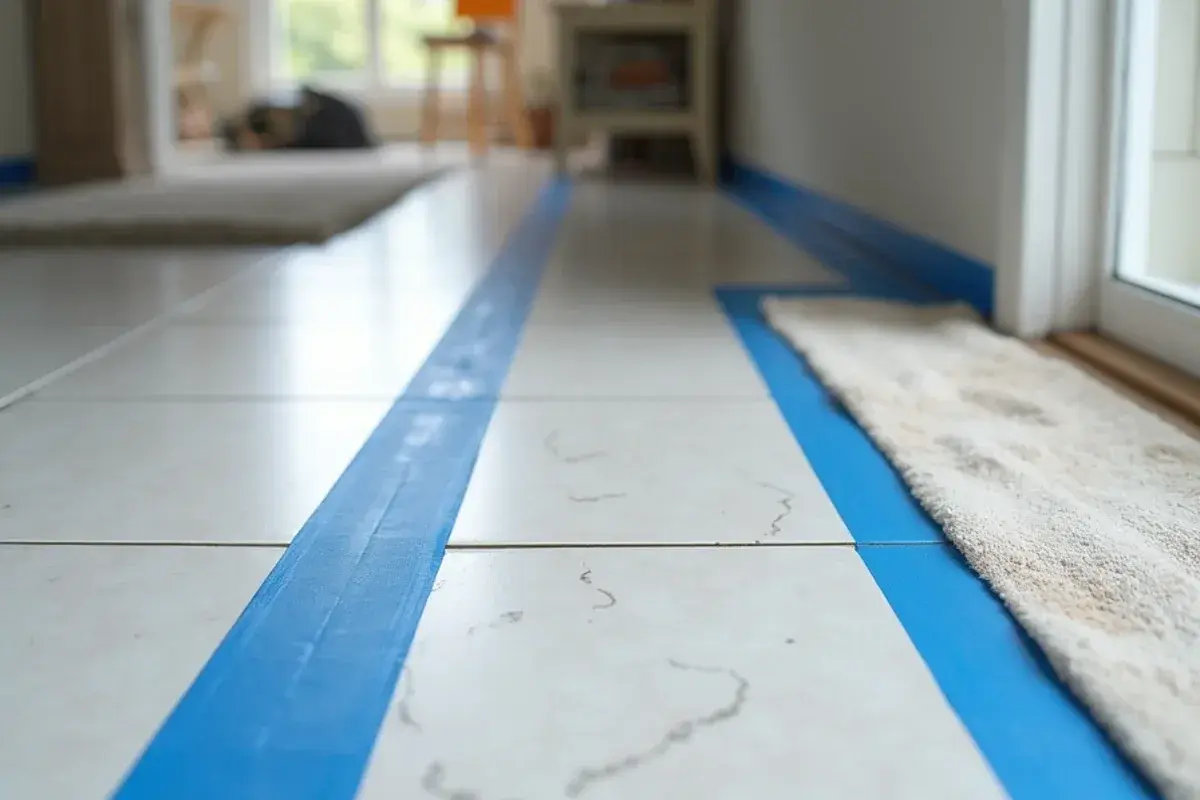
- Keep everyone off the ridge. Tape it off and move rugs that could hide it.
- Do not stomp it flat. Pushing tiles back into the same tight space can crack them or lift the next row.
- Photograph it from several angles, with a date, before anything is moved.
- Look for water. Check nearby supply lines, the water heater, the AC drain and exterior doors. A wet slab changes the repair.
- Note what changed recently: a leak, a long power outage, new sun through a door, or a hot, humid spell.
- Save any spare tiles. Leftover boxes in the garage or attic are the best chance of a match.
- Call your insurer if a sudden leak or storm came first, so the timeline is on record.
Why Florida floors are prone to it
Sun is a big one. EJ171 tightens field joints from roughly every 20 to 25 feet to every 8 to 12 feet where tile gets direct sunlight. A sliding glass door facing west can heat a strip of tile far more than the rest of the room.
Moisture is the other. Florida slabs hold water, and CTaSC notes that a slab without a vapor retarder lets ground moisture reach the tile. Water damage adds risk too. Cleanfax, a restoration trade publication, describes ceramic tile that tented weeks or months after a correctly done drying job. Wet tile can stay slightly larger after it dries, while the slab shrinks back.
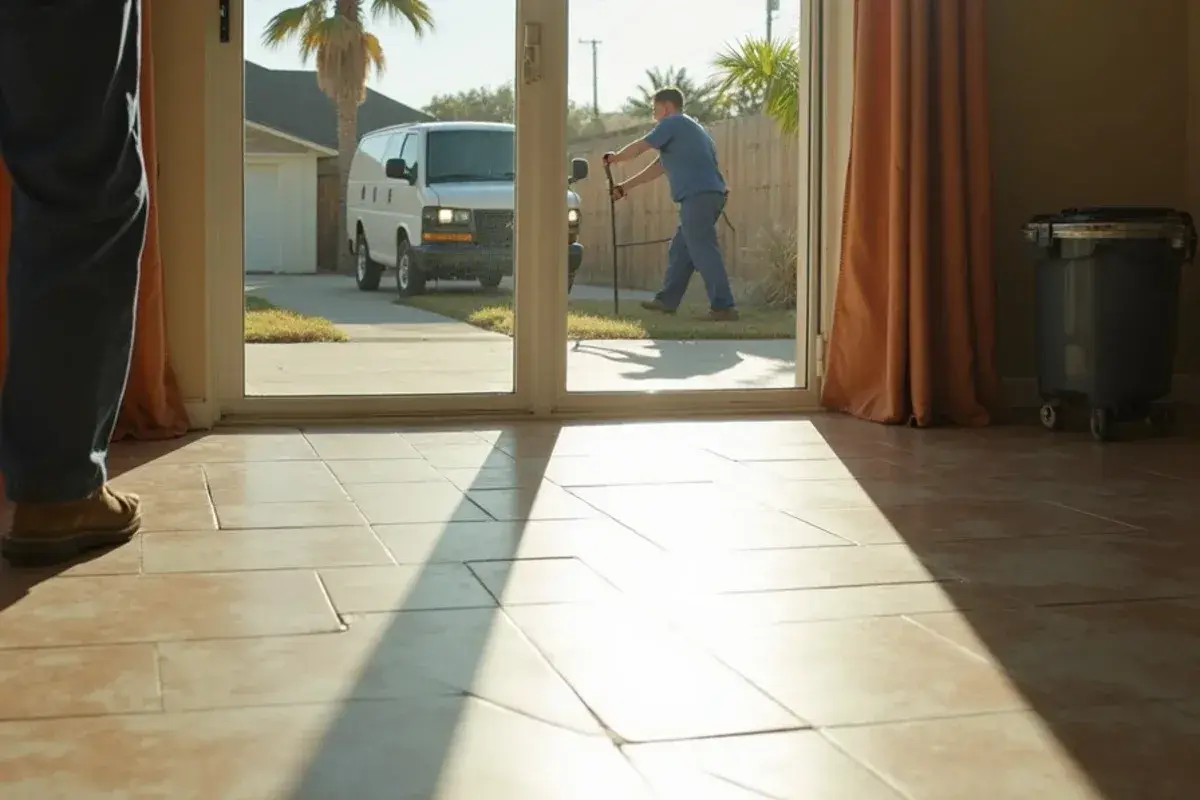
Age of install matters. Many 1980s and 1990s subdivisions around Doctors Lake, including Lakeside, still have original builder ceramic tile. Tile laid tight to the walls, with no flexible joint under the baseboards, has had decades of heat and humidity cycles to build up pressure.
Does tile tenting mean my slab is failing?
Usually not. A CTaSC consultant answering a homeowner's insurance question noted that a hairline slab crack on its own would not cause tenting. Tenting is mostly about the tile assembly having no room to move.
That said, a crack that runs straight through the tented area deserves a look. If one side of the crack sits higher than the other, or doors and walls nearby have shifted, call a structural professional first. Structural repairs fall under Florida's state-certified contractor categories in Chapter 489, Part I, of the Florida Statutes.
Which repair actually lasts?
The right fix depends on how much of the floor is affected and whether the cause can be removed.
| Repair | When it fits | Trade-off |
|---|---|---|
| Re-set a few tiles | Small area, spare tiles on hand, room to cut in a joint | Fails again if the floor still has no room to move |
| Re-set plus movement joints | Tiles lifted but intact; perimeter can be opened up | Baseboards come off; joints are visible |
| Partial replacement | Cracked tiles, matching tile available | Color or size may differ slightly |
| Full replacement | Widespread hollow tile, moisture issue or no match | Highest cost, but fixes the cause |
TileLetter warns that resetting tiles in the same tight space is a short-lived fix. CTaSC recommends checking whether a lifted tile still fits back into its original spot. If it does not, the slab has shrunk and the floor needs relief at the walls.
For a full replacement, the long-term build-up is well known: a moisture barrier where the slab calls for it, full mortar contact, a crack-isolation or uncoupling membrane and movement joints throughout. Our tile flooring installation page shows those layers in order.
What we see in the field on Clay County tile floors
The first thing we check is the perimeter. With a baseboard off, you can see whether the tile was laid hard against the wall or the grout runs into the drywall. That tells us whether the floor ever had room to move.
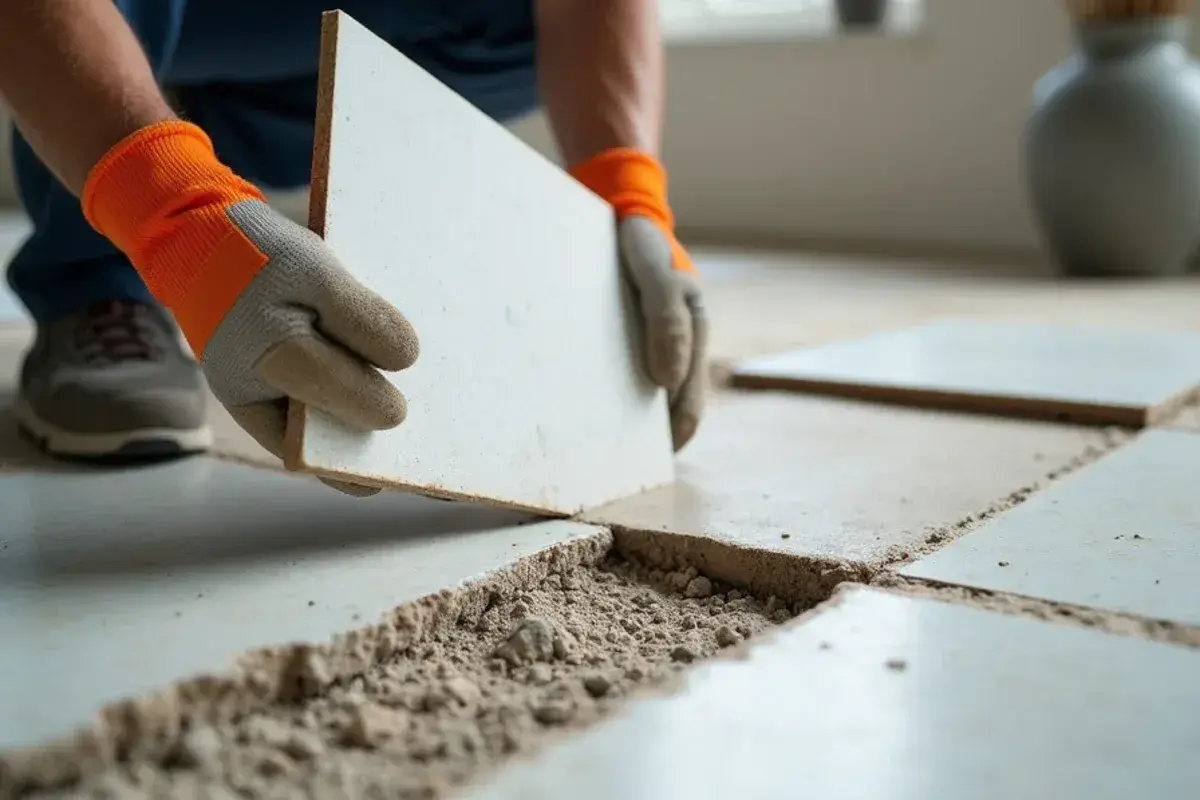
Next we lift a loose tile and look at its back. ANSI A108.5, as summarized by the Ceramic Tile Education Foundation, sets average mortar contact at not less than 80%, and 95% for exterior and shower installations. A tile with a few stripes of thin-set stuck to it was never fully bonded. That points to an installation problem across the floor, not just one spot.
Then we test the slab. A floor that tented after a leak, or one in a low riverfront home in Orange Park, may need to dry before anything is re-set. In-situ probes under ASTM F2170 read the humidity inside the concrete, which matters more than a dry-looking surface.
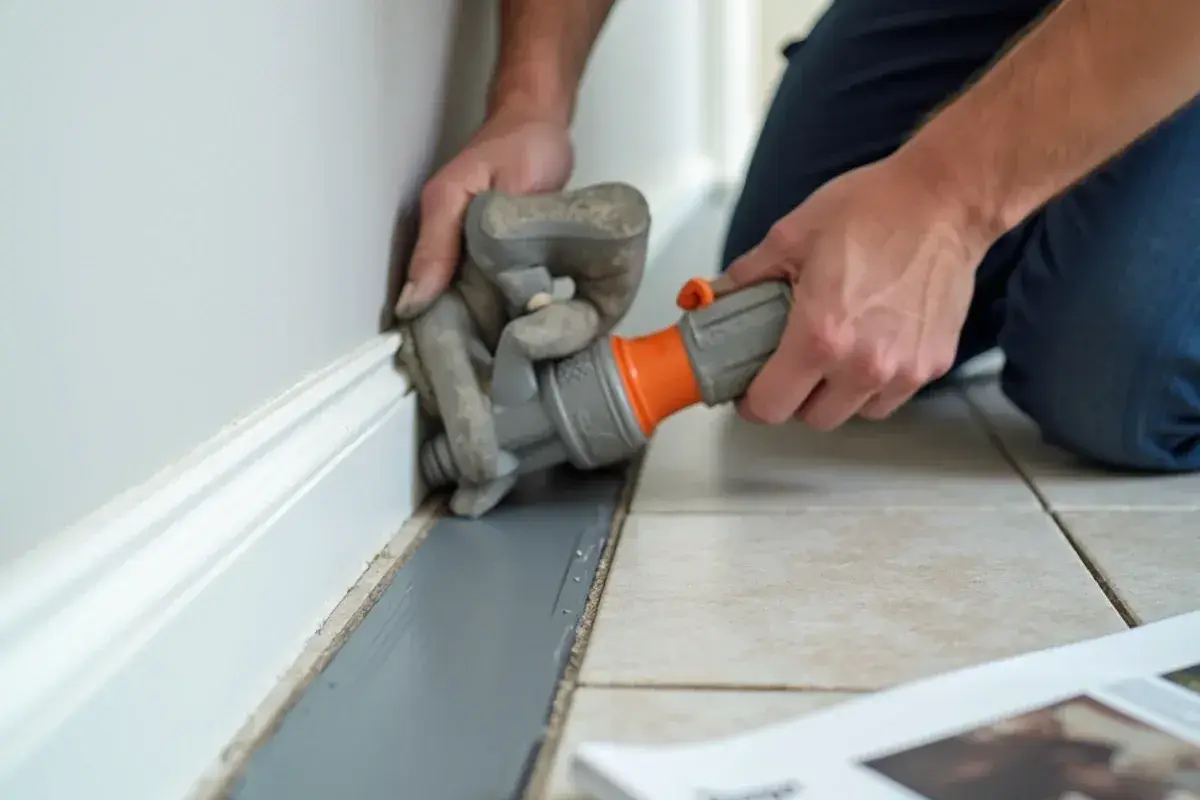
Matching is the honest trade-off. Builder ceramic from the 1990s is rarely still made. If there are no spares, one option is to borrow tiles from a closet or under an appliance for the visible patch, then fill the hidden spot with a near-match. When that will not work, a full room is often the better money. Our tile repair service starts with that conversation.
Frequently asked questions
Is it safe to walk on tile that has tented?
No, not until it is dealt with. A tented ridge is a trip hazard, and the raised edges can be sharp where tile or grout has cracked. More tiles can release as the floor keeps moving. Tape off the area, keep children and pets away and move rugs that could hide the ridge. A crew can lift and set aside the loose tiles safely.
Can I glue a popped tile back down myself?
No, not as a lasting fix. Gluing or pressing tiles back into the same tight space leaves the pressure that lifted them in place, so they tend to pop again or push up the next row. A proper repair removes the loose tiles, cleans off old mortar, re-sets them with full mortar contact and cuts in movement joints at the perimeter.
Will homeowners insurance pay for tented tile?
No, not usually when the cause is missing movement joints alone, which reads as an installation issue. If a covered event, such as a sudden leak, triggered the tenting, it may be handled as part of that loss. Tile consultants note the insurer will want evidence the tenting is not pre-existing, so photograph it early and ask your insurer or agent.
Why did my tile tent after years with no problems?
Because the stress builds slowly. A slab keeps shrinking for years while tile expands with summer heat and moisture. Each cycle adds pressure until the bond under the weakest tiles finally lets go. A wet season, a leak, new sun through a door or a long AC outage can be the last push, even though the cause was there from day one.
The bottom line
Popped tile is a pressure problem. Heat, moisture and a shrinking slab build stress until a weakly bonded row gives way. Keep people off it today, photograph it and check for water. A lasting fix gives the floor room to move, with joints at the walls and, for a full redo, a membrane and full mortar contact.
If your tile has tented or sounds hollow, call (904) 533-7260. We inspect the perimeter, check the bond and the slab, and give you the repair options in writing.
Talk to a Jacksonville floor crew
Questions about your own floor after reading this? Call (904) 533-7260 and describe what you're seeing.
JW Painting & Pressure Washing & Epoxy Flooring · Jacksonville, FL 32254 · (904) 533-7260
Mon–Sat 7am–8pm · Sun closed