
Urgent floor repair · Jacksonville, FL
Water-Damaged Floor Replacement in Jacksonville, FL
A burst supply line or storm water under the door can leave a Jacksonville slab home holding moisture for days. JW handles water-damaged floor replacement after the restoration crew has dried things out: removing what is left, checking the slab or subfloor, and laying new floors. Call (904) 533-7260.
- 5.0 on Google · 82 reviews
- Based in Jacksonville, FL 32254
- Where Precision Meets Perfection
Water-damaged floors
Water-damaged floor replacement in Jacksonville, after the drying is done
Every flooded floor goes through two separate jobs. The first is water mitigation: extraction, fans and dehumidifiers, and mold work where it is needed. A restoration company working to the IICRC S500 water-damage standard handles that part. The second job is the rebuild, and that is where our crew comes in.
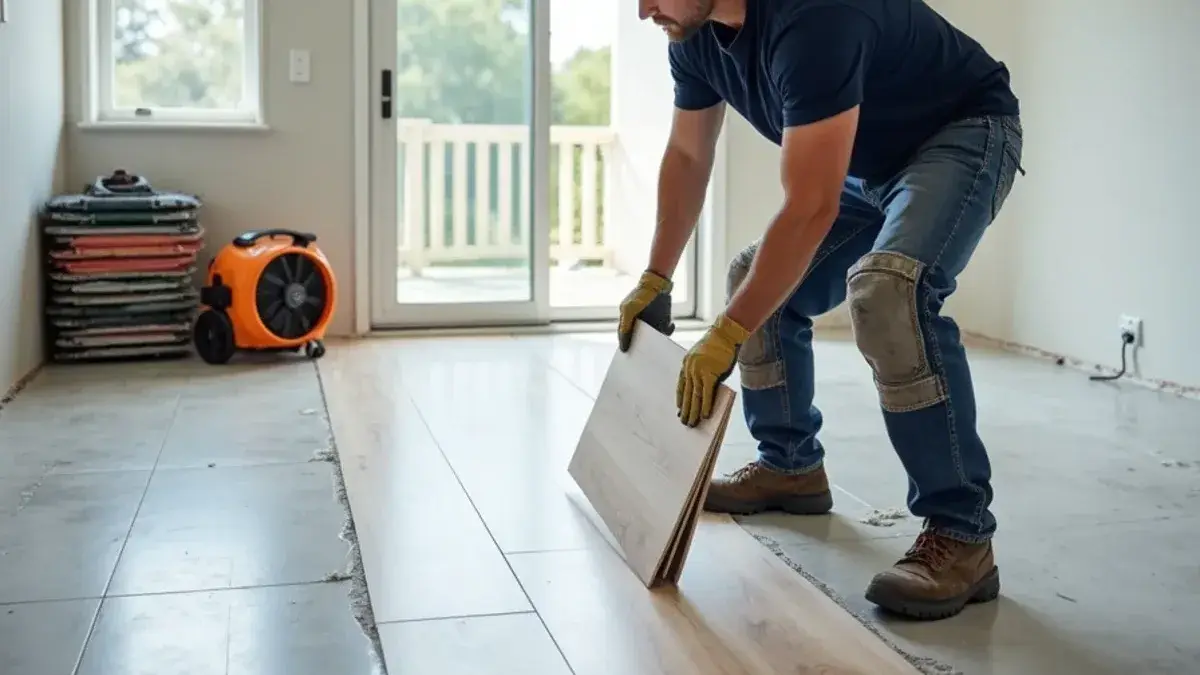
We start when moisture readings show the slab or wood subfloor is dry. Then we pull whatever flooring the drying crew left, scrape the old adhesive, correct low or damaged spots, and install the new floor. That might be vinyl plank, porcelain tile or a coated slab. Boards that only lifted or cupped may be worth saving through buckled floor repair instead.
If your house sits in a flood zone, we go over the materials FEMA treats as flood damage-resistant before you pick. Putting back exactly what was there is not always smart when another storm season opens on June 1.
- Removal of remaining tile, plank, laminate or glue-down flooring, plus adhesive scraping
- Moisture readings on the slab or subfloor before any new product is ordered
- Photos, room measurements and an itemized written quote for your adjuster
- Slab patching and leveling, with joist or framing damage referred to the right contractor
- New flooring, transitions and baseboards, with paint touch-up by the same crew
- Help tracking down a match for rooms the water never reached
What we look for
Can the floor dry in place, or does it have to come out?
It depends on the water and the material. Under IICRC S500, a burst pipe or failed supply line starts as Category 1, clean water. A washer or dishwasher overflow is Category 2. Sewage, sea water and rising river water are Category 3. A Florida Department of Community Affairs fact sheet adds that time and heat can degrade even clean water.
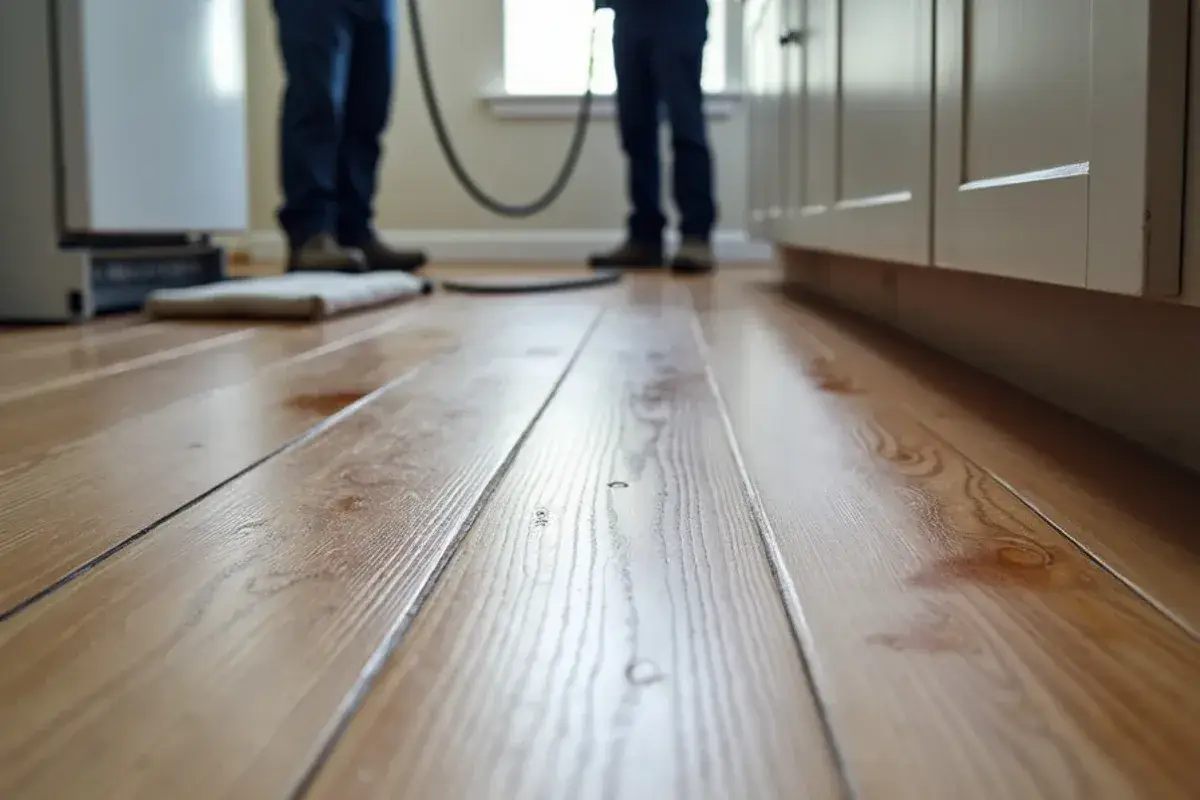
That same fact sheet lists carpet, pad, sheet vinyl and tile floor materials among the coverings to pull and discard in cleanup. It also warns that non-porous layers can trap moisture and slow drying, and that flooring adhesives give mold something to feed on. Floating plank over a slab is a common trap: the top looks fine while water sits underneath.
Tile set in thin-set on concrete often survives, which is why FEMA counts that assembly as flood damage-resistant. Even so, tile can let go of the slab afterward. Signs a floor needs replacing:
- Laminate or fiberboard-core planks with swollen, mushroomed edges
- Vinyl plank that smells musty or has water beneath it when lifted
- Tile that sounds hollow or rocks underfoot once the water drains
- Carpet pad soaked by anything other than clean supply-line water
Our process
The order of work once the restoration crew leaves
A new floor laid on a damp slab fails a second time. These steps keep the replacement from repeating the damage.
1Tell us what happened
Call with the water source, the rooms involved and whether drying has started. If no one is drying the house yet, get a water-mitigation company in first. That work cannot wait for a flooring quote.
2Confirm the floor is dry
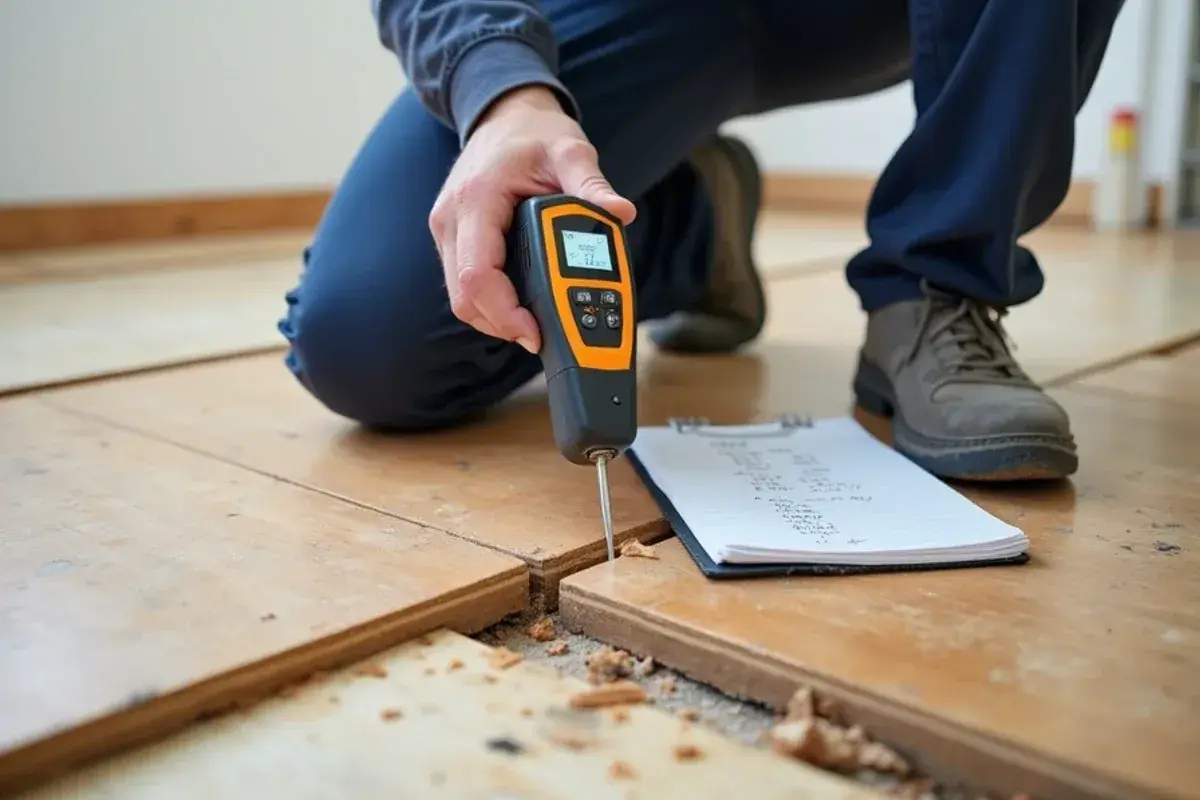
We read wood subfloors with a moisture meter and test concrete the way the new product requires, often with ASTM F2170 in-situ humidity probes. Nothing new goes down until readings sit inside the maker’s limits.
3Document for the claim
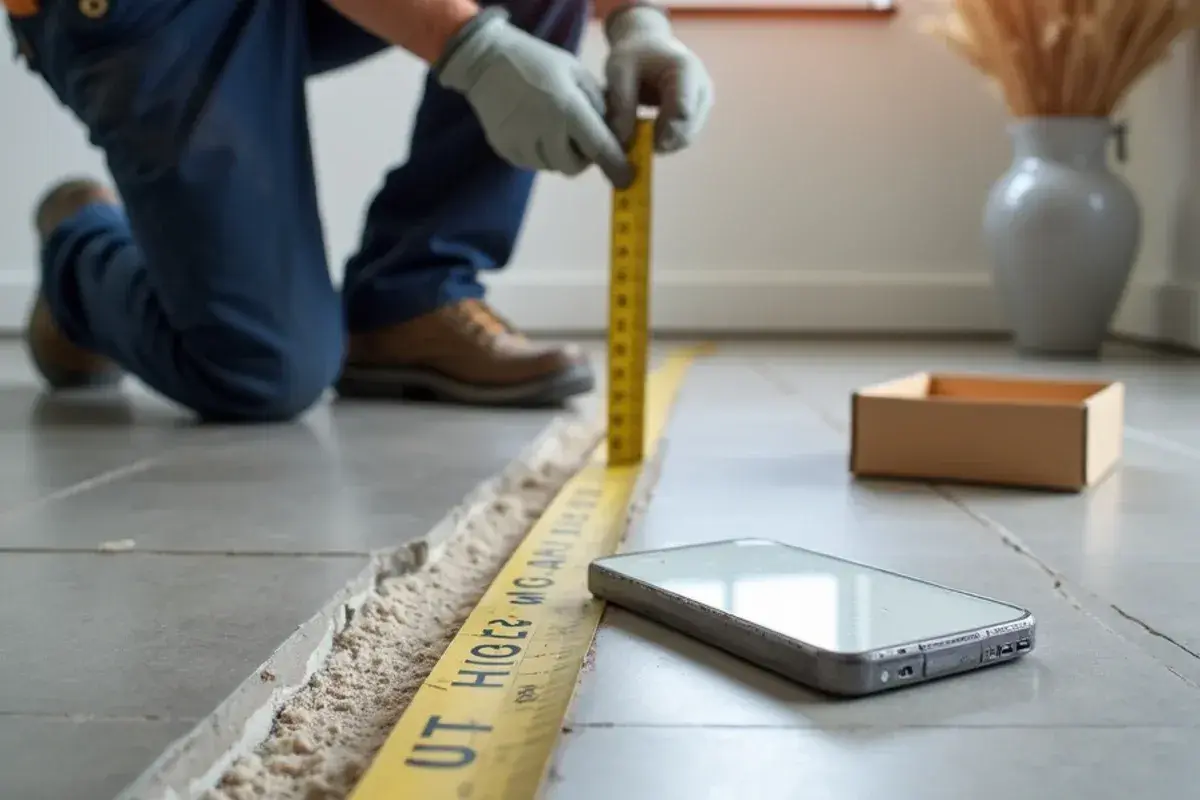
We photograph each room, measure it and note product names from any leftover boxes. A cut sample of the old floor goes to you, since FloodSmart suggests keeping material samples for the adjuster. The written quote itemizes tear-out, prep and materials.
4Tear out and prepare
Remaining flooring comes up and adhesive is scraped. Ridges get ground flat and dips get self-leveler. If plywood is soft or joists look damaged, we stop and point you to a contractor who handles framing.
5Install the replacement
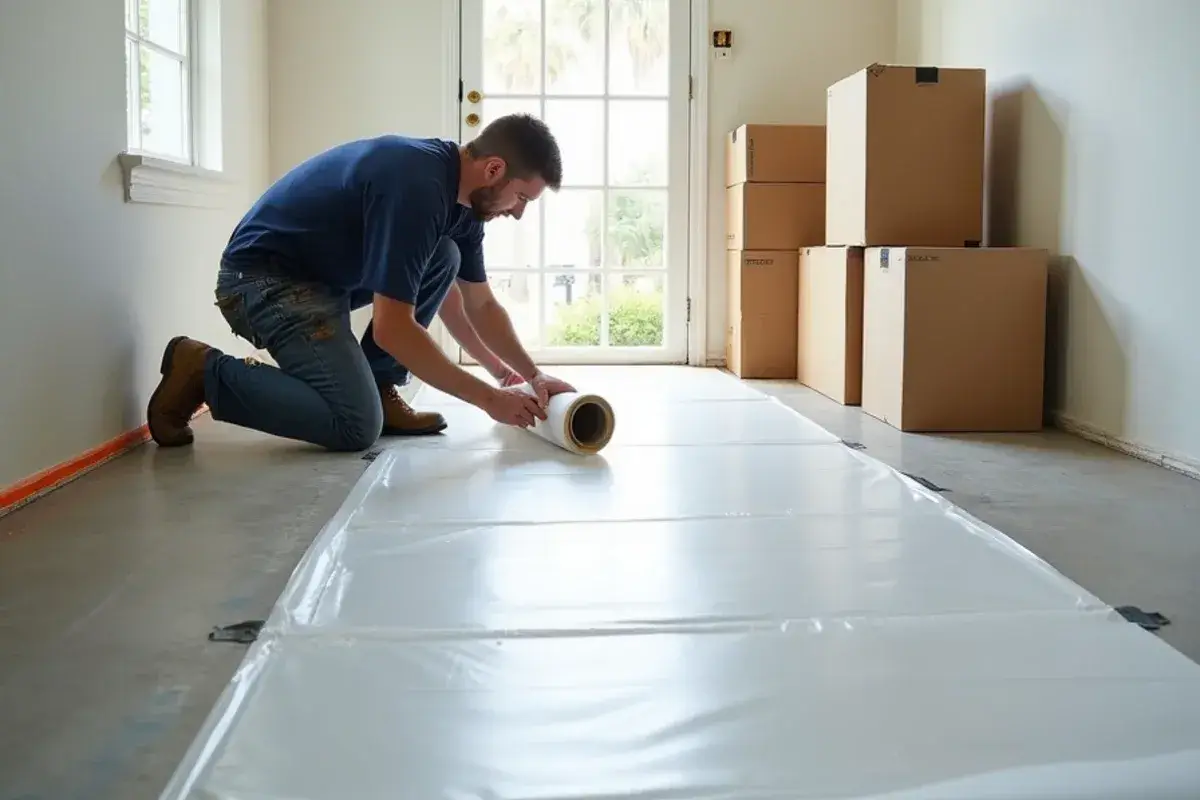
Vinyl plank goes over a moisture barrier on the slab. Tile goes over a crack-isolation membrane where the concrete has hairline cracks. Each product follows its own installation guide.
6Trim, touch up and walk through
Baseboards, transitions and thresholds go back on, and scuffed paint gets touched up. We walk the rooms with you and leave the product names for your records and your claim file.
Price and paperwork
What drives the cost after a leak or flood, and which rules apply?
Cost factors on a water-damage floor job
Square footage is the starting point, but the condition of the house after drying often matters more. If the restoration crew already pulled carpet and pad, there is less to remove. Glue-down plank and tile set in mortar take longer to strip than a floating floor.
The slab or subfloor is the next variable. Hairline cracks, dips left by old mortar and soft plywood near a toilet or dishwasher each add prep time. Then comes the material you choose, and whether undamaged rooms must be redone so one floor runs through the house. Tile set in thin-set takes more labor than floating plank, but it is the assembly FEMA treats as flood damage-resistant.
Pulling and resetting toilets, appliances and base trim adds labor too. Every item appears as a separate line on the written quote, so you and your adjuster can read the same numbers.
Permits, mold and matching under Florida law
Replacing finish flooring is generally exempt from a building permit, but confirm with your local building department. Flood-zone substantial-improvement rules can still reach a heavily damaged house. Repairs to joists or floor framing are structural, and Florida assigns them to state-certified contractor categories under Chapter 489.
Mold work is regulated separately. Florida’s mold statute in Chapter 468 covers assessment and remediation of more than 10 square feet, overseen by the state’s DBPR. Separately, s. 626.9744, F.S., addresses matching in adjoining areas for some homeowner claims. How either applies to your house is a question for your adjuster or insurer.
Why JW
Why homeowners call JW for the rebuild
JW carries a 5.0 rating across 82 Google reviews. Customers keep mentioning the same things: on time, clean job sites, fair prices and clear communication. That last one matters when a restoration crew, an adjuster and a flooring crew all pass through one house.
Water rarely stops at the floor. Baseboards swell, paint bubbles and lower walls get patched. JW also paints and repairs drywall, so the trim and walls can be finished by the crew that laid the floor. One reviewer hired us to repair and finish a new-floor installation at home, which is close to what a post-leak rebuild looks like. Owner Jimmie Wilson runs these rebuilds himself and brings more than 30 years of hands-on finishing experience.
What customers say about our floor repairs
Hired JW Painting to repair and finish the installation of new floors in my home. Floors look fabulous now. Excellent job!!!
I would recommend Jimmy Wilson to anyone. He done a wonderful job on my floor.
Service areas
Flood-prone parts of Northeast Florida we serve
We work out of the 32254 ZIP on Jacksonville’s west side. These are some of the places where storm surge, rivers or tides put water on floors.
Questions
Questions after a leak, flood or hurricane
How soon after a leak or storm should damaged floors come out?
Soaked carpet, pad and any flooring holding water underneath should come up in the first day or two, during drying. The EPA frames its water-damage response around 24 to 48 hours, and it says the subfloor beneath must be dried too. A mitigation company usually does that early removal. Our crew handles the rest once readings show the slab is dry.
Do you work alongside my insurance adjuster?
Yes. We measure every room, photograph the damage, record product names and keep a sample of the old floor, which FloodSmart also recommends. The written quote itemizes tear-out, prep, materials and trim so the adjuster can review each line. What the policy pays is between you and your insurer, and we make no promises about the outcome.
Do you handle drying and mold, or only the flooring?
No, we do not handle drying or mold. We handle the flooring. Extraction and drying belong to a water-mitigation company, and Florida licenses mold remediation of more than 10 square feet under Chapter 468. We step in after that work, confirm the slab or subfloor is dry with moisture readings, then remove what remains and install the new floor.
Can you match the flooring in rooms that were not damaged?
Yes, when the same product is still made. Leftover boxes in a garage or closet often show the brand and color, and we check availability before quoting. If it is discontinued, the options are a transition at a doorway or replacing the connected rooms. Florida’s s. 626.9744 addresses matching in adjoining areas, so ask your adjuster how it applies.
Can water-damaged laminate be saved, or does it all have to come up?
No, swollen laminate rarely comes back, because its fiberboard core does not shrink once it has absorbed water. A few edge planks can sometimes be swapped from spare cartons if the subfloor under them tests dry. Soft or spongy spots, a musty smell or a wavy floor mean water reached the subfloor, and the EPA advises drying wet materials within 24 to 48 hours.
Related services and reading
Buckled & Cupped Floor Repair
The moisture or pinning cause found first, then boards repaired, re-laid or replaced.
Learn moreLuxury Vinyl Plank Flooring
Rigid-core plank floated over a tested slab, with barrier, expansion space and sealed wet edges.
Learn moreTile Flooring Installation
Porcelain and ceramic set over membranes, with movement joints that keep tile from tenting.
Learn moreDrying finished and the floors still torn up?
Call (904) 533-7260. Tell us what flooded and what is left on the floor, and we will measure, test and itemize the replacement.
JW Painting & Pressure Washing & Epoxy Flooring · Jacksonville, FL 32254 · (904) 533-7260
Mon–Sat 7am–8pm · Sun closed