
Epoxy & coatings · Jacksonville, FL
Floor Sealing & Clear Coat Protection in Jacksonville, FL
Concrete, VCT, epoxy and pavers all wear faster in Jacksonville’s sand, sun and humidity once their protective layer is gone. JW handles concrete floor sealing and clear-coat protection that cuts down on stripping and waxing and stretches the time between bigger repairs. Call (904) 533-7260 to book a look.
- 5.0 on Google · 82 reviews
- Based in Jacksonville, FL 32254
- Where Precision Meets Perfection
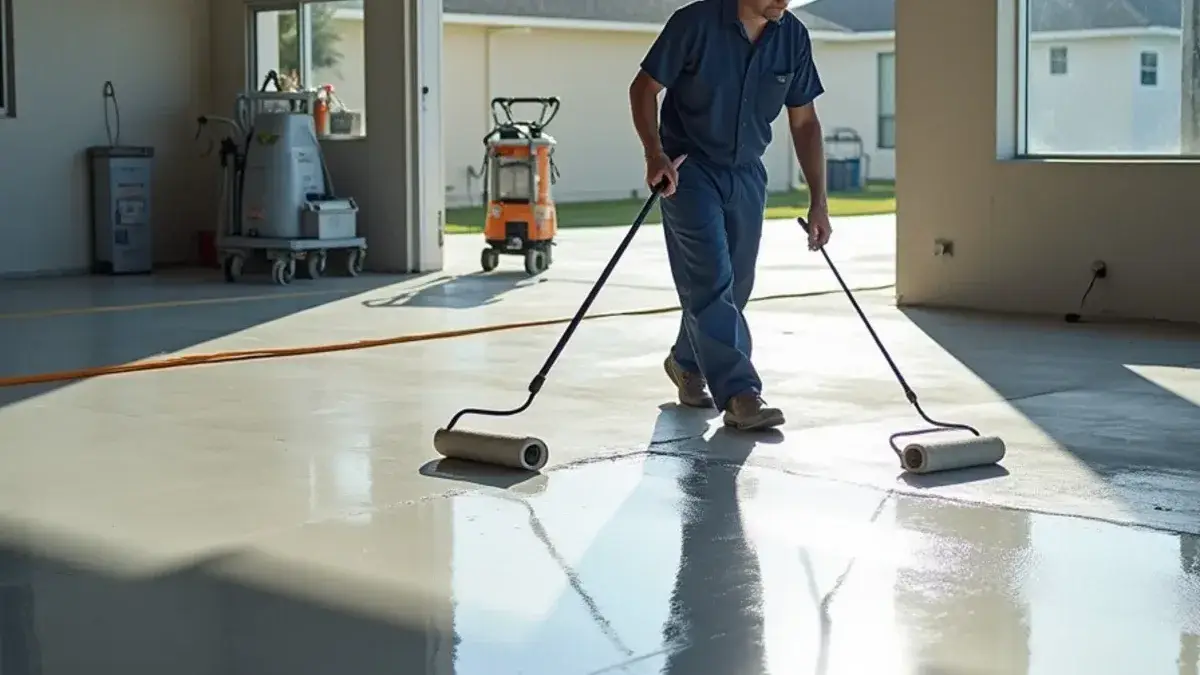
Floor sealing & clear coat
What a clear coat protects, floor by floor
A sealer or clear coat is the sacrificial layer between your floor and everything that crosses it. When the coat takes the scuffs, stains and sun, the surface underneath does not. The job is picking the right coat and renewing it before it wears through.
Bare and stained concrete in shops, porches and patios gets either a penetrating sealer that soaks in or a film-forming coat that sits on top. VCT in offices, churches and stores can take a durable clear protectant in place of endless acrylic finish. Epoxy floors get a fresh clear topcoat once the old one dulls. Pavers and stamped concrete get a breathable sealer suited to the texture.
Every visit starts with a look at the floor and a written quote naming the product, the number of coats and how long the area stays closed.
- Deep cleaning, degreasing or stripping old finish down to a clean surface
- Light grinding or screening so the new coat can bond
- Penetrating or film-forming sealer chosen for the surface and its use
- Clear urethane or polyaspartic topcoat over worn epoxy
- Grit additive where a sealed surface would turn slick when wet
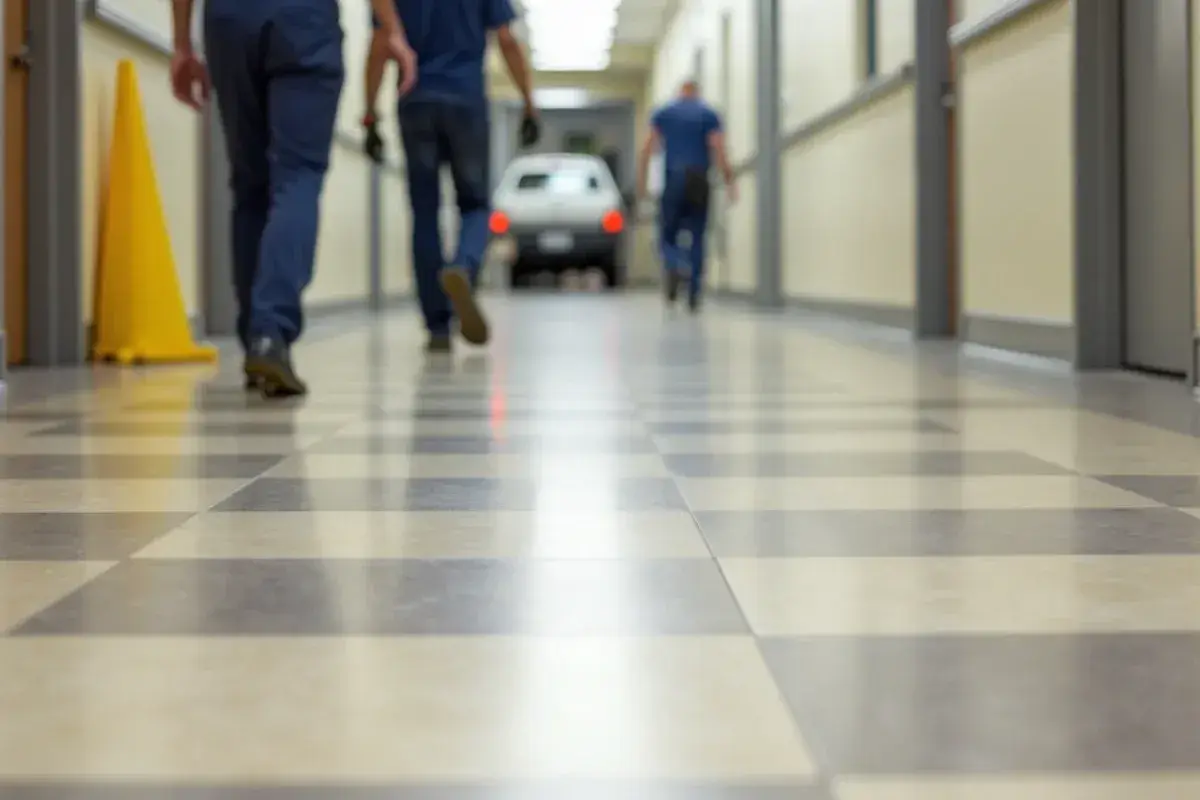
What we look for
How can you tell a floor needs sealing again?
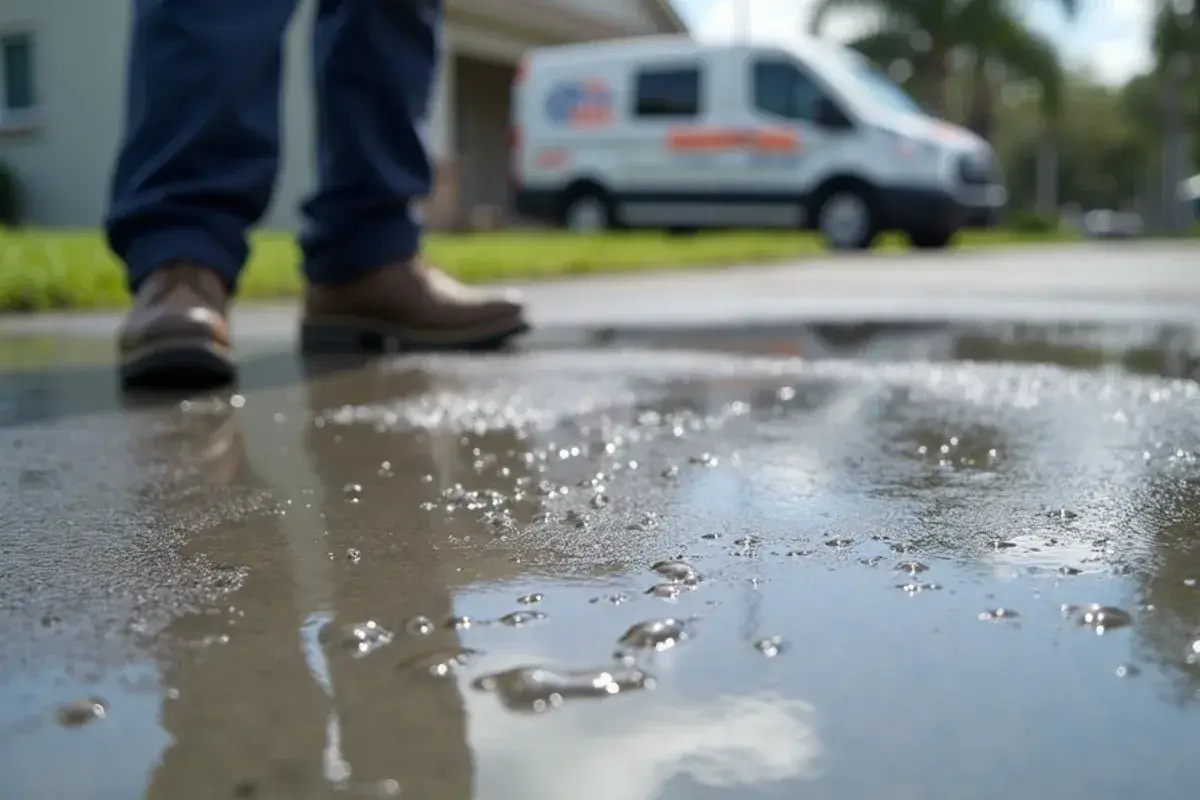
Concrete Network’s simplest test works on most concrete: sprinkle a little water. If it beads, the sealer is still doing its job. If it soaks in and leaves a dark spot, the protection is gone.
On VCT the sign is a cycle. Floor-care trade writing describes acrylic finish going down in four to six coats, wearing at the top and being scrubbed back and recoated again and again. Every full strip costs chemicals, water and a closed floor.
Our climate speeds all of this up. Jacksonville gets about 53 inches of rain a year, so outdoor sealers live through constant wet-dry cycles, and tracked-in sand acts like sandpaper on any shiny coat. Watch for these signs:
- Water darkening the surface instead of beading up
- Gray traffic lanes or dull patches inside doorways
- A white, cloudy haze under the sealer, often trapped moisture
- Joint sand washing out of pavers, or weeds in the joints
Our process
A reseal visit, start to finish
Sealing itself goes quickly. The prep around it does not, and the prep decides how long the new coat lasts.
1Identify the surface and the old coat
We work out what is down now: bare concrete, an acrylic sealer, wax on VCT or a worn epoxy topcoat. With older vinyl tile we ask about its age, because the EPA notes it and its adhesive may contain asbestos.
2Clean and strip
The floor is degreased, washed and rinsed, and old wax or failing sealer comes off by the method the product calls for. On asbestos-containing tile, OSHA allows stripping only with low-abrasion pads below 300 rpm and wet methods.
3Prepare for the bond
Clean concrete may need a light grind to accept a film-forming coat. Epoxy gets screened or sanded so the new topcoat grips. Pavers must be fully dry, and new ones need time to finish releasing efflorescence.
4Apply thin, even coats
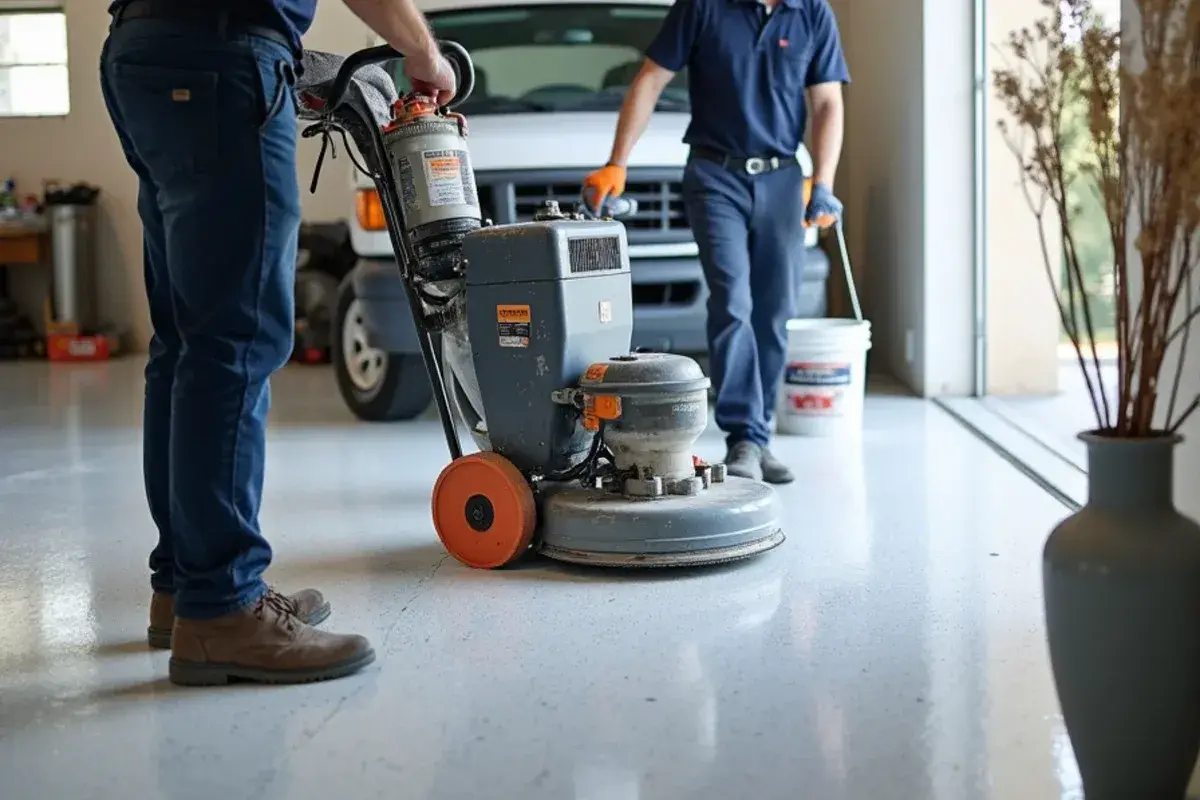
Sealer goes on thin, because thick coats pool in stamped texture and can turn cloudy. Grit goes in wherever wet feet or tires will cross. Pavers can also get a joint-stabilizing sealer flooded into the sand.
5Cure and set a schedule
The area stays closed for the cure time on the product sheet. Before we leave, you get the product name, a cleaning method that will not strip it, and a suggested date to check the floor again.
Price and paperwork
What does sealing cost over the life of a floor, and what rules apply?
Cost factors for sealing and recoating
Area is the starting point, but prep drives most of the bill. A clean, previously sealed floor needs a wash and a recoat. A floor with peeling sealer, built-up wax or oil stains needs stripping or grinding before anything new goes on.
Product choice matters next. Penetrating sealers are quick to apply and can last years outdoors. Clear urethane and polyaspartic coats cost more up front but hold their gloss longer. On VCT, the fair comparison is the coat against years of scheduled strip-and-refinish labor.
Closures and timing count too. After-hours work, furniture moves and phased areas add labor. Outdoors, a week of afternoon storms can push the date, since sealers need a dry surface. Your written quote lists each step so you can weigh a recoat now against a full repair later.
Safety, health and licensing rules
OSHA 29 CFR 1910.1001 prohibits sanding asbestos-containing flooring and requires stripping it with low-abrasion pads below 300 rpm and wet methods. The EPA advises leaving older vinyl tile and adhesive alone, or testing them before anyone sands or scrapes.
In workplaces, OSHA 1910.22 requires walking surfaces to be kept clean and dry where practicable, and the FDA Food Code expects food-area floors to be smooth and easily cleanable. Florida law bars local license requirements for flooring and painting scopes, and finish work is generally permit-exempt; confirm with your building department.
Why JW
Why JW handles the cleaning and the coating in one visit
JW holds a 5.0 rating from 82 Google reviews. Reviewers single out punctuality, a clean job site, fair prices and steady communication, and a good reseal is mostly a matter of doing small things carefully.
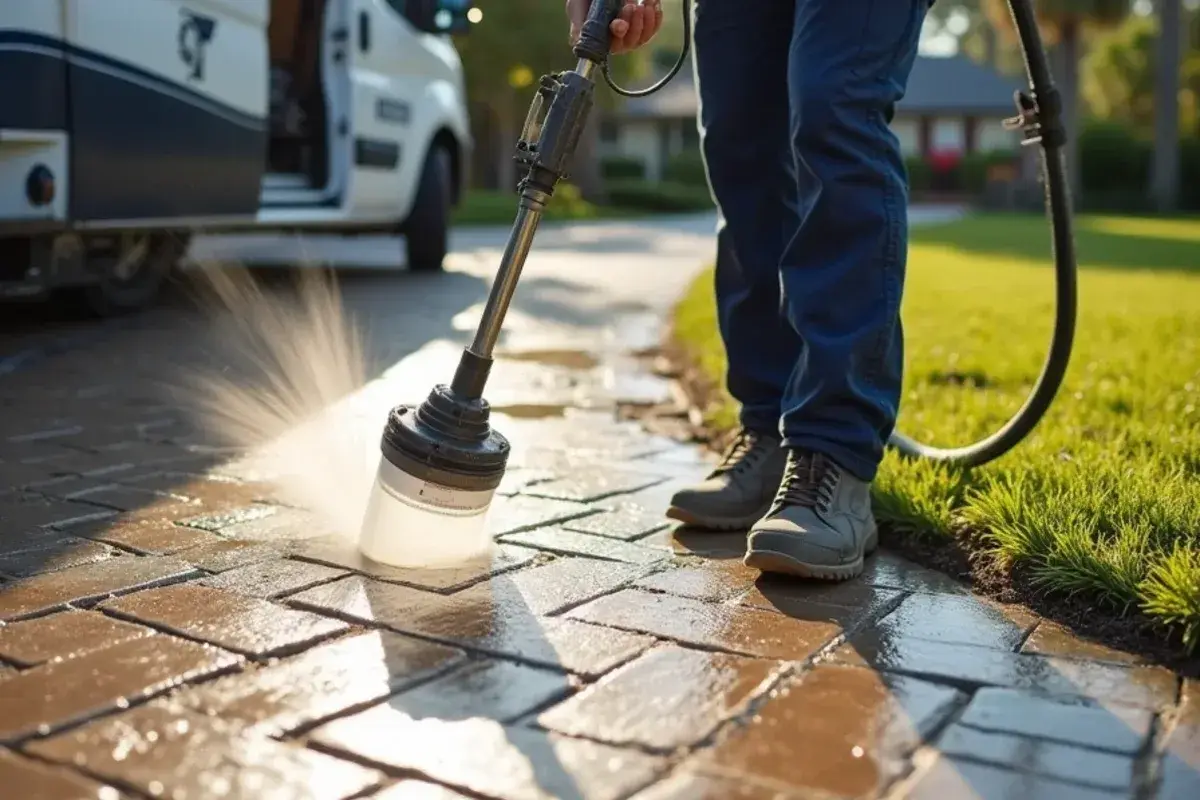
Pressure washing, painting and epoxy coatings are all done in-house. That matters here because sealing is mostly cleaning: the deeper the wash, the better the bond. The crew that installs epoxy floors can renew a dull topcoat, and a paver patio can be washed and sealed by one team on one schedule, with no wait between the cleaning and the coat. Owner Jimmie Wilson brings more than 30 years of hands-on finishing experience to each reseal.
What customers say about JW
I had my garage floor done with epoxy, and I’m really happy with the results. Jimmy was professional, arrived on time, and did a thorough job preparing the surface. The epoxy finish looks sleek, durable, and resistant to stains and chips. I highly recommend this service for anyone wanting to upgrade their garage flooring! Great price for the quality of materials and services.
Jimmie did a great job painting/ epoxy my garage floor. He also pressure washed my house and driveway. Great job and great price! I highly recommend this company.
Jamie did a great job paint my home interior & porch. Also the floor coating in my grandmothers garage turned out beautiful.
Service areas
Where we seal floors, pavers and patios
We are based in Jacksonville’s 32254 ZIP. Each of these areas brings a different kind of sealing and recoat work.
Questions
Questions about sealing and recoating
What does a clear-coat floor protectant do?
It adds a hard, transparent layer that takes the wear instead of your floor. On concrete it blocks stains and dusting. On VCT it stands in for soft acrylic finish that needs burnishing and stripping. On epoxy it restores gloss and scratch resistance. Commercial floor-care providers describe urethane coats as needing no burnishing and reducing future stripping. Each product sets its own recoat interval.
Can a clear coat end stripping and waxing on VCT?
Yes, largely. A urethane-type clear coat replaces the cycle of acrylic finish, burnishing and periodic stripping with a harder layer that gets cleaned, then scuffed and recoated when it dulls. It still wears in heavy lanes and is harder to remove later, so we check the tile maker’s guidance first. Older tile gets an asbestos question before any stripping.
How often should sealed concrete be recoated?
It depends on the sealer and the traffic. Concrete Network puts most concrete at every one to three years, with film-forming acrylics wearing fastest. Penetrating sealers last longer outdoors, and harder epoxy, urethane and polyaspartic coats can run five to ten years. In our sandy, rainy climate, do the water-bead test each spring and reseal once water soaks in.
Can you seal pavers and stamped concrete?
Yes. Pavers are washed, dried and sealed with a breathable product, and new pavers wait until efflorescence clears, typically two to three months by one major paver maker’s count. A joint-stabilizing sealer can harden the sand. Stamped concrete gets thin coats so sealer does not pool in the texture, plus grit where it gets wet. Plan on resealing pavers every three to five years.
Will a sealer make my concrete slippery?
No, not if the product suits the spot. Glossy film-forming sealers, especially wet-look acrylics, fill the surface texture and can turn slick when wet. Penetrating sealers soak in and leave the tread alone. On porches, pool surrounds and garage aprons, we either use a penetrating product or mix anti-slip grit into the topcoat.
Related services and reading
Commercial Epoxy Flooring
Resin floors for warehouses, kitchens, auto bays and clinics, installed in after-hours phases.
Learn morePool Deck, Patio & Lanai Coatings
Washed, repaired and textured decks and lanais that grip wet feet and stay cooler.
Learn moreEpoxy Floor Repair & Recoating
Peeling, chipped or tire-lifted coatings diagnosed, ground off where needed and recoated.
Learn moreReady to stop stripping and rewaxing?
Call (904) 533-7260. Tell us whether it is concrete, VCT, epoxy or pavers, and we will set up a visit and a written quote.
JW Painting & Pressure Washing & Epoxy Flooring · Jacksonville, FL 32254 · (904) 533-7260
Mon–Sat 7am–8pm · Sun closed