
Urgent floor repair · Jacksonville, FL
Buckled & Cupped Floor Repair in Jacksonville, FL
Jacksonville air stays damp most of the year, and slabs push moisture up from below, so wood and plank floors can cup, crown or peak with little warning. JW handles buckled floor repair by tracing the cause first, then fixing or replacing hardwood, laminate and LVP. Call (904) 533-7260.
- 5.0 on Google · 82 reviews
- Based in Jacksonville, FL 32254
- Where Precision Meets Perfection
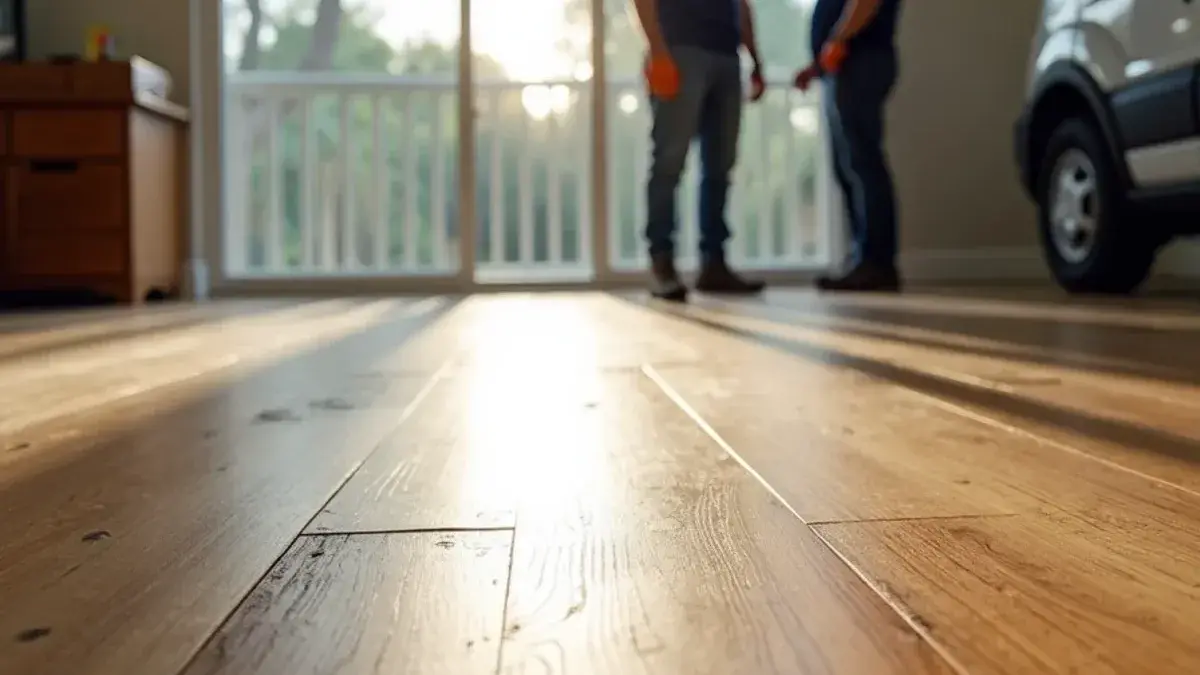
Buckled floor repair
Buckled and cupped floor repair: what the job covers
A lifted floor is a symptom. Boards rise because something is feeding them water or holding them in place, and a fix that skips the cause only lasts until the next humid spell. So every job has two halves: diagnosis, then repair.
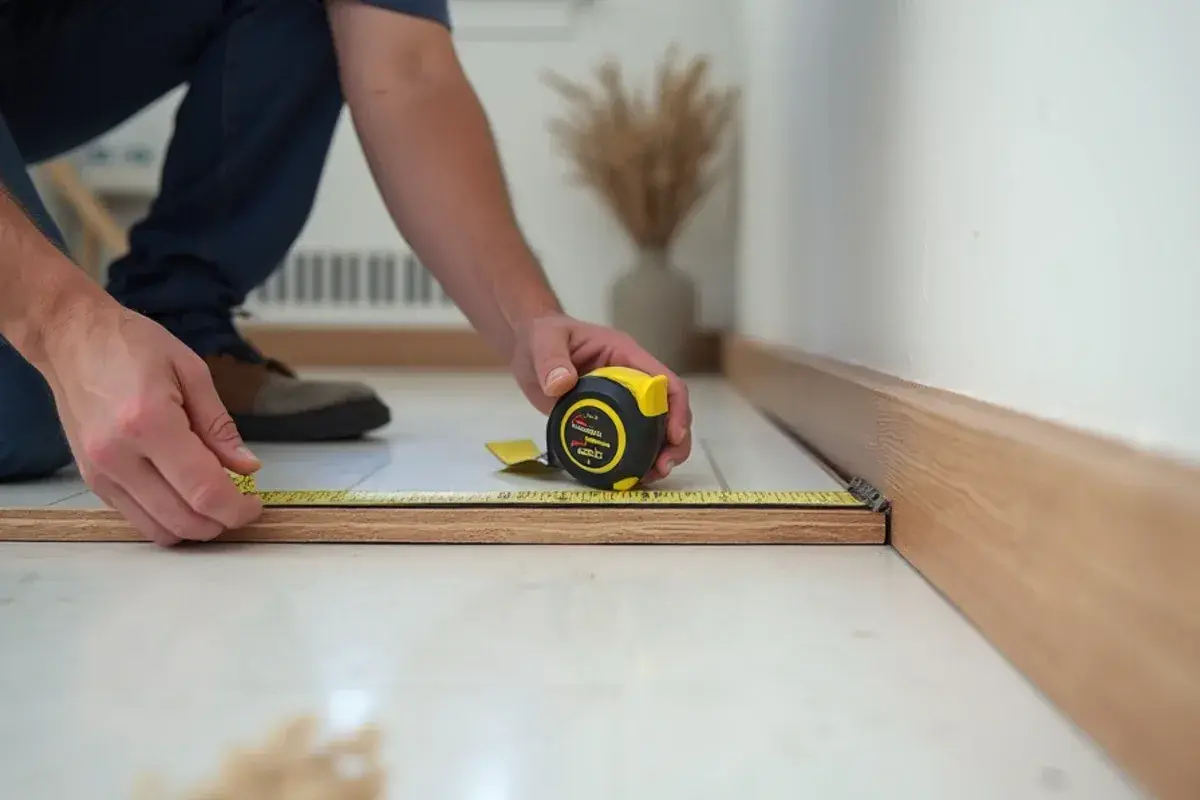
On the diagnostic side, we take moisture readings in the boards and in the slab or subfloor. We check the expansion gap at walls and cabinets, and look for leaks at the dishwasher, ice maker line, water heater and exterior doors. On the repair side, we swap out damaged boards, re-lay floating floors with proper gaps, or plan a replacement when too much is lost.
We work on solid and engineered hardwood and laminate and on vinyl plank. If the boards are wet from a flood or burst pipe, the water-damaged floor process comes first.
- Moisture readings in damaged boards and in an unaffected room for comparison
- Slab humidity testing or subfloor checks under the raised area
- Gap check at walls, door casings, cabinets and kitchen islands
- Board-by-board replacement where matching stock exists
- Re-laying floating plank with corrected gaps and transitions
- A replacement plan when a repair would not hold
What we look for
Cupping, crowning, buckling or peaking: what is the floor telling you?
Each shape points to a different cause. Cupping means the board edges sit higher than the middle, because the underside holds more moisture than the top. Crowning is the reverse, and it often follows sanding a cupped floor before it dried. Buckling is the floor pulling up off the subfloor, often after flooding or a long leak.
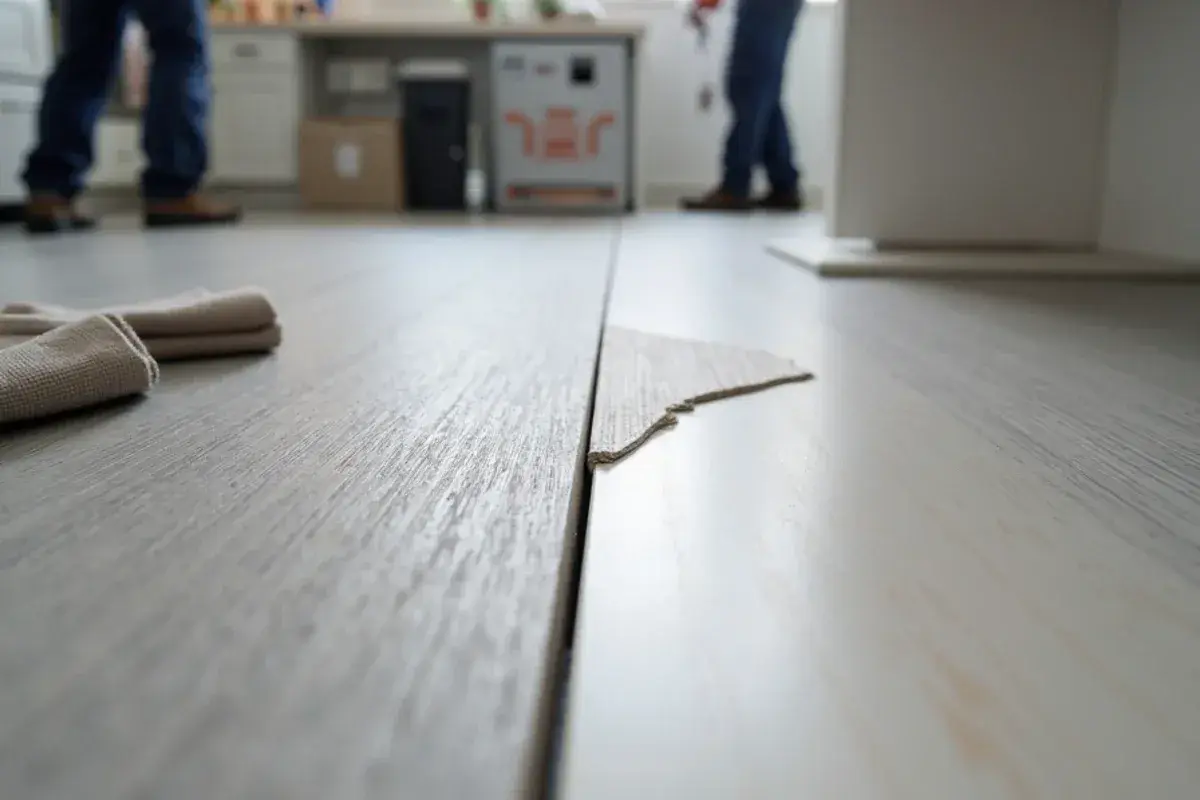
Vinyl plank does not swell the way wood does, yet floating plank still peaks at the seams when it has no room to move. Flooring makers warn that cabinets set on top of a floating floor pin it down and can cause buckling or joint failure. Missing gaps at walls and tight door casings do the same.
Local weather keeps the pressure on. Morning relative humidity in Jacksonville averages about 89 percent over the year, per 1961 to 1990 climate records compiled by Current Results. Add a slab poured on damp ground, or a house closed up with the AC off during a trip or an outage, and boards take on water quickly.
Our process
How we trace the moisture before we touch a board
Most failed repairs come from fixing the boards and missing the cause. This is the order we follow on every lifting floor.
1Map the damage
We outline the raised area, note which way the boards run and photograph it. Then we ask what changed: a new dishwasher, a storm, a week without power, a new rug or furniture on a floating floor.
2Read the boards top and bottom
A moisture meter compares the face of the boards with their underside where we can reach it, and with a dry room elsewhere. A wetter underside points below the floor. Even readings point to room air.
3Test what lies beneath
On slabs we use in-situ humidity probes under ASTM F2170. On wood subfloors and crawlspaces we read the sheathing. NWFA guidelines call for checking both the wood and the subfloor, so we do both.
4Get the source stopped
A leaking supply line goes to a plumber. High indoor humidity is a job for the AC contractor. Grading, gutters or sprinklers soaking an outside wall get flagged for you. Repairs wait until the source is controlled.
5Let it settle, then measure again
Cupped boards often flatten as they dry, so we re-read before deciding anything. Sanding a wood floor before moisture evens out shaves off the raised edges, and the floor crowns once it dries.
6Repair or replace, then walk through
We replace damaged boards, free pinned plank and reset gaps, or replace the room when too much is gone. Then we walk the floor with you and leave the readings for your records.
Price and paperwork
Repair or replace: what sets the price, and the rules behind it
What moves the cost of a buckled floor fix
The size of the damaged area comes first. A few lifted boards by a dishwasher is a different job from a whole living room that crowned after sanding.
Matching stock matters next. Leftover boxes from the original install make board replacement practical. Without them, a discontinued product can turn a small repair into a room or a whole connected floor. The install method counts too: glue-down boards take longer to remove cleanly than nailed or floating ones.
Floors running under cabinets or islands add work, because the plank has to be cut free or the cabinet toe kick removed. Solid hardwood may need sanding and refinishing to blend repaired boards. A slab that tests wet may need a moisture barrier before anything goes back down. Plumbing or AC repairs are billed by those trades, and the written quote shows only the flooring work.
Licensing, permits and installation standards
Florida law bars local governments from requiring a license for flooring job scopes, and finish flooring is generally exempt from building permits. Check with your building department to confirm. Rotted joists or sagging framing under a crawlspace home are another matter: that is structural work under Florida’s state-certified contractor categories.
Industry guidelines also shape the repair. NWFA installation guidelines call for checking wood and subfloor moisture and acclimating the boards before installation. Floating-floor makers require perimeter expansion gaps and, on concrete, a moisture barrier unless the pad includes one. Makers’ limited warranties generally require the floor to be installed to those instructions.
Why JW
What you get when JW looks at a lifting floor
JW holds a 5.0 rating from 82 Google reviews, and the comments repeat the same points: punctual, tidy, fairly priced and easy to reach. One customer hired us to repair and finish a new-floor installation at home. Communication counts on a job like this, because the fix often waits on a plumber or AC technician, and reviewers say JW keeps them posted.
Coatings and installation stay in-house, so if a repair turns into a replacement, the same crew lays the new floor. JW also paints, which means new quarter-round and touched-up baseboards are part of the same visit rather than another appointment. Owner Jimmie Wilson diagnoses these floors himself, with more than 30 years of hands-on finishing experience behind the repair-or-replace call.
Customer reviews of our floor repair work
Hired JW Painting to repair and finish the installation of new floors in my home. Floors look fabulous now. Excellent job!!!
I would recommend Jimmy Wilson to anyone. He done a wonderful job on my floor.
Service areas
Humid river towns and older homes we cover
From our base in Jacksonville’s 32254 ZIP we reach slab subdivisions and older crawlspace homes alike. A few places where lifting floors come up:
Questions
Buckled floor questions we hear most
Why is my hardwood cupping or my LVP peaking?
Hardwood cups when the underside of the boards holds more moisture than the top, usually from slab vapor, a slow leak or crawlspace humidity. Vinyl plank peaks for a different reason: it has no room to move. Missing wall gaps, tight door casings and cabinets set on a floating floor are the usual culprits, and sunny runs beside sliding glass doors make it worse.
Can buckled floors be repaired, or must they be replaced?
Yes, many can be repaired. Mild cupping often flattens once the moisture source is stopped and the boards dry, and individual boards can be swapped when matching stock exists. Floating plank can be lifted and re-laid with proper gaps. Replacement makes sense when laminate has swollen, boards have broken loose over a wide area, or the product is discontinued.
How do you find the moisture source?
We compare moisture readings on the face and underside of affected boards with readings in a dry room. On concrete we use in-situ humidity probes under ASTM F2170, and on crawlspace homes we read the subfloor sheathing. Then we check the usual suspects: dishwasher and ice maker lines, the water heater, exterior doors, and indoor humidity with the AC running.
Will the manufacturer warranty cover buckling?
No, usually not when moisture or installation caused it. Flooring makers’ published limited warranties commonly exclude damage from subfloor moisture, flooding and leaks, and failures from installs that ignored their instructions. Some also set an indoor humidity range; one major hardwood warranty names 35 to 55 percent. Read your product’s terms. Moisture readings and photos from the visit give you a record either way.
How long should cupped hardwood dry before it is sanded flat?
Weeks to a few months after the leak or vapor source is fixed, and it ends on readings, not the calendar. Boards sanded while still cupped lose wood at the raised edges, then crown in the middle once they finish drying. We wait until the face and underside of the boards read close to the wood in a dry room before any sanding.
Related services and reading
Water-Damaged Floor Replacement
Ruined floors pulled and replaced once the slab or subfloor reads dry, itemized for your adjuster.
Learn moreHardwood & Laminate Flooring
Engineered wood, solid hardwood and laminate matched to your subfloor, plus refinishing older boards.
Learn moreLuxury Vinyl Plank Flooring
Rigid-core plank floated over a tested slab, with barrier, expansion space and sealed wet edges.
Learn moreIs your floor lifting, cupping or peaking right now?
Call (904) 533-7260. We will find what is pushing the boards up, then tell you whether a repair will hold or the floor needs replacing.
JW Painting & Pressure Washing & Epoxy Flooring · Jacksonville, FL 32254 · (904) 533-7260
Mon–Sat 7am–8pm · Sun closed