
Epoxy & coatings · Jacksonville, FL
Commercial Epoxy Flooring in Jacksonville, FL
A commercial floor in Jacksonville takes forklift traffic, fryer grease or brake fluid, often on a slab that holds moisture. JW installs commercial epoxy flooring for warehouses, restaurants, auto shops and clinics, and schedules the work after hours so you stay open. Call (904) 533-7260 to set up a walk-through.
- 5.0 on Google · 82 reviews
- Based in Jacksonville, FL 32254
- Where Precision Meets Perfection
Commercial epoxy
Commercial epoxy flooring in Jacksonville, matched to how the floor is used
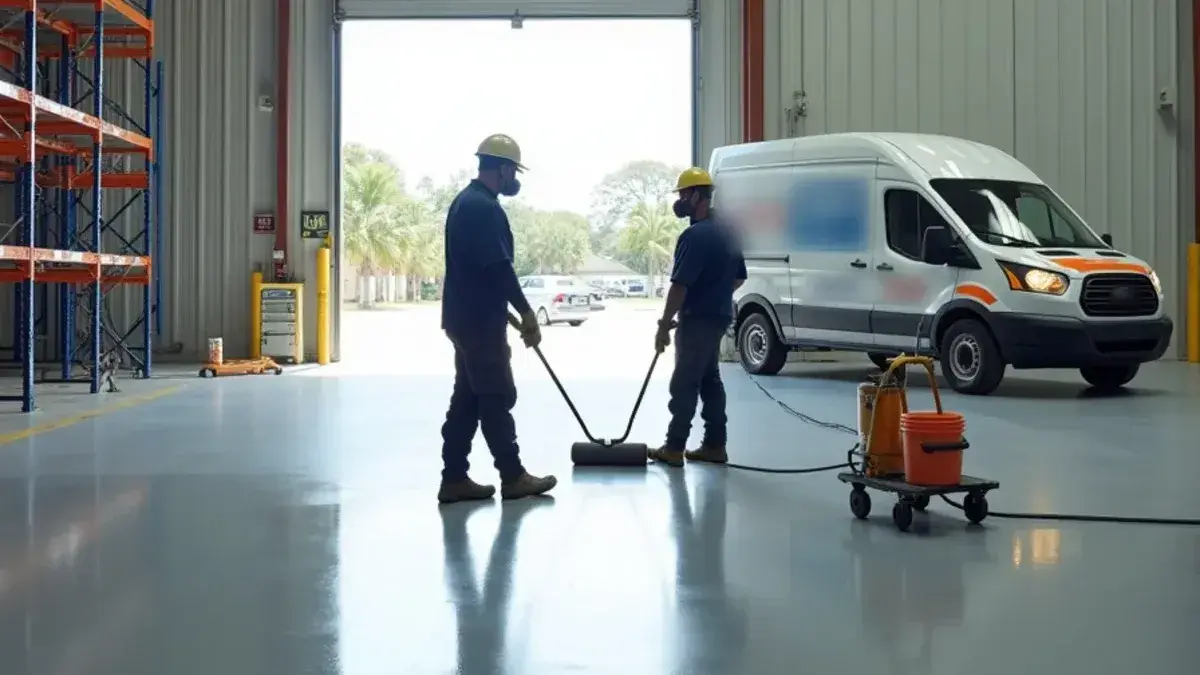
A business floor is a system, not one coat of paint. It starts with a ground and repaired slab, then a primer, a body coat sized to the traffic, and a topcoat picked for chemicals, abrasion or sun. The right build for a dry storage aisle is the wrong one for a dish room.
We size the system to the work done on it. Warehouses usually get a thick epoxy with a hard-wearing topcoat. Kitchens often need urethane cement or a textured build that handles hot water. Auto bays need resistance to oils and fluids, and clinic floors have to survive disinfectants and constant mopping.
Every project starts with a walk-through and a written quote that lists each layer, the cure times and the hours each area will be closed.
- Diamond grinding to the surface profile the coating maker specifies
- Crack, joint and spall repair before the first coat
- Slab moisture testing, with a vapor-control primer quoted when readings call for it
- Integral cove base at the walls of kitchens and wash-down rooms
- Grip texture, safety colors and line striping laid out with you
What we look for
What does each type of business need from its floor?
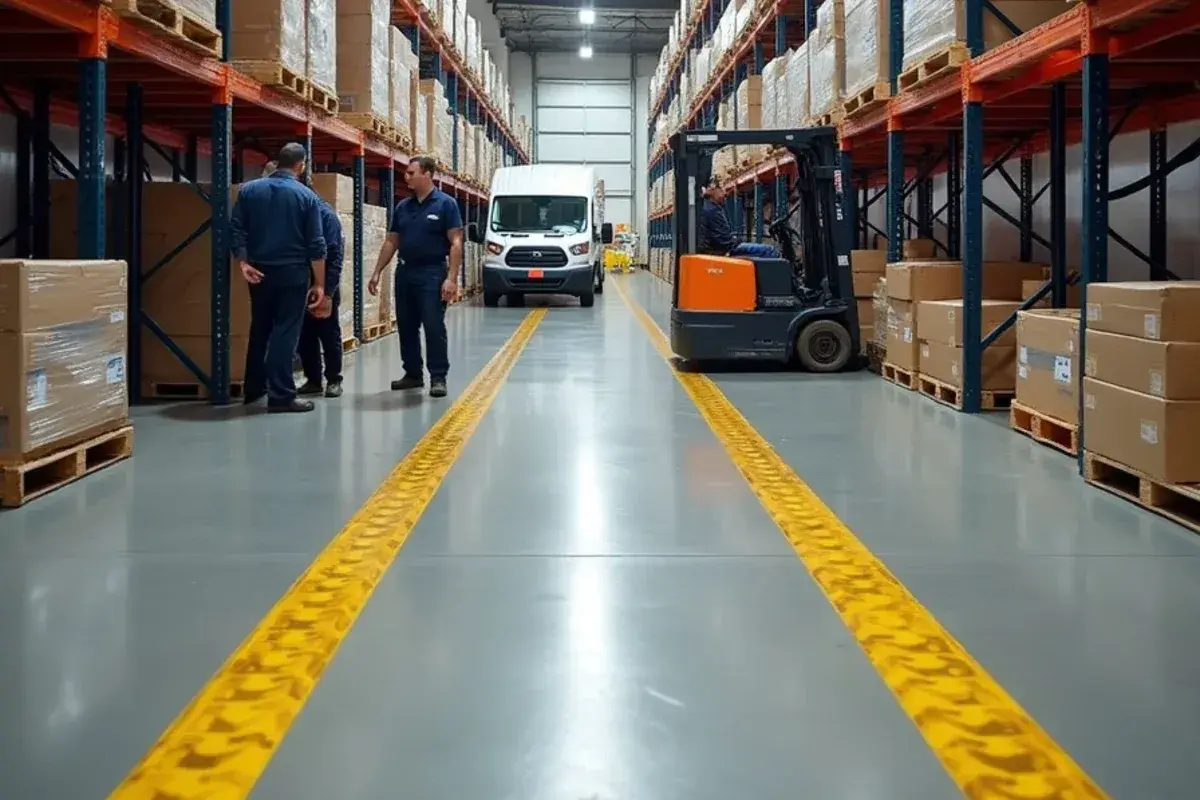
Warehouses and distribution space. Northeast Florida holds nearly 100 million square feet of warehouse distribution space, according to a Cushman & Wakefield count reported by JAXPORT in 2021. Forklift wheels grind dust out of bare concrete and chip thin coatings at dock edges and turns, so these floors need build and a tough topcoat.
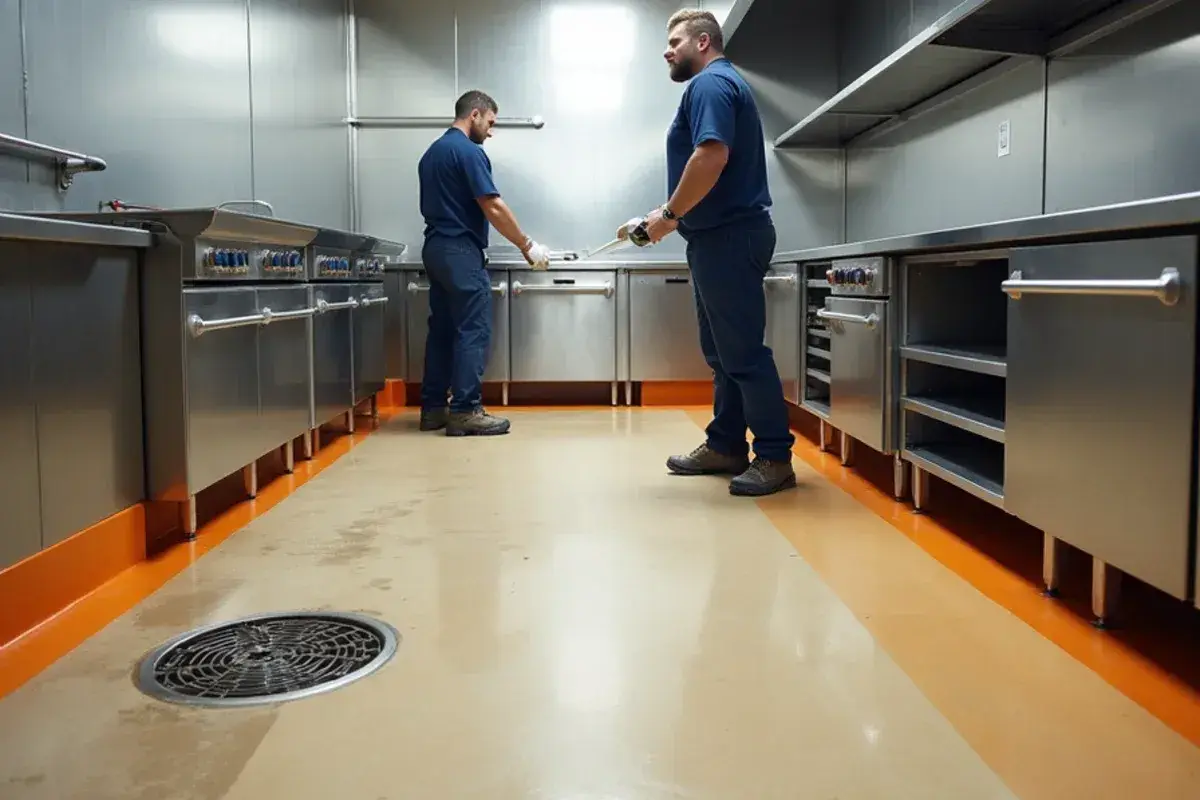
Restaurants and commercial kitchens. Grease, dropped pans and hot-water cleaning wear down standard epoxy over time. Coating makers point wet kitchens toward urethane cement, which goes on thicker and copes better with sudden temperature swings.
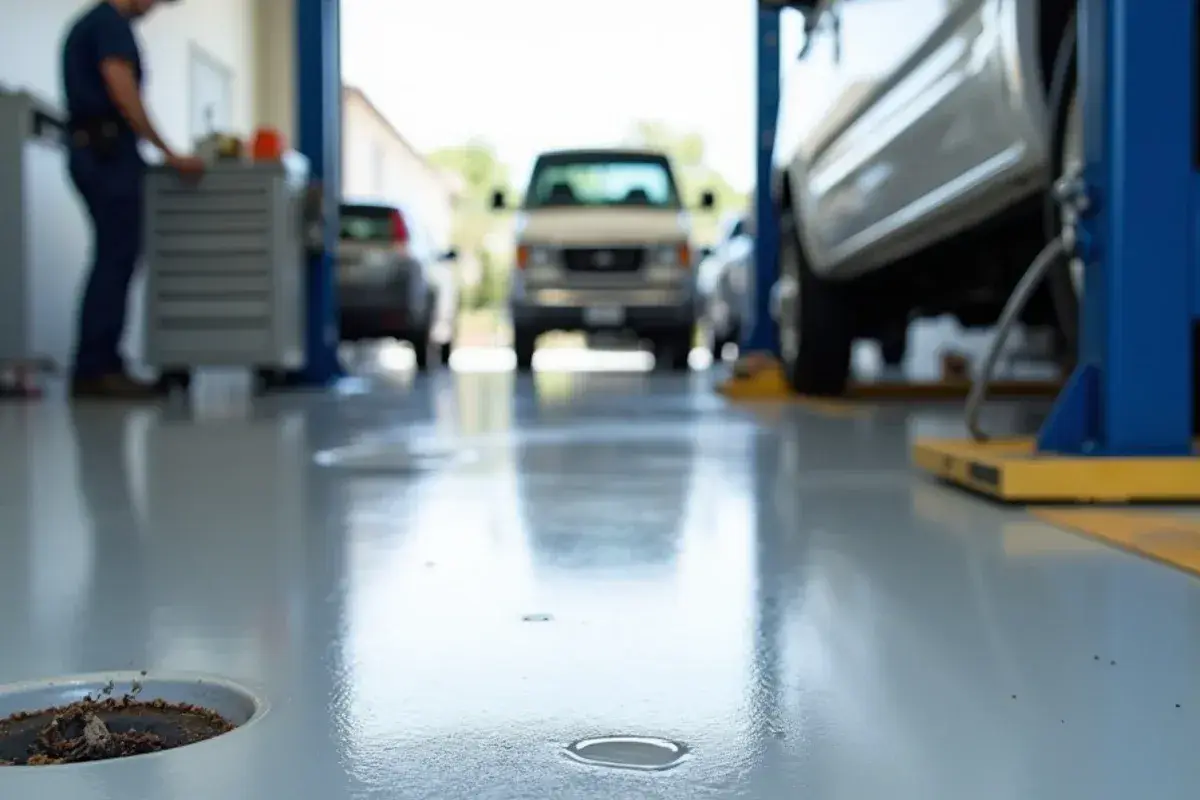
Auto shops and service bays. Motor oil, brake fluid and coolant soak into bare concrete and stay. A chemical-resistant topcoat keeps spills on the surface, where a squeegee can reach them.
Clinics and offices. Waiting rooms and exam areas get mopped with disinfectants every day. A jointless resin floor with a cove base leaves no grout lines for grime to settle into.
Our process
How an after-hours commercial install works
Most businesses cannot close for a week. We plan the work in zones and shifts so the space keeps running, and we confirm every cure time with you before the first night.
1Walk the space and test the slab
We map traffic lanes, drains, fixed equipment and damaged areas. Then we test moisture by the method the coating maker names, such as ASTM F2170 in-situ probes or the ASTM F1869 calcium chloride test.
2Plan the phases
The quote splits the floor into zones, each with a start time and a return-to-service time. Fast-curing polyaspartic topcoats can shorten a closure where the product data sheet allows it.
3Grind and repair
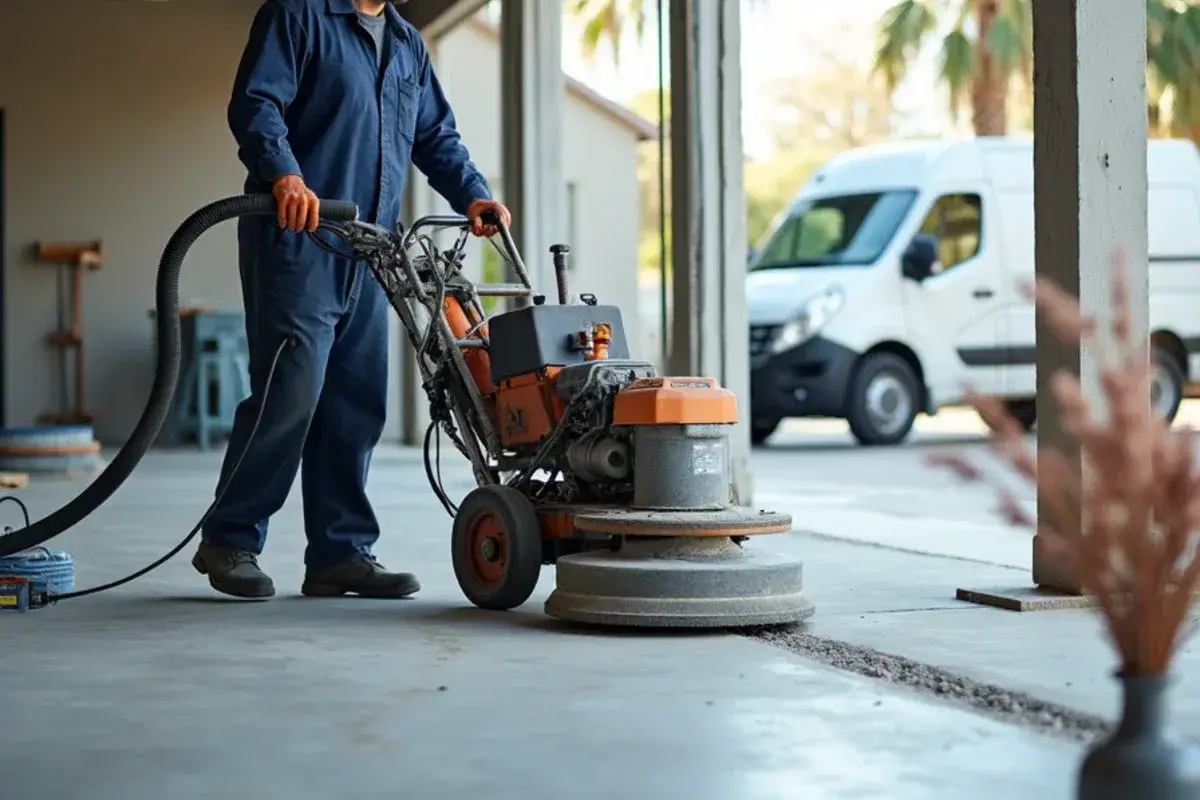
Diamond grinders with dust extraction open the concrete to the surface profile described in ICRI Guideline 310.2R. Cracks, joints and spalls get filled so they do not show through the finish.
4Build the coating
Primer, body coat and topcoat go down at the specified thickness, with aggregate broadcast wherever traction matters. Cove base, safety colors and striping are added in the same sequence.
5Cure, inspect and hand back
We check the finish, pull our barriers and walk each zone with you before it reopens. Your staff gets the product names and a cleaning routine that will not dull the topcoat.
Price and paperwork
What drives the cost of a commercial floor, and which rules apply?
Cost factors for business floors
Square footage sets the baseline, but the system moves the number more. A thin topcoat in a showroom costs far less per foot than a urethane cement build in a kitchen. Thickness counts as well: a full aggregate broadcast uses more resin and labor than two rolled coats.
Prep is the next lever. Old coatings, adhesive, oil-soaked concrete and wide cracks all add grinding and repair time. A slab that tests high for moisture needs a vapor-control primer, which adds material and a step.
Scheduling matters too. Night and weekend phases, short reopening windows and work around fixed equipment take more labor than an empty building. Moving racks or kitchen lines, cove base and striping each get their own line, so the written quote shows exactly where the money goes.
Codes, inspections and licensing
The FDA Food Code requires food-establishment floors to be smooth, durable, easily cleanable and nonabsorbent where required, and it allows antislip finishes for safety. In Florida, the DBPR Division of Hotels and Restaurants inspects public food service establishments and requires plan review for remodels, so ask the division whether your floor project counts.
OSHA 29 CFR 1910.22 requires walking-working surfaces to be kept clean, orderly and dry where practicable, and OSHA 1910.176 requires permanent aisles to be marked. Florida law bars local governments from requiring a license for flooring work, and finish flooring is generally permit-exempt; confirm with the local building department.
Why JW
Why business owners call JW for coated floors
JW holds a 5.0 rating from 82 Google reviews. Reviewers keep returning to the same points: the crew arrives on time, keeps the site clean, communicates and charges a fair price. On a night shift inside your building, those habits matter.
Epoxy coating, painting and pressure washing all happen in-house. The same crew can wash down an entry, repaint walls and bollards, and coat the floor without a second contractor on your calendar. One reviewer pointed to how carefully the surface was prepared before an epoxy floor went down, and prep is where commercial floors live or die. Owner Jimmie Wilson leads commercial jobs with more than 30 years of hands-on finishing experience.
What customers say about our epoxy work
I had my garage floor done with epoxy, and I’m really happy with the results. Jimmy was professional, arrived on time, and did a thorough job preparing the surface. The epoxy finish looks sleek, durable, and resistant to stains and chips. I highly recommend this service for anyone wanting to upgrade their garage flooring! Great price for the quality of materials and services.
Service areas
Commercial floors we coat across Northeast Florida
We work from the 32254 ZIP on Jacksonville’s west side and travel to commercial sites around the region. Here are some of the areas and the work they tend to bring.
Questions
Commercial flooring questions from owners and managers
Which epoxy systems suit restaurants, warehouses and auto shops?
It depends on heat, water, chemicals and wheels. Dry warehouses usually do well with a thick epoxy under an abrasion-resistant urethane or polyaspartic topcoat. Kitchens cleaned with hot water are better served by urethane cement, which handles temperature swings. Auto shops need a chemical-resistant topcoat over a well-ground slab. We confirm the pick against the maker’s data sheet after the moisture test.
Can you install after hours so we stay open?
Yes. After-hours installs are a normal part of our commercial work. We split the floor into zones, work nights or weekends, and choose primers and topcoats whose cure times fit your reopening. A restaurant might close one section at a time, while a warehouse can shift racking lane by lane. The written quote lists every closure window.
Do you offer slip-resistant and chemical-resistant finishes?
Yes. Traction comes from aggregate broadcast into the coating, set coarser in wet kitchens and finer in offices so the floor still cleans easily. Chemical resistance comes from the topcoat chemistry, chosen against the oils, cleaners or acids on your list. Resin makers test their systems under methods such as ASTM C267, and we match their charts to your exposures.
Can your floors meet food-service sanitation requirements?
Yes. A properly built resin floor can meet the FDA Food Code’s floor rules: smooth, durable, easily cleanable and nonabsorbent in wet areas, with coved floor-to-wall joints. We install cove base at the walls and keep texture fine enough to scrub. In Florida, the DBPR Division of Hotels and Restaurants inspects the establishment and makes the final call.
Do you add line striping and safety markings?
Yes. We lay out aisles, forklift lanes, walkways and hazard zones with you and apply the lines as part of the coating, so they wear with the floor. OSHA 1910.176 requires permanent aisles to be marked, and OSHA 1910.144 makes yellow the color for caution and physical hazards. Your layout goes into the quote.
Related services and reading
Epoxy Flooring
Flake, metallic, solid and quartz resin floors on diamond-ground, moisture-tested concrete.
Learn moreFloor Sealing & Clear Coat Protection
Clear coats and sealers that protect concrete, VCT, epoxy and pavers with less upkeep.
Learn moreEpoxy Floor Repair & Recoating
Peeling, chipped or tire-lifted coatings diagnosed, ground off where needed and recoated.
Learn moreReady to replace a worn shop or kitchen floor?
Call (904) 533-7260. Tell us what rolls, spills or gets washed on the floor, and we will quote a system and an after-hours schedule.
JW Painting & Pressure Washing & Epoxy Flooring · Jacksonville, FL 32254 · (904) 533-7260
Mon–Sat 7am–8pm · Sun closed