
Epoxy & coatings · Jacksonville, FL
Epoxy Floor Repair & Recoating in Jacksonville, FL
When a garage coating starts peeling in Jacksonville, the cause is usually underneath it. Often the slab was never ground, moisture is pushing up, or hot tires lifted a thin kit. JW finds the cause, grinds off what failed, patches the concrete and recoats so the fix lasts.
- 5.0 on Google · 82 reviews
- Based in Jacksonville, FL 32254
- Where Precision Meets Perfection
Epoxy floor repair
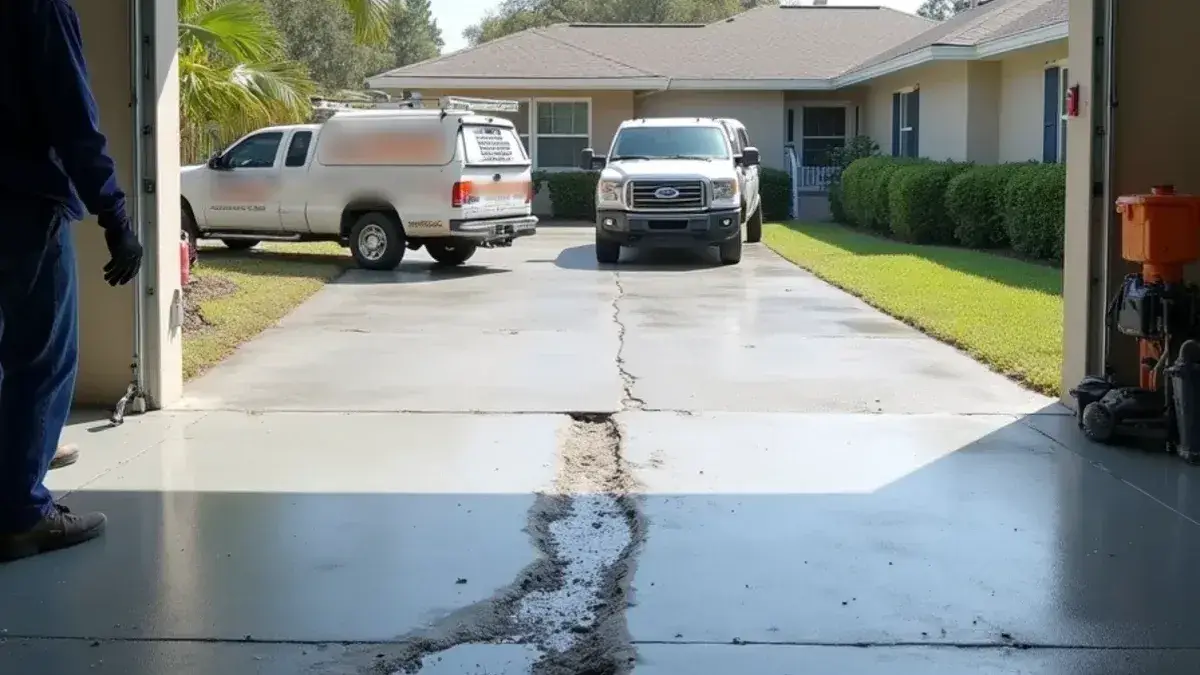
Epoxy floor repair in Jacksonville starts with why it failed
A peeling floor is a symptom. Before anything gets patched, we work out why the coating let go, because a recoat over the same problem tends to fail the same way. Most failures trace back to prep, moisture, contamination or a product too thin for car traffic.
From there, the repair is one of three jobs. Small chips and a few cracks in a well-bonded floor can be patched and blended. A sound but worn floor can be scuffed and recoated. A coating lifting in many places, or one sitting on an unground slab, has to come off down to bare concrete.
Once the slab is bare, the new floor is built like any new install, and our garage floor epoxy page covers that full system. If you want to compare finishes before recoating, see epoxy flooring.
- Adhesion checks across the floor, not just at the worst spot
- Moisture testing wherever blisters or damp patches appear
- Grinding off failed paint, DIY kits and loose epoxy
- Crack and chip repair, ground flush with the slab
- Spot patches or a full recoat, matched to the floor that remains
What we look for
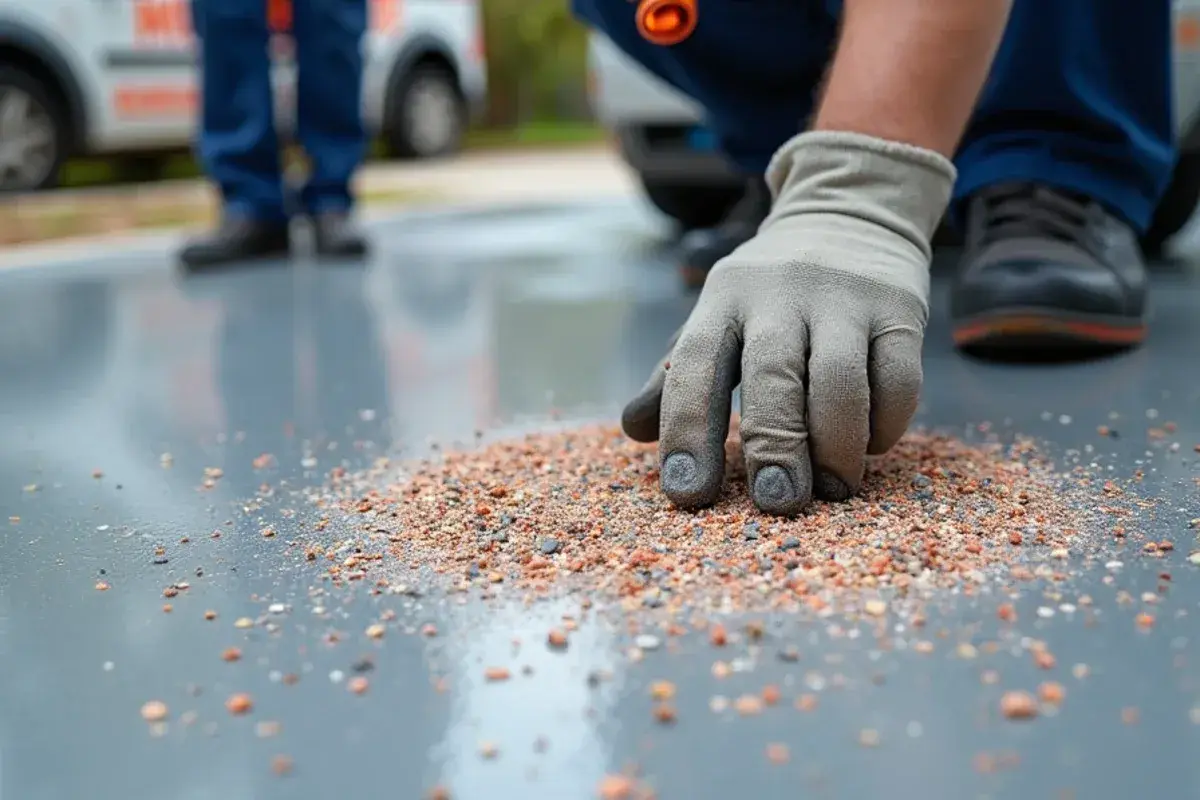
What do peeling, bubbles and tire marks mean?
Local weather puts coatings under steady pressure. Most of Jacksonville’s rain falls between May and September, and July highs average near 92°F, so slabs stay damp and tires come home hot. A kit rolled on a muggy afternoon, too close to the dew point, can lose its bond early.
Each kind of failure points to a cause. Reading the pattern tells us whether a patch will hold or the whole coating needs to come off:
- Peeling in tire-shaped patches: hot-tire pickup, where heated tires softened a thin or under-cured film and pulled it up as they cooled
- Sheets lifting off clean concrete: poor bond, usually a slab that was washed or acid-etched instead of ground
- Blisters or bubbles: moisture vapor and alkaline salts pushing up from the slab to the bond line
- Small round craters, or fisheyes: oil or silicone left on the concrete before coating
- Chips at joints and edges: impact, or cracks moving under the coating
- Amber, yellowed areas near the door: UV breaking down an epoxy with no UV-stable topcoat
Our process
How we repair or recoat a failed epoxy floor
The order matters: diagnose, decide, then repair. Skipping the first two steps is how a floor ends up recoated twice.
1Inspect and map the damage
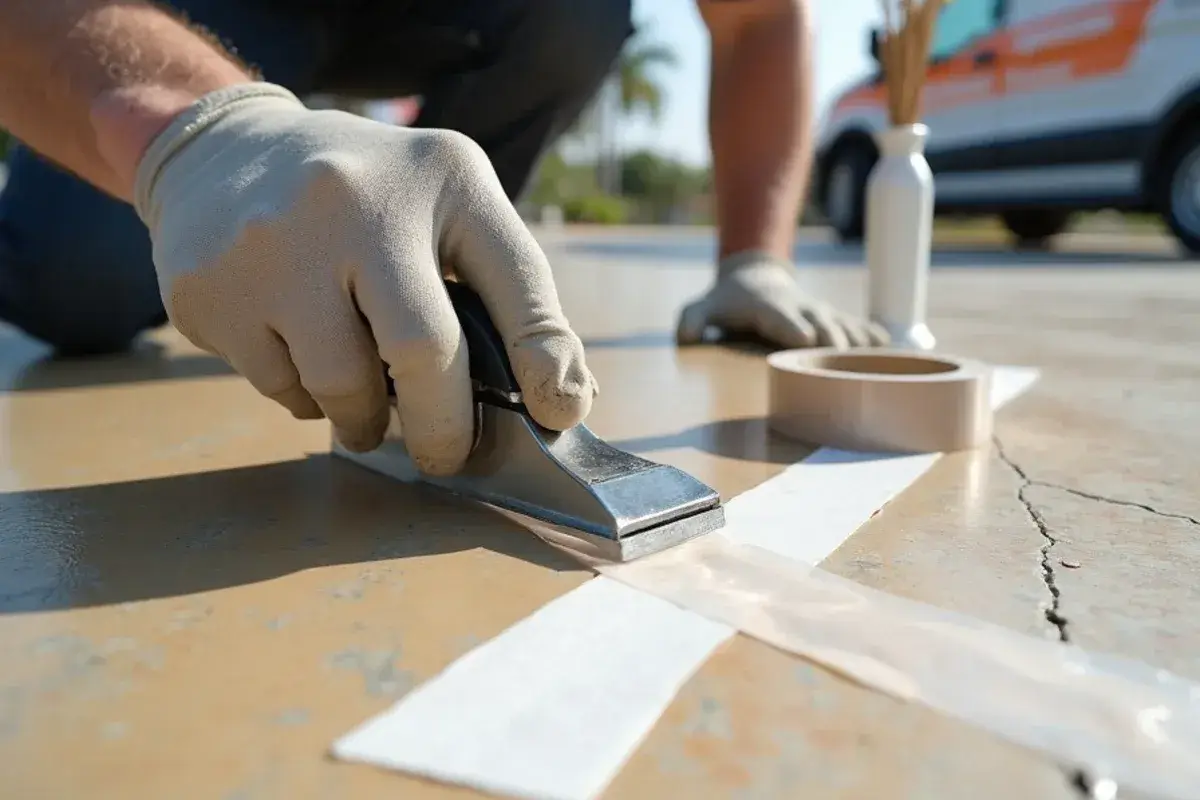
We walk the floor, tap and scrape at loose edges and mark every area that has let go. A tape test, such as the cross-hatch method in ASTM D3359, shows how well the rest is still bonded.
2Test for moisture
Where we see blisters or damp spots, the slab gets in-situ RH probes under ASTM F2170 or the calcium chloride test under ASTM F1869. The reading decides which primer goes back down.
3Quote the repair in writing
Your written quote says whether the floor will be patched, recoated or stripped, and why. If removal is needed, it is priced as its own line so you can see it.
4Remove what failed
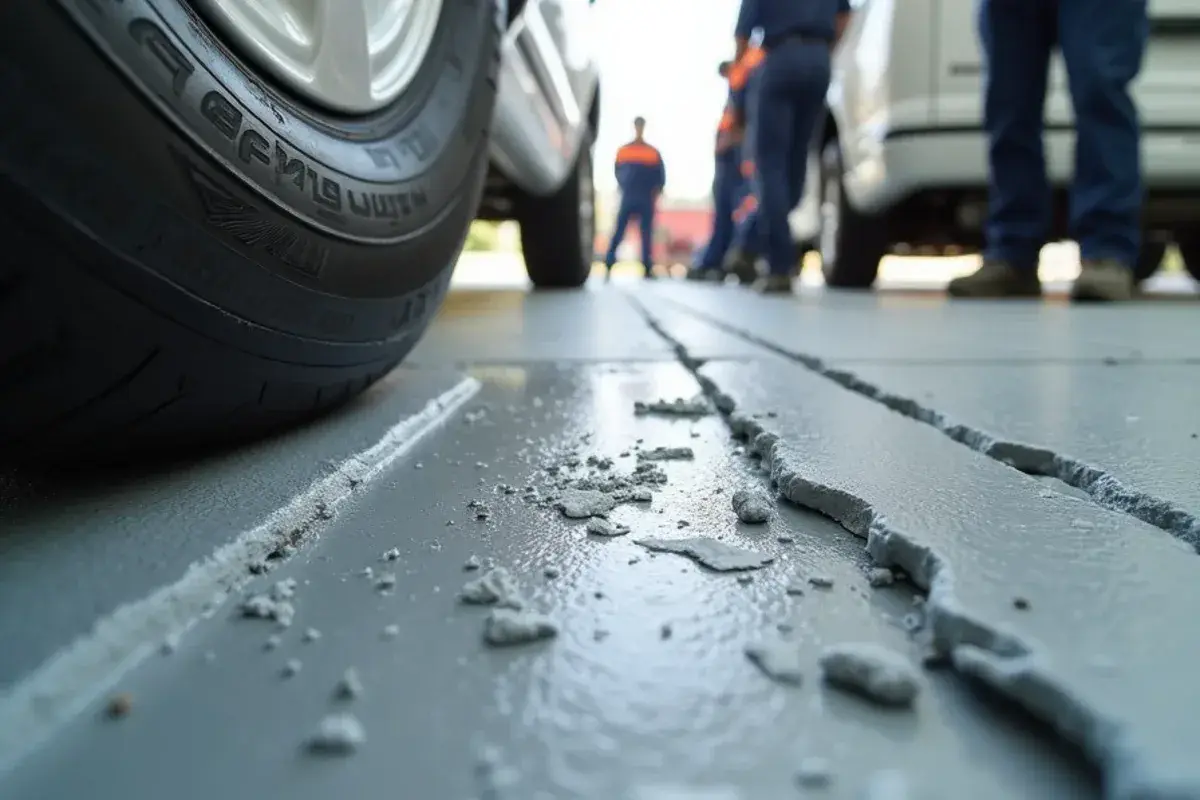
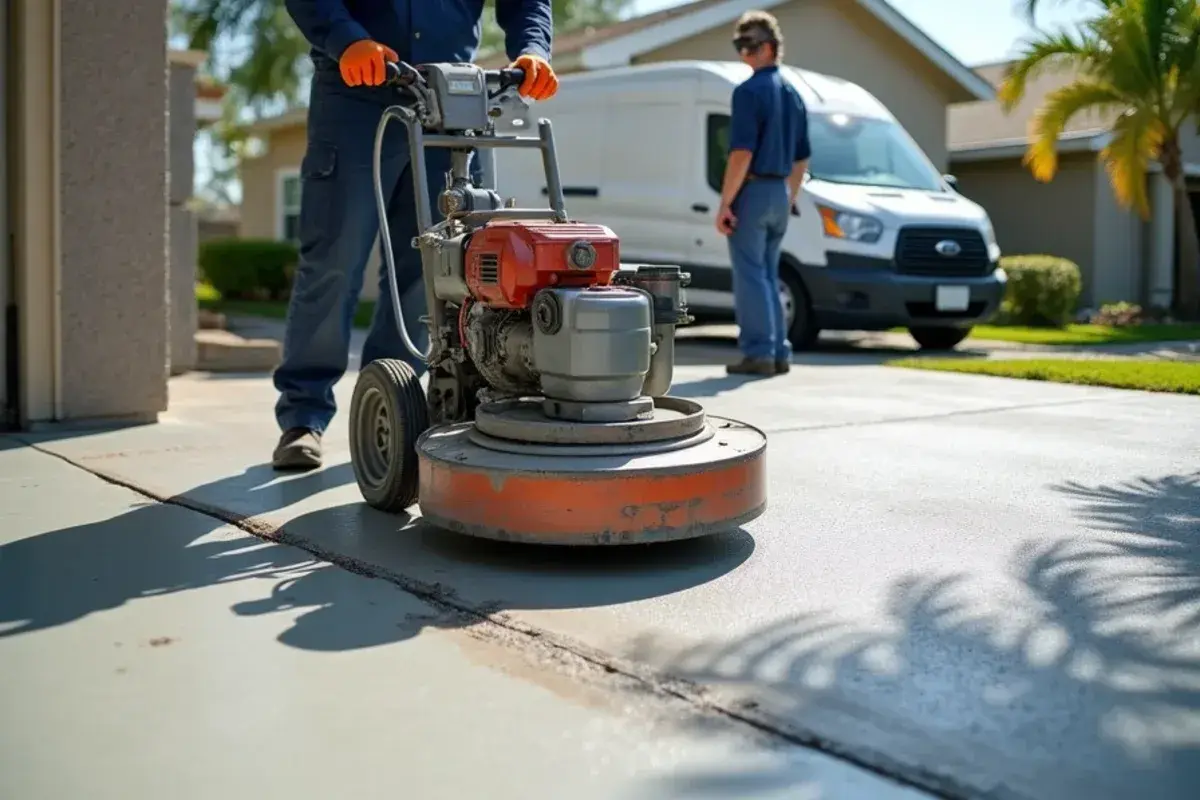
Loose and failed coating comes off with a diamond grinder and dust collector. When most of the floor has failed, all of it comes off. Any well-bonded epoxy that stays is scuffed so new resin can grip.
5Patch the slab
Chips, cracks and pits are cut back to sound edges, filled and ground flush. On flake floors, patches get the same base color and a matching flake blend so they sit in with the rest.
6Recoat and walk through
New coats go on inside the product’s temperature and dew-point limits, usually finishing with a UV-stable clear topcoat. We walk the floor with you and leave the cure times in writing.
Price and paperwork
Patch, recoat or start over: cost drivers and rules
What drives the cost of an epoxy repair
The biggest factor is how much of the old coating has failed. A few chips in a well-bonded floor are a small job. A floor peeling across both parking spots costs more than a bare slab, because the old coating needs its own grinding pass before normal prep even starts.
What sits underneath matters too. Moisture readings over the primer’s limit mean a moisture-tolerant primer. Oil-soaked concrete needs extra cleaning. Deep spalls take more filler and grinding than hairline cracks do. A coating over old vinyl tile or adhesive may need testing before any of it is ground.
Then there is the finish. Matching an existing flake blend, recoating the whole floor so the sheen evens out, or upgrading to a polyaspartic topcoat each change the price. Your written quote spells out which option you are getting and what it includes.
Rules that apply to repair work
Recoating a floor counts as finish work. Florida jurisdictions using the residential code’s R105.2 exemptions generally need no permit for painting and similar finish work, though the building official decides. Florida law since 2021 also bars local license requirements for painting and flooring scopes.
A slab that has heaved, sunk or broken through is a structural problem for a state-certified contractor under Chapter 489. Grinding falls under OSHA’s construction silica standard, 29 CFR 1926.1153. If old vinyl tile or black adhesive sits under the coating, the EPA advises testing it for asbestos before any grinding.
Why JW
Why JW for a failed coating
JW installs epoxy garage floors as well as fixing them, so the crew knows what good prep looks like and what happens when it is skipped. One reviewer singled out the surface preparation on a garage coating. Overall, JW holds a 5.0 rating from 82 Google reviews.
Customers keep writing about the same habits: arriving on time, cleaning up, fair prices and clear communication. Repair work tests all four, because the first visit is about finding a cause, not selling a new floor. JW also pressure-washes and paints, so the apron and garage walls can be cleaned or refreshed in the same project. Owner Jimmie Wilson makes the repair call on site, with more than 30 years of hands-on finishing experience.
Customers on JW’s epoxy garage work
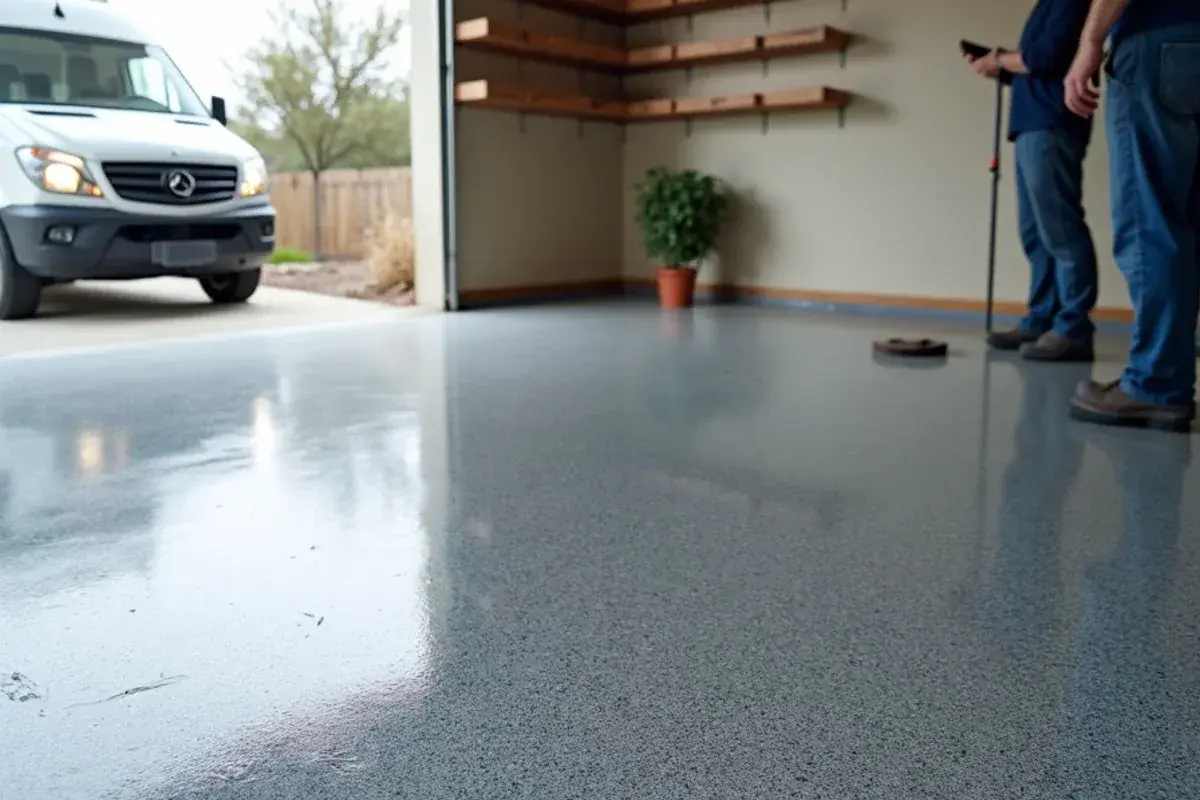
I had my garage floor done with epoxy, and I’m really happy with the results. Jimmy was professional, arrived on time, and did a thorough job preparing the surface. The epoxy finish looks sleek, durable, and resistant to stains and chips. I highly recommend this service for anyone wanting to upgrade their garage flooring! Great price for the quality of materials and services.
Jimmie did a great job painting/ epoxy my garage floor. He also pressure washed my house and driveway. Great job and great price! I highly recommend this company.
Jamie did a great job paint my home interior & porch. Also the floor coating in my grandmothers garage turned out beautiful.
Service areas
Coating repairs from Orange Park to the Beaches
From our base in Jacksonville’s 32254 ZIP, we repair coated floors across the region. Here are a few places, and the conditions there that are hard on coatings.
Questions
Epoxy repair questions, answered
Why is my garage epoxy peeling or flaking?
Usually because of prep, moisture or the product. Coatings rolled onto a slab that was only washed or acid-etched sit on a weak surface skin and peel in sheets. Moisture pushing up through the concrete causes blisters. Thin store kits often fail where hot tires park. We check which one it is before quoting, since each needs a different fix.
Can you recoat over old or DIY epoxy?
Yes, if it is still well bonded. We test adhesion across the floor, scuff the old coating so the new coat can grip, and recoat. If the old coating is peeling, soft or sitting on an unground slab, recoating only traps the problem under fresh resin. In that case, we grind it off and start again from bare concrete.
How do you fix hot-tire pickup?
The lifted areas, and any nearby coating that is losing its bond, are ground off down to concrete. The slab is reprofiled, patched and recoated with a higher-build system and a tougher topcoat. Then the floor gets full cure time before anyone parks on it, which a rushed DIY job often skips. Keeping silicone tire shine off the slab helps too.
Can chips and cracks be patched so they blend in?
Yes, on flake floors they usually blend well when the base color and flake blend can be matched. A light topcoat over the area helps even out the sheen. Solid and metallic floors are harder, because any patch breaks the continuous look. Cracks that keep moving may show again as a fine line, so we flag those before the work starts.
When does the whole coating need to come off?
When the failure is widespread or the cause sits under the coating. If tape tests show poor bond across much of the floor, if blisters point to moisture, or if the coating went onto unground concrete, patching will not hold. Grinding everything off costs more up front, but it is the only fix that deals with the cause.
Can a yellowed epoxy floor be fixed without starting over?
Yes, if the coating underneath is still bonded. Epoxy is not UV-stable, so the sunny strip inside a garage door ambers first. We scuff the surface and recoat it with a UV-stable topcoat such as polyaspartic. Another coat of plain epoxy would yellow again, and tinted door glass or blinds slow the cycle.
Related services and reading
Garage Floor Epoxy & Polyaspartic Coating
Flake epoxy and polyaspartic garage floors over diamond-ground concrete, installed in one to two days.
Learn moreEpoxy Flooring
Flake, metallic, solid and quartz resin floors on diamond-ground, moisture-tested concrete.
Learn moreCommercial Epoxy Flooring
Resin floors for warehouses, kitchens, auto bays and clinics, installed in after-hours phases.
Learn moreIs your garage coating failing?
Call (904) 533-7260. We will test the floor, tell you whether it can be patched or needs to come off, and quote it in writing.
JW Painting & Pressure Washing & Epoxy Flooring · Jacksonville, FL 32254 · (904) 533-7260
Mon–Sat 7am–8pm · Sun closed