
Epoxy & coatings · Jacksonville, FL
Epoxy Flooring Contractor in Jacksonville, FL
Concrete in Jacksonville’s humid climate keeps giving off moisture, and a resin floor laid over a damp, smooth slab is the kind that peels. JW installs flake, metallic, solid-color and quartz epoxy systems for garages, shops and living spaces, starting with a diamond grind and a moisture test.
- 5.0 on Google · 82 reviews
- Based in Jacksonville, FL 32254
- Where Precision Meets Perfection
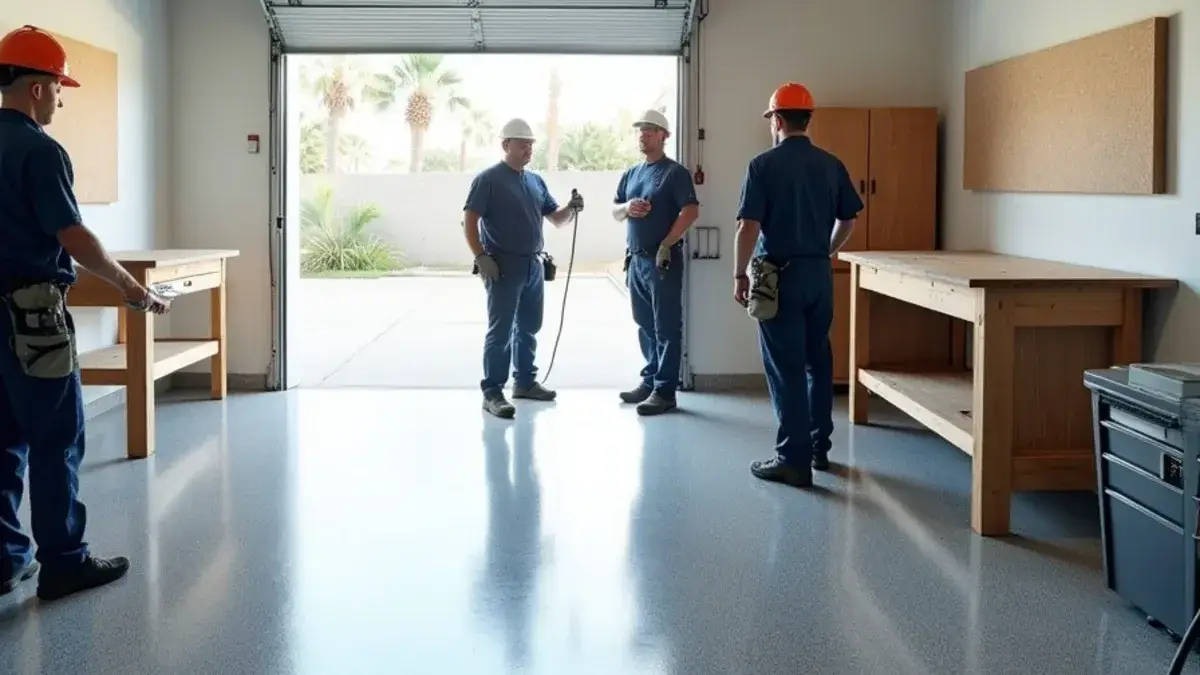
Epoxy flooring
Epoxy flooring in Jacksonville: four systems, one method
An epoxy floor is a system, not a single can of paint. A primer soaks into freshly ground concrete, a pigmented body coat builds thickness, and a clear topcoat takes the wear. What goes between those layers decides how the floor looks and how it grips.
We install four finishes. Flake floors get colored vinyl chips broadcast into the body coat until it is covered, which hides dust, tire marks and small slab flaws. Metallic floors swirl pearlescent pigment through the resin for a deep, poured look that suits living spaces and showrooms. Solid-color floors give shops and storage rooms a clean, even surface. Quartz floors carry colored sand for grip where the floor gets wet.
Garages are the most common setting, and our garage floor epoxy page walks through that job in detail. Warehouses, kitchens and auto bays are covered on the commercial epoxy flooring page.
- Diamond grinding to the surface profile the coating maker specifies
- Moisture testing of the slab before any resin is mixed
- Crack, pit and spall repair, ground flush before coating
- Primer, body coat and a broadcast of flake, quartz or metallic pigment
- A UV-stable clear topcoat wherever sunlight reaches the floor
- Cure times and care notes handed over at the walkthrough
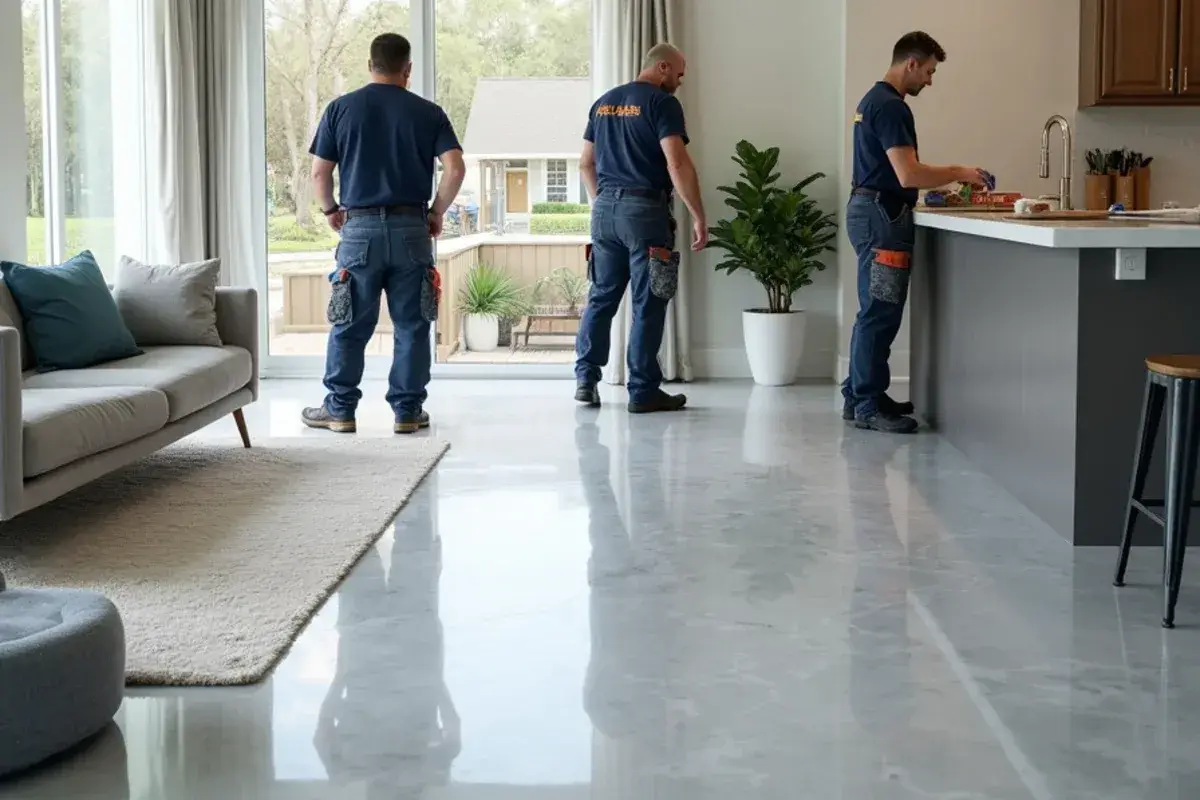
What we look for
What does Jacksonville weather do to a resin floor?
Jacksonville has a humid subtropical climate. Rain averages around 52 inches a year, most of it between May and September, and the average July high sits near 92°F. A slab that lives in that air holds more water than its dry-looking surface suggests.
Moisture moving up through concrete pushes against anything sealed on top. Coating maker Tnemec links blistering to that vapor, which carries alkaline salts up to the bond line. That is why the slab gets tested before we choose a primer, not after a bubble shows up.
Sun and damp air matter as well. Standard epoxies amber under UV, so a floor that catches afternoon light through an open door needs a UV-stable topcoat. Humidity also limits install days: Sika’s data sheets ask for a slab at least 5°F above the dew point, because condensation can cost the coating its bond.
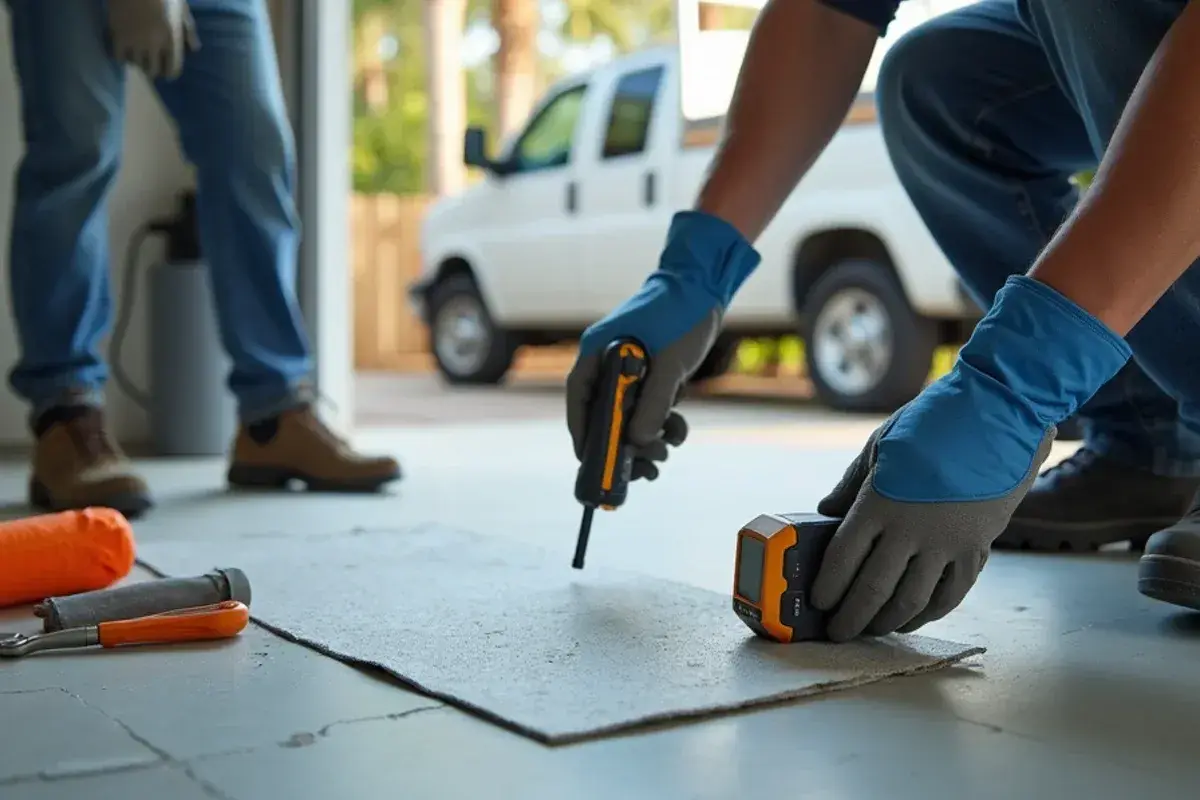
Our process
From bare concrete to clear topcoat: our install order
Most of the work happens before any color goes down. These are the steps behind every resin floor we put in, whichever finish you choose.
1Measure and pick the system
We measure the space, see how it is used and lay out finish samples. A two-car garage, a home gym and a boat shop each point toward a different build.
2Test the concrete
Slab moisture is checked with the method the resin maker names, such as in-situ RH probes under ASTM F2170 or the ASTM F1869 calcium chloride test. A high reading changes the primer.
3Put the quote in writing
Your written quote names each layer, the finish, the prep and how many days the floor stays closed. You can hold it next to any other bid and compare line by line.
4Grind and repair
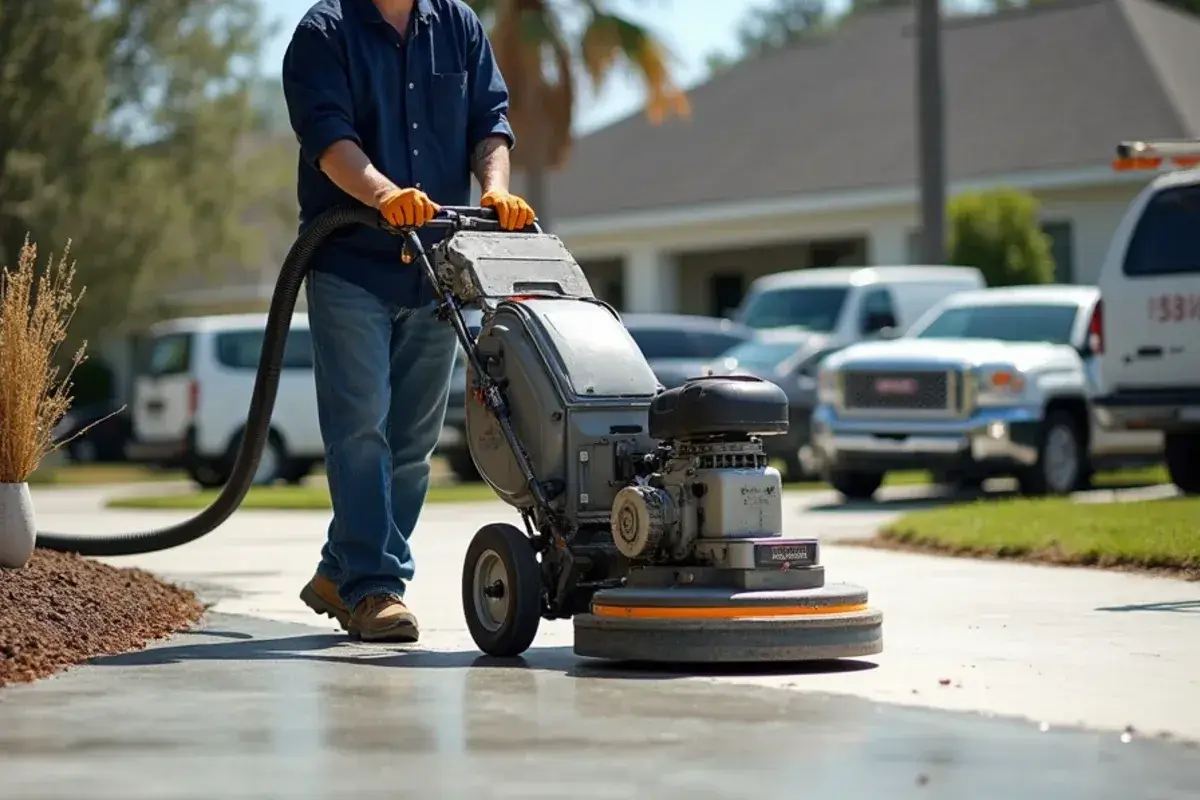
A diamond grinder with a dust-collecting vacuum removes the weak top skin and opens the pores to the profile on the data sheet, graded on ICRI’s CSP scale. Cracks and pits are filled and ground flush.
5Build the layers
Primer, body coat and the chosen broadcast or pigment go down while slab temperature and dew point stay inside the product’s limits. Flake and quartz floors are scraped and vacuumed before the clear coat.
6Topcoat and walkthrough
A clear topcoat seals the system, with fine grit added wherever you want more traction. We walk the floor with you and leave the product names and cure times in writing.
Price and paperwork
What sets the price of an epoxy floor, and is a permit needed?
Cost factors by system and slab
Area is the starting point, but the system you pick moves the number more. A solid color under a clear coat takes less material and labor than a full flake broadcast, and a metallic floor needs the most hand work of the four.
The slab is the other half of the price. Old paint, sealer or adhesive has to be ground off first. Wide cracks, spalled edges and pitted concrete each add repair time. A moisture reading over the standard primer’s limit calls for a moisture-tolerant primer, which costs more.
Details add up too: stem walls, steps, floor drains, edges that run up the wall, and shelving or machines that have to be moved out. Each one is priced on your written quote, so you can see where the money goes before work begins.
Permits, licensing and grinding dust
A resin coating counts as finish work. Florida jurisdictions that adopt the residential code’s R105.2 exemptions generally waive building permits for painting and similar finish work, as the building official decides, so check with your city or county building department first.
Florida law since 2021 keeps local governments from requiring a license for painting and flooring scopes. Structural slab repair is different and falls to state-certified contractors under Chapter 489. On site, OSHA’s construction silica standard, 29 CFR 1926.1153, pairs floor grinders with a matched dust collector and HEPA vacuuming between passes indoors.
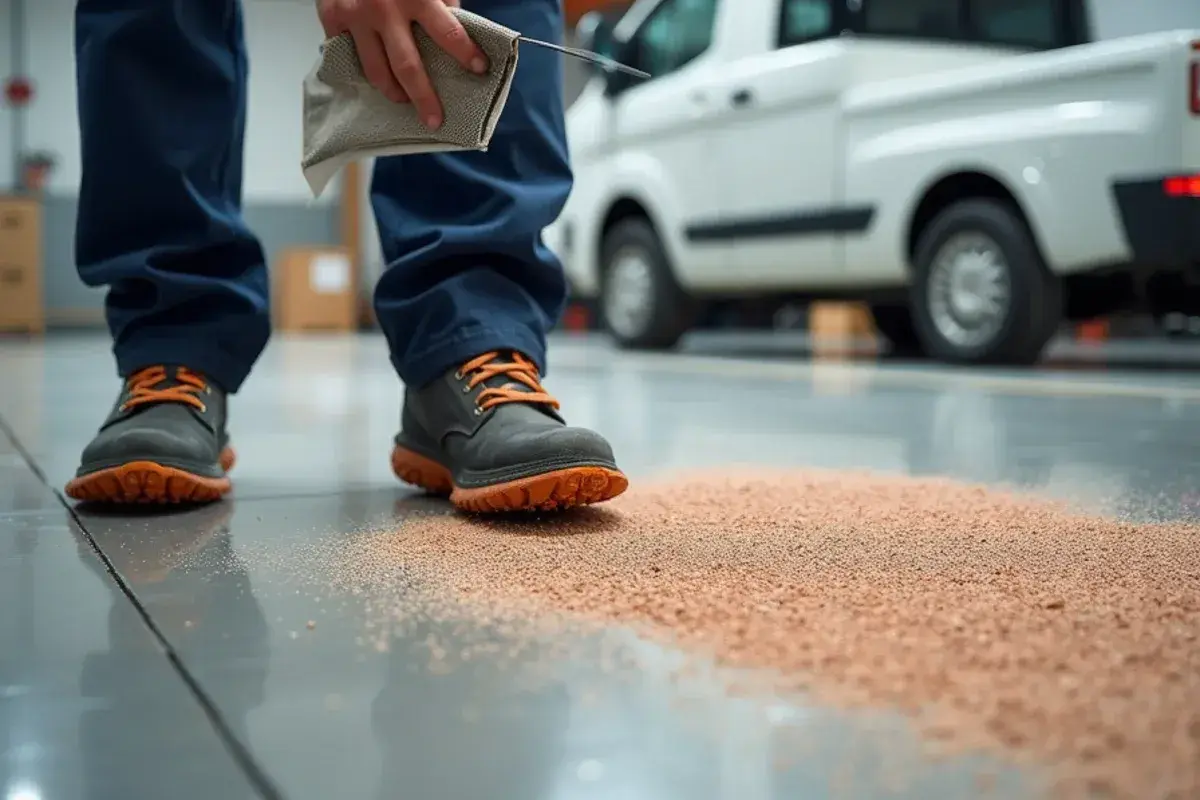
Why JW
Why owners pick JW for a resin floor
JW holds a 5.0 rating from 82 Google reviews. Reviewers keep naming the same things: the crew shows up on time, leaves the site clean, charges a fair price and keeps them in the loop. Several reviews describe epoxy garage floors, and one singles out the surface prep before the coating went on.
One crew handles coatings and floor installs, so a resin garage and new plank inside the house can be a single project. JW paints and pressure-washes in-house as well. Walls get painted before the floor goes down and outside concrete gets washed, with no second contractor to schedule. Owner Jimmie Wilson leads the coating work himself and brings more than 30 years of hands-on painting and finishing experience to the prep that decides whether resin lasts.
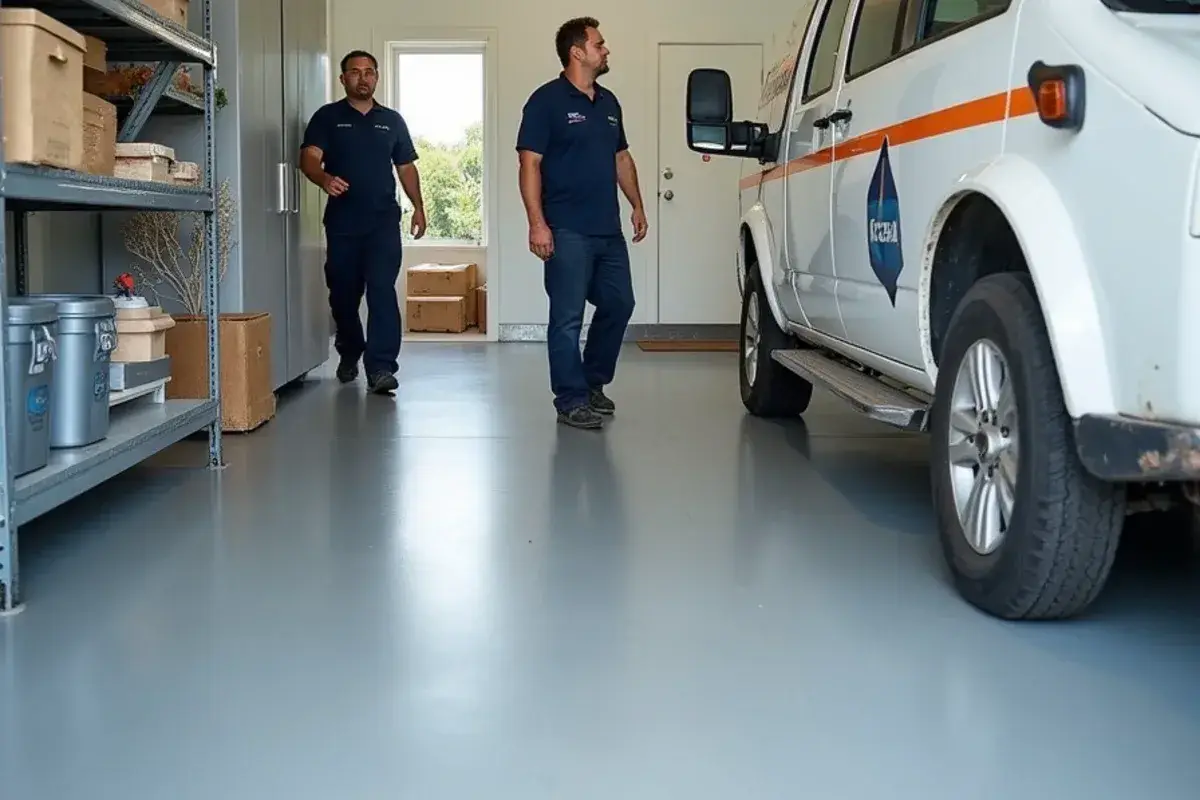
Customers on their coated floors
I had my garage floor done with epoxy, and I’m really happy with the results. Jimmy was professional, arrived on time, and did a thorough job preparing the surface. The epoxy finish looks sleek, durable, and resistant to stains and chips. I highly recommend this service for anyone wanting to upgrade their garage flooring! Great price for the quality of materials and services.
Jimmie did a great job painting/ epoxy my garage floor. He also pressure washed my house and driveway. Great job and great price! I highly recommend this company.
Jamie did a great job paint my home interior & porch. Also the floor coating in my grandmothers garage turned out beautiful.
Service areas
Epoxy floor jobs from the Beaches to Baker County
We work out of the 32254 ZIP on Jacksonville’s west side. Here are some of the places we coat floors, and what tends to shape the job there.
Questions
Questions about epoxy finishes, moisture and cure time
How long does an epoxy floor last in Florida heat and humidity?
It depends on prep, traffic and sun more than on the label. Angi puts a well-installed epoxy floor at roughly 10 to 20 years, depending on the material and how hard it is used. Here, the two things that cut that short are slab moisture and UV through an open door, which is why we test the slab and add a UV-stable topcoat where sun reaches.
Can epoxy go over a slab with moisture problems?
Yes, in many cases, with the right primer. Moisture-tolerant epoxy primers are rated for specific readings, and Tnemec rates one for in-situ humidity up to 95% under ASTM F2170. We test first and match the primer to the number. A slab that is wet from a leak, poor drainage or a flood needs that fixed before any coating goes down.
Which finishes do you offer (flake, metallic, solid, quartz)?
All four. Flake is the usual garage pick because it hides dust and small flaws. Metallic suits living spaces and showrooms, but scratches show more and patches are hard to hide, so it is a poor match for a car garage. Solid color works for shops and storage. Quartz adds grip for wash-down areas and wet entries. We bring samples to the measure.
How soon can I walk and drive on a new epoxy floor?
It depends on the product and the weather. Concrete Network’s coating guide says standard epoxy takes foot traffic after about 24 hours and vehicles after about a week. Polyaspartic topcoats reopen faster, often to traffic in about a day. Cool or muggy days slow curing, so at the walkthrough we give you the times from your product’s data sheet.
Is epoxy slippery when it gets wet?
Yes, a smooth gloss coat can be slick under water or oil. The fix is texture: fine aggregate added to the topcoat, or a quartz system for floors that see regular water. Flake gives a little texture but should not be relied on alone. Tell us at the measure where people walk with wet feet or spill fluids, and we will plan the grip around it.
Is epoxy a good choice for a living room or other indoor space?
Yes, in the right room, with honest trade-offs. A metallic or solid epoxy floor is jointless and easy to mop, but it is hard underfoot, and chips are difficult to patch invisibly. Indoors, felt pads under furniture, rugs at the doors and pH-neutral cleaners keep the finish looking new. Sharp spiked heels can dent softer finishes, so we match the topcoat to how the room gets used.
Related services and reading
Garage Floor Epoxy & Polyaspartic Coating
Flake epoxy and polyaspartic garage floors over diamond-ground concrete, installed in one to two days.
Learn moreCommercial Epoxy Flooring
Resin floors for warehouses, kitchens, auto bays and clinics, installed in after-hours phases.
Learn moreEpoxy Floor Repair & Recoating
Peeling, chipped or tire-lifted coatings diagnosed, ground off where needed and recoated.
Learn moreReady to coat a garage, shop or room?
Call (904) 533-7260. We will measure, test the slab and give you a written quote for the system that fits.
JW Painting & Pressure Washing & Epoxy Flooring · Jacksonville, FL 32254 · (904) 533-7260
Mon–Sat 7am–8pm · Sun closed