
Epoxy & coatings · Jacksonville, FL
Garage Floor Epoxy Coating in Jacksonville, FL
A Jacksonville garage floor takes hot tires, oil drips and afternoon sun through the open door. JW coats garage slabs with flake epoxy and polyaspartic systems over a diamond-ground surface, and most installs take one to two days. Call (904) 533-7260 to book a measure.
- 5.0 on Google · 82 reviews
- Based in Jacksonville, FL 32254
- Where Precision Meets Perfection
Garage floor epoxy
Garage floor epoxy in Jacksonville: what the job covers
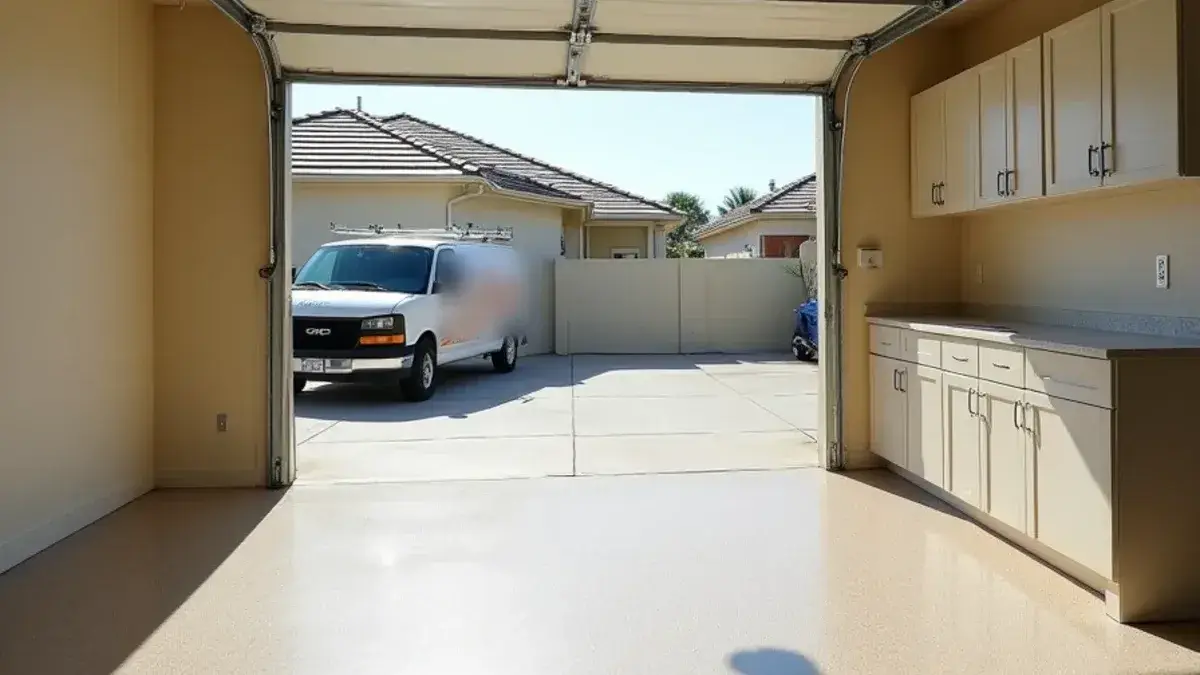
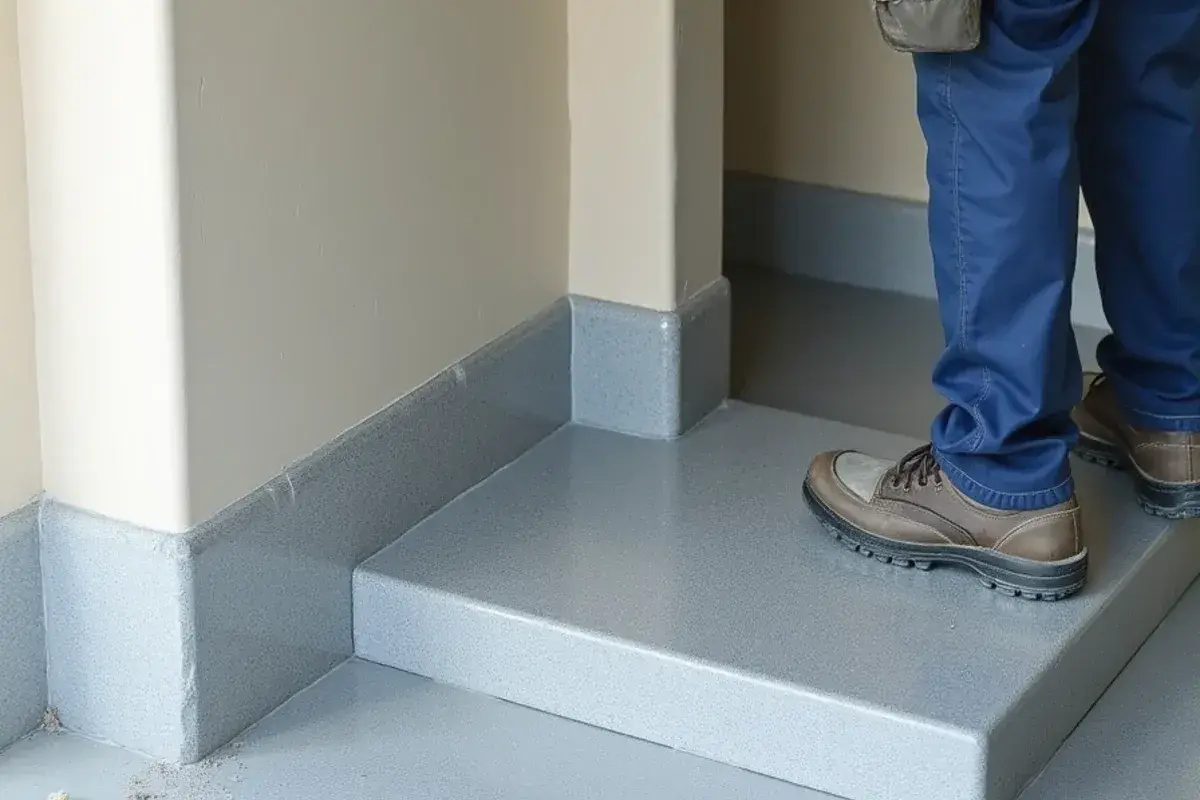
A garage coating covers more than the open floor. The job takes in the parking pads, the strip under the door, the step into the house and, if you want them, the short stem walls along the edges. Each of those gets ground and coated, not painted around.
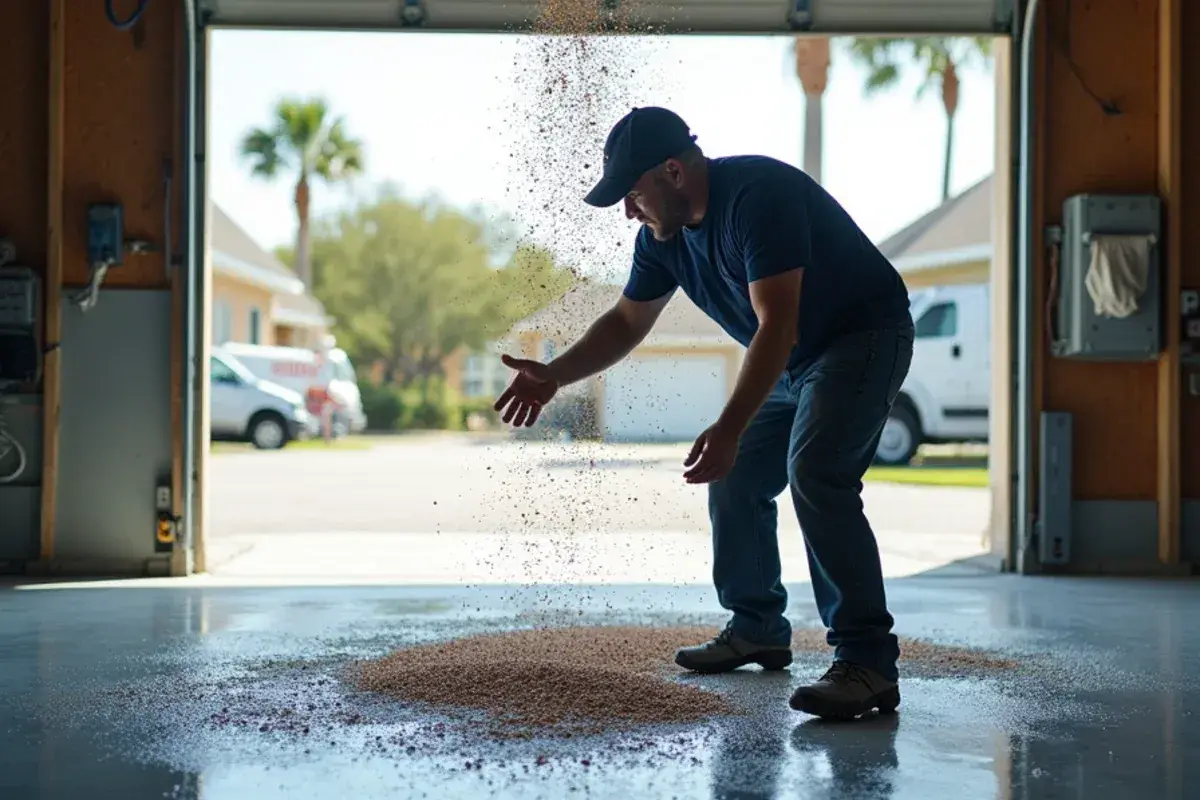
Most garages get a flake system: a tinted base coat, a full broadcast of vinyl chips and a clear topcoat. The real decision is the chemistry. Epoxy is the traditional base, with a long working time and good build over rough concrete. Polyaspartic cures much faster and holds its color in sunlight, though it costs more. Many floors pair an epoxy base with a polyaspartic top.
If an older coating is already lifting, start with epoxy floor repair. To compare metallic, solid and quartz finishes as well, see epoxy flooring.
- Degreasing oil spots before the grinder touches them
- Diamond grinding wall to wall, with edge work in the corners
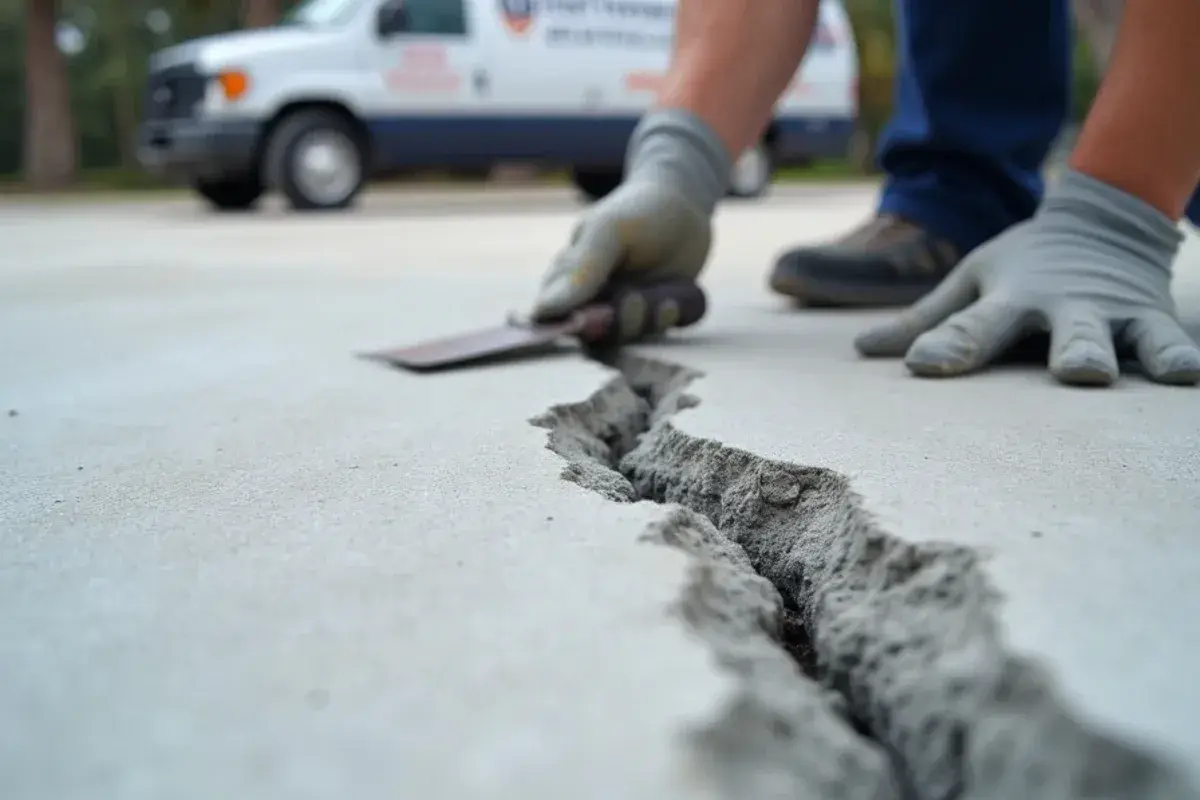
- Cracks and spalls chased, filled and ground flush
- Base coat, full flake broadcast and a clear topcoat
- Stem walls and the house step, if you want them done
- Walking and parking times written down for you
What we look for
Is your garage slab ready for a coating?
Garage slabs take abuse a living room never sees. Tires come home hot off I-95 or I-295, park on the coating and cool, and the tread grabs the surface as it contracts. Thin or under-cured films let go first. That is hot-tire pickup, and it ruins plenty of store-bought kits.
Oil is the next problem. Drips soak deeper than the stain you can see, and resin will not bond to oily concrete. Sun is the third: standard epoxy ambers under UV, so a door left open on summer afternoons calls for a UV-stable topcoat.
Walk your garage and note these before you call:
- Dark oil or transmission stains where the cars park
- Cracks wider than a hairline, or chipped joint edges
- White powdery residue or damp patches after rainy weeks
- Old paint or sealer that a fingernail can scratch
Our process
Day one and day two of a garage coating
Most garage installs take one to two days, then the coating needs cure time before you park. Here is how those days go.
1Measure, test and quote
Before install day, we measure the garage, look over cracks and stains and test the slab with in-situ RH probes or the method the coating maker names. A written quote follows.
2Empty and degrease
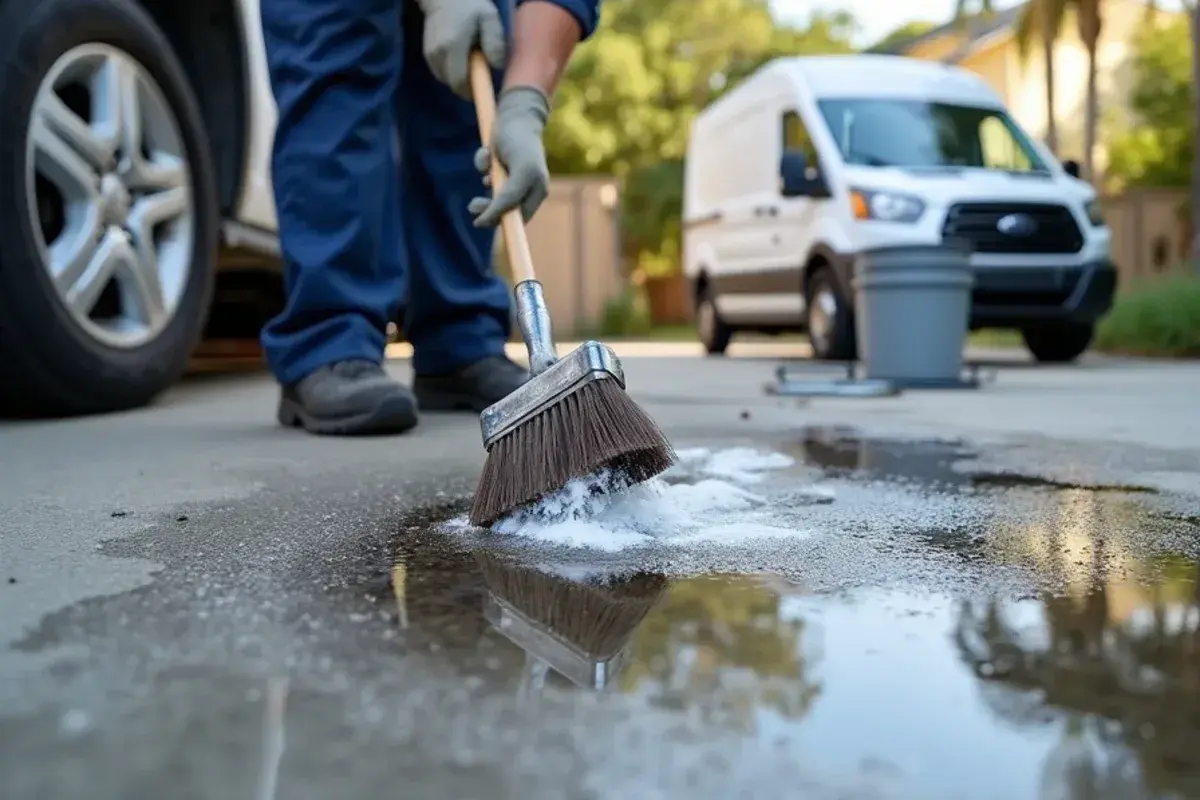
The garage should be cleared when the crew arrives. Oil spots are degreased first, so the grinder does not push oil deeper into the pores.
3Diamond-grind the slab
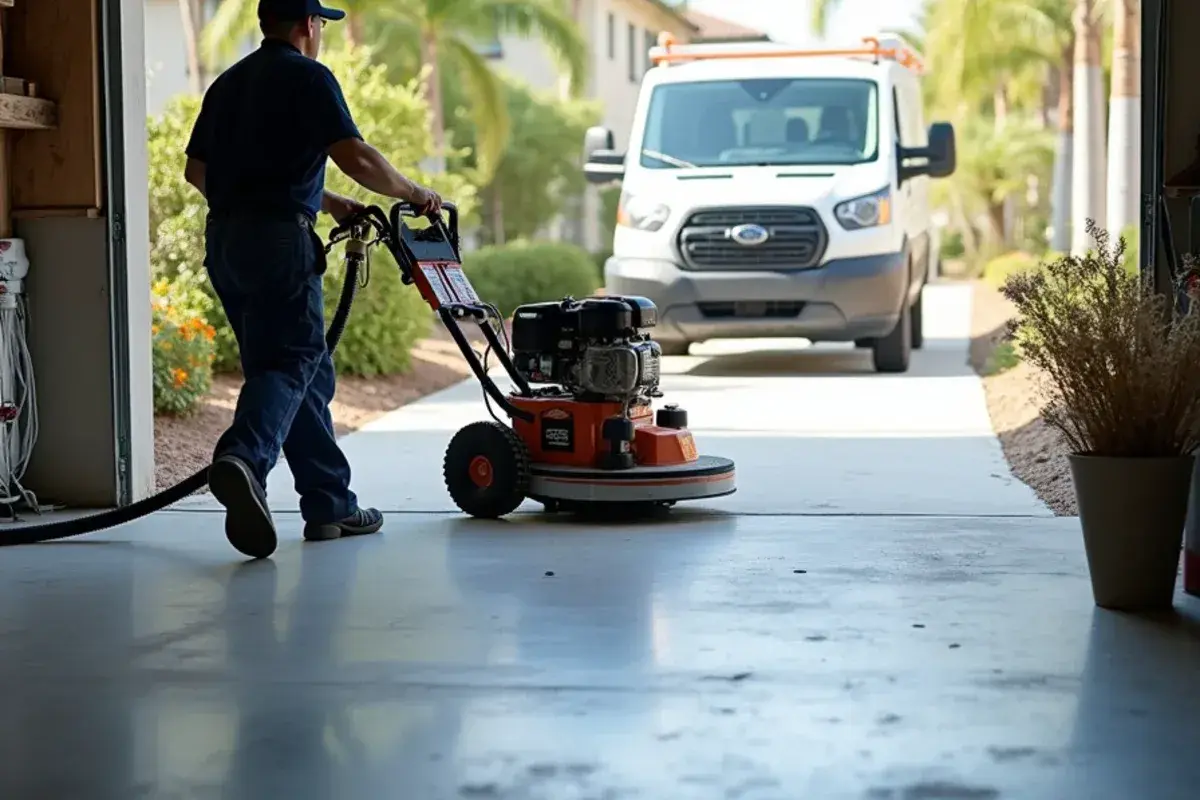
A walk-behind diamond grinder tied to a dust collector opens the concrete to the profile on the coating’s data sheet. A hand grinder reaches the edges and corners, and everything is vacuumed.
4Repair cracks and joints
Cracks are chased to clean edges, filled with a material suited to how much they move and ground flush. Control joints are treated so the slab can still move without splitting the coating.
5Base coat and flake
The base coat goes down while the slab stays above the dew point by the margin the product requires. Flake is broadcast by hand until the wet resin disappears under it.
6Scrape, topcoat and walk through
Loose flake is scraped off and vacuumed, then the clear topcoat locks the rest in. We walk the floor with you and leave the walking and parking times on paper.
Price and paperwork
Garage coating cost factors and Florida rules
Why two garages of the same size get different quotes
Square footage sets the base. A three-car garage uses more material than a two-car, but the condition of the slab often matters more than its size.
Prep is the biggest variable. Heavy oil staining takes extra degreasing. Old paint or a failed DIY kit has to be ground off completely before anything new goes down. Wide cracks, chipped joints and a pitted apron by the door each add repair time, and a high moisture reading calls for a moisture-tolerant primer.
Then comes the system. An epoxy base under a polyaspartic topcoat costs more than epoxy alone, and a full flake broadcast uses more material than a light one. Stem walls, the house step and moving a fridge or shelving each add a line. Our garage epoxy cost guide explains how to compare bids side by side.
Permits, contractor rules and flood zones
A garage coating is finish work. Florida jurisdictions that adopt the residential code’s permit exemptions for painting and similar finish work generally require no building permit for it, though your building official makes the final call, so it is worth a quick check before booking.
Florida’s 2021 and 2023 contractor-law changes bar local governments from requiring a license for painting and flooring scopes. A heaved or broken slab that needs structural repair falls under Chapter 489 state-certified categories. For garages in a flood zone, FEMA’s Technical Bulletin 2 counts concrete among flood damage-resistant floor materials, unlike standard wood flooring.
Why JW
Why JW gets the call for garage floors
Several JW reviews are about garage floors. Customers describe coatings that came out clean and even, and one points to the time spent preparing the surface before any resin went on. Across 82 Google reviews, the rating is 5.0.
The same reasons come up again and again: on time, tidy, fair price and easy to reach. Because JW also pressure-washes, the driveway and apron outside the door can be cleaned on the same project, as one reviewer had done alongside a garage floor. Painting is in-house as well, so scuffed garage walls and door trim can be finished before the floor goes down. Owner Jimmie Wilson works the garage jobs himself, with more than 30 years of hands-on painting and finishing experience behind the grinding and coating.
Garage floor reviews from JW customers
I had my garage floor done with epoxy, and I’m really happy with the results. Jimmy was professional, arrived on time, and did a thorough job preparing the surface. The epoxy finish looks sleek, durable, and resistant to stains and chips. I highly recommend this service for anyone wanting to upgrade their garage flooring! Great price for the quality of materials and services.
Jimmie did a great job painting/ epoxy my garage floor. He also pressure washed my house and driveway. Great job and great price! I highly recommend this company.
Jamie did a great job paint my home interior & porch. Also the floor coating in my grandmothers garage turned out beautiful.
Service areas
Garage coatings from Oakleaf to Yulee
We cover Duval County and the suburbs around it from Jacksonville’s west side. Here is what tends to shape garage work in a few of the places we serve.
Questions
Garage coating questions we hear at the measure
Epoxy or polyaspartic: which is better for a Jacksonville garage?
For most garages here, a hybrid works best: an epoxy base for build and bond, topped with polyaspartic for UV stability and faster reopening. Straight polyaspartic suits a garage that has to be back in use quickly. Concrete Network notes it should not go over slabs with high moisture vapor emission, so the slab test helps make the call.
Will hot tires lift the coating?
No, not on a properly built floor. Hot-tire pickup happens when heated tires soften thin or under-cured coatings and pull them up as they cool. A diamond-ground slab, a higher-build system and full cure before parking prevent it. Silicone tire shine dripping onto the floor can also weaken the bond where you park, so keep it off the slab.
Do you diamond-grind or acid-etch the slab?
No acid etching on our jobs. We diamond-grind every garage slab. Sherwin-Williams notes that acid etching usually reaches only a CSP-1 to CSP-2 profile on ICRI’s scale, too shallow for thicker floor systems, and it soaks the concrete with water. Grinding removes the weak top layer and leaves a profile the coating can grip.
Can you coat a garage with cracks and oil stains?
Yes. Oil spots are degreased before grinding, and the grinder then takes off the stained top layer. Deep, old stains may need a second cleaning or an oil-tolerant primer. Cracks are chased, filled and ground flush, though a crack that keeps moving can still show as a fine line later. We point those out at the measure.
How many days is the garage out of use?
Plan on one to two days of install, then cure time before you park. Concrete Network’s guide says standard epoxy needs about a week before vehicles, while polyaspartic systems can often take traffic in about a day. Humidity and temperature move those times, so we give you the exact numbers for your product at the walkthrough.
How do I clean a coated garage floor, and can a sealed slab be coated?
Sweep or dust-mop grit, then damp-mop with a pH-neutral cleaner and warm water. Skip vinegar, bleach, citrus sprays and abrasive pads, and wipe oil or water up quickly, since a wet coating gets slick. A slab that was sealed before needs that sealer ground off first, because resin barely sticks to an old sealer; we check for one at the measure.
Related services and reading
Epoxy Floor Repair & Recoating
Peeling, chipped or tire-lifted coatings diagnosed, ground off where needed and recoated.
Learn moreEpoxy Flooring
Flake, metallic, solid and quartz resin floors on diamond-ground, moisture-tested concrete.
Learn moreFloor Sealing & Clear Coat Protection
Clear coats and sealers that protect concrete, VCT, epoxy and pavers with less upkeep.
Learn moreReady to coat your garage floor?
Call (904) 533-7260. We will measure, test the slab and put the system, prep and timeline in writing.
JW Painting & Pressure Washing & Epoxy Flooring · Jacksonville, FL 32254 · (904) 533-7260
Mon–Sat 7am–8pm · Sun closed