Commercial
Epoxy Floors for Jacksonville Restaurants and Warehouses: What Inspectors Look For

By Jimmie Wilson, owner of JW Painting & Pressure Washing & Epoxy Flooring
More than 30 years of hands-on painting and finishing experience
Published · Updated
- 5.0 on Google · 82 reviews
- Based in Jacksonville, FL 32254
- Where Precision Meets Perfection
Short answer
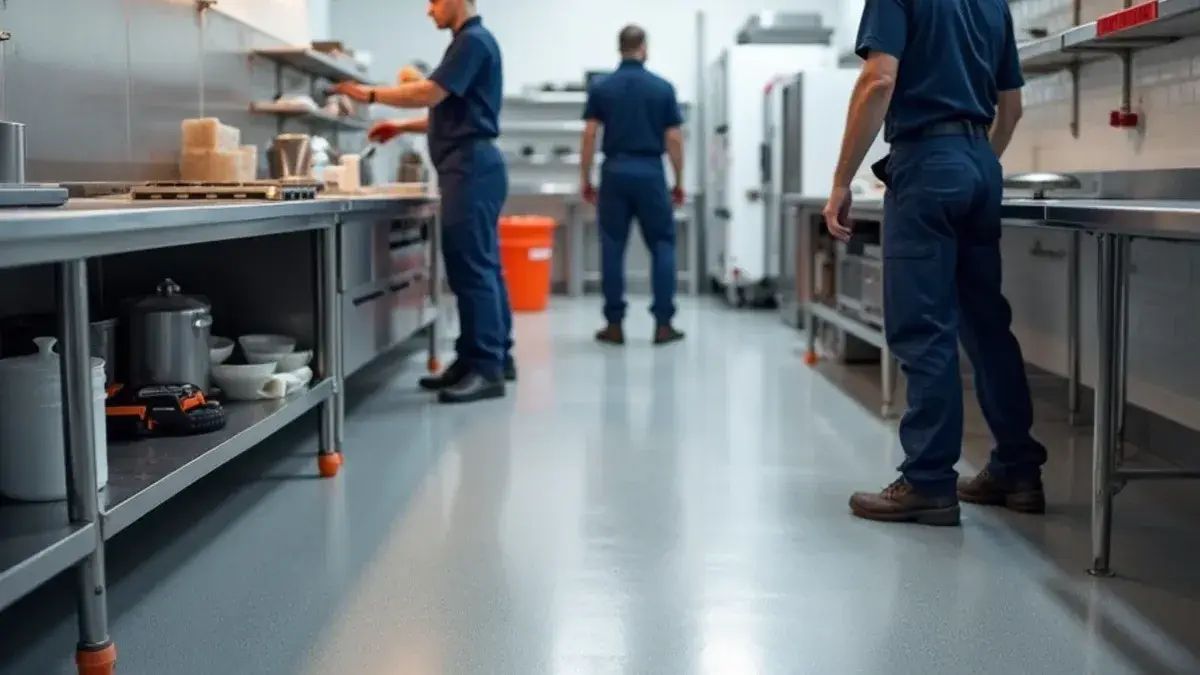
Florida restaurant inspectors look for floors that are smooth, durable, easily cleanable and nonabsorbent where they get wet, with coved floor-wall joints. Those rules come from the FDA Food Code. Warehouses answer to OSHA, which wants walking surfaces kept clean, dry where practical and free of hazards. A well-built resin floor can meet both.
A floor rarely fails an inspection on its own. It gets written up because it holds water, traps grease at the wall, or cannot be cleaned back to bare surface. Here is what the rules behind those notes actually say, for restaurants and for warehouses, and how a resin floor is built to meet them.
What do Florida inspectors check on a restaurant floor?
In Florida, the DBPR Division of Hotels and Restaurants licenses and inspects public food service establishments. Its sanitation rule, 61C-4.010, F.A.C., makes physical facilities subject to Chapter 6 of the FDA Food Code. That chapter is where the floor language lives.
The core requirement is §6-101.11. Floors where food operations take place must be smooth, durable and easily cleanable. Areas subject to moisture must also be nonabsorbent. The Food Code names them: food preparation areas, walk-in refrigerators, warewashing areas, toilet rooms and anywhere cleaned by flushing or spraying.
Section §6-201.11 repeats that floors must be smooth and easily cleanable, with one exception that matters for kitchens. Antislip floor coverings or applications may be used for safety reasons. Section §6-201.14 keeps carpet out of prep areas, walk-ins, warewashing and other wet spaces.
In practice, an inspector is looking for cracked or missing tile, open grout lines, worn coatings that expose bare concrete, and pooling water. Any of those makes a floor harder to clean and easier to write up.
Coving and the floor-wall joint
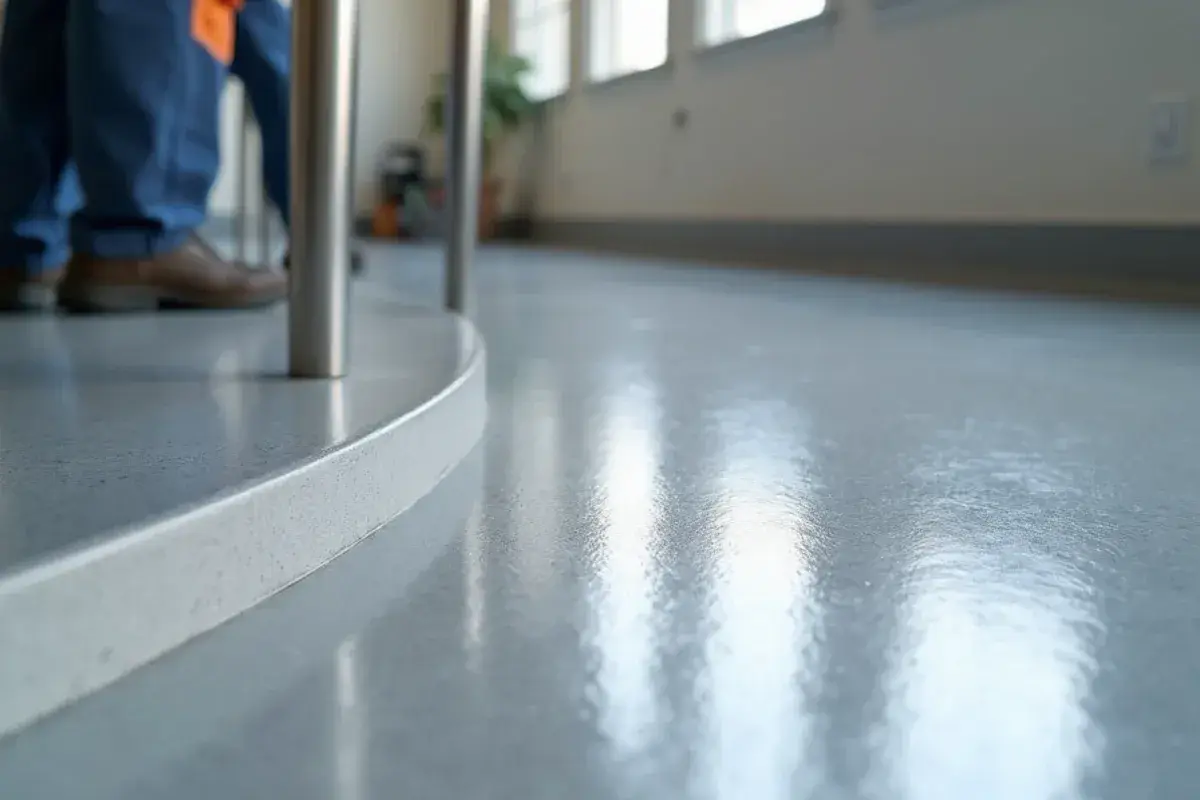
The corner where floor meets wall is where kitchens collect grease, water and debris. FDA Food Code §6-201.13 deals with it directly:
| Cleaning method | What §6-201.13 requires |
|---|---|
| Mopping or scrubbing, no water flushing | Floor-wall junctures coved and closed to no larger than 1 mm (1/32 inch) |
| Water flushing or hosing down | Drains provided, floor graded to drain, and junctures coved and sealed |
The FDA's annex explains why. Grading the floor to drain carries liquid waste away quickly. That prevents pooling that could attract insects and rodents or add to problems with pathogens such as Listeria monocytogenes.
Resin floors handle this well because the cove can be part of the floor itself. Sika's data sheet for its Sikafloor-261 epoxy lists an integral cove base among its finish options. The result is one continuous surface from the floor up the wall, with no seam to open later.
Slip resistance without failing cleanability
Here is the tension. A smooth floor is easiest to clean, but a smooth floor can be slick when wet. Sika's data sheet for its Sikafloor-261 lists a wet DCOF of about 0.32 for the smooth high-gloss finish. ANSI A137.1, written for ceramic tile, sets a wet DCOF of at least 0.42 for level interior spaces expected to be walked on when wet. It is a useful benchmark even for resin floors.
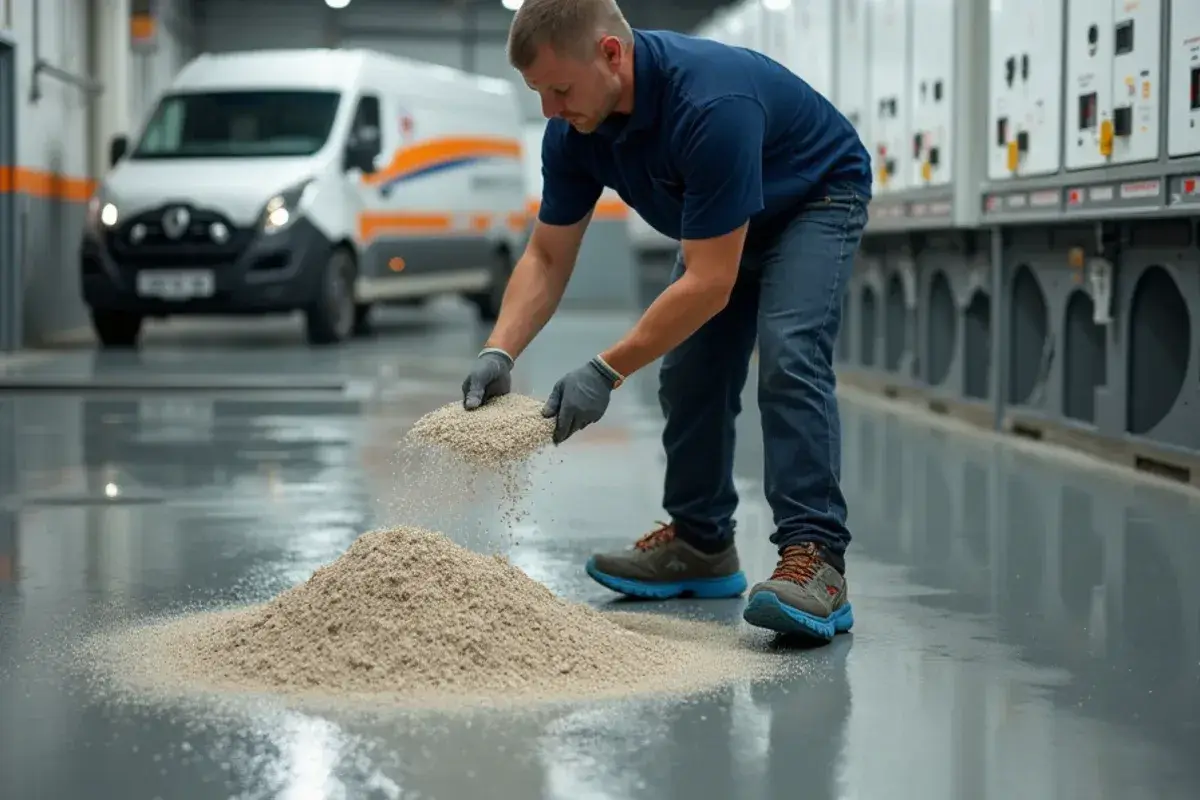
The fix is texture. Broadcasting aggregate into the wet coating raises grip, and the Food Code's antislip exception allows it. The trade-off is cleaning effort. Heavier texture grips better but holds more soil, so the usual approach is more texture at the fryer line and dish area and less in dry storage.
OSHA's rules point the same way. Under 29 CFR 1910.22, workroom floors must be kept clean and, to the extent feasible, dry. Where wet processes are used, drainage must be maintained, and walking-working surfaces must be kept free of hazards such as leaks and spills.
Chemical resistance, heat and hot water
Kitchen floors take grease, sanitizers, degreasers and hot water every day. Before choosing a system, ask the installer for the product's chemical resistance chart and compare it with the cleaners your staff actually use. Many data sheets, including Sika's, say to consult the maker for specific chemicals.
Hot washdown is the hardest test. Urethane cement floors are built for it. Sika's data sheet for its Sikafloor-19 NA PurCem FS lists commercial kitchens among its typical uses. It describes the product as designed to resist thermal shock and steam cleanable at 6 to 9 mm thick. A thin epoxy coating is a different product for different conditions, so the right choice depends on what hits the floor.
What about warehouses?
Warehouses answer mainly to OSHA. Under 29 CFR 1910.22, employers must inspect walking-working surfaces regularly and maintain them in a safe condition. Hazards must be fixed or guarded before employees use the surface again. Under 1910.176, aisles must be kept clear and in good repair, and permanent aisles and passageways must be appropriately marked.
Food warehouses add a second regulator. In Florida, the Department of Agriculture and Consumer Services issues food permits. Its rule 5K-4.020 defines a food storage warehouse as a cold storage warehouse, dry storage warehouse or commercial food distribution center. A permit requires a preoperational inspection of the establishment.

What we see in the field on commercial floors
A commercial floor that needs work usually shows one of a few problems. Coatings wear through, quarry tile breaks, or bare concrete soaks up spills. Whether the space is a restaurant downtown or a warehouse elsewhere in Duval County, the work starts the same way. We test the slab for moisture, diamond-grind it to open the surface, and repair cracks and joints before any coating goes down.
Industrial sites bring heavier traffic. In Green Cove Springs, Reynolds Industrial Park sits on the former naval air station along the St. Johns River. Its warehouses and marine businesses need floors that take forklifts, pallet jacks and spills, plus aisle striping that stays visible.
The honest trade-offs:
- Downtime versus durability. After-hours and phased installs keep a business open, but each zone still needs its cure time.
- Texture versus cleaning. More grip means more scrubbing. Match texture to each area rather than the whole floor.
- Coating versus sealer. A clear sealer protects sound concrete in dry storage for less. Our floor sealing and clear coat page explains where that is enough.
Before you call, gather a few details:
Checklist
- Which areas are wet, and how the floors are cleaned now
- The cleaners and sanitizers your staff use
- Hours when the space can be closed, and whether phasing works
- Any recent inspection notes about floors, walls or drains
- Whether drains or equipment will move, which may trigger plan review
Our commercial epoxy flooring page covers systems for restaurants, warehouses and shops in more detail.
Frequently asked questions
Does a restaurant floor in Florida need to be coved?
Yes, in most food areas. FDA Food Code §6-201.13 applies to Florida public food service establishments through DBPR rules. It calls for coved floor-wall junctures closed to no more than 1 mm where floors are not water-flushed. Where crews hose floors down, the floor needs drains, a slope to them and sealed coves. An integral resin cove base is one way to meet it.
Is a glossy epoxy floor too slippery for a kitchen?
Yes, it can be when wet. Sika lists its smooth high-gloss Sikafloor-261 at a wet DCOF of about 0.32. ANSI A137.1 sets 0.42 for level interior tile walked on wet. Broadcasting aggregate into the coating raises traction. The Food Code allows antislip floor coverings for safety, so a textured kitchen floor is acceptable as long as it stays cleanable.
Do I need DBPR approval before replacing a kitchen floor?
No, not always, but ask the division first. Florida's plan-review rule asks for updated plans before a public food service establishment is renovated or remodeled. It waives that when the division can determine the work will not affect sanitation and safety requirements. Adding, removing or moving equipment counts as a remodel, so a job that relocates drains or equipment is more likely to need review.
Can a commercial floor be coated without closing the business?
Yes, often, by working after hours and in phases. A kitchen or warehouse can be split into zones so part of it keeps running while another is ground, coated and cured. Cure times set the pace, and they vary by product and temperature, so the schedule follows the data sheet. Fast-curing topcoats can shorten the time a zone stays closed.
The bottom line
Inspectors are not asking for a particular brand of floor. They want surfaces that are smooth, durable, nonabsorbent where wet, coved at the walls and safe to walk on. A properly prepared resin floor, with the right texture, chemistry and cove for each area, can meet all of that.
If your floor is holding water, failing to come clean or coming up at the next inspection, call (904) 533-7260. We will look at the space, plan around your hours and put the scope in writing.
Related
Services and areas from this article
Talk to a Jacksonville floor crew
Questions about your own floor after reading this? Call (904) 533-7260 and describe what you're seeing.
JW Painting & Pressure Washing & Epoxy Flooring · Jacksonville, FL 32254 · (904) 533-7260
Mon–Sat 7am–8pm · Sun closed