Core service
Engineered Hardwood vs Laminate in Humid Jacksonville Homes

By Jimmie Wilson, owner of JW Painting & Pressure Washing & Epoxy Flooring
More than 30 years of hands-on painting and finishing experience
Published · Updated
- 5.0 on Google · 82 reviews
- Based in Jacksonville, FL 32254
- Where Precision Meets Perfection
Short answer
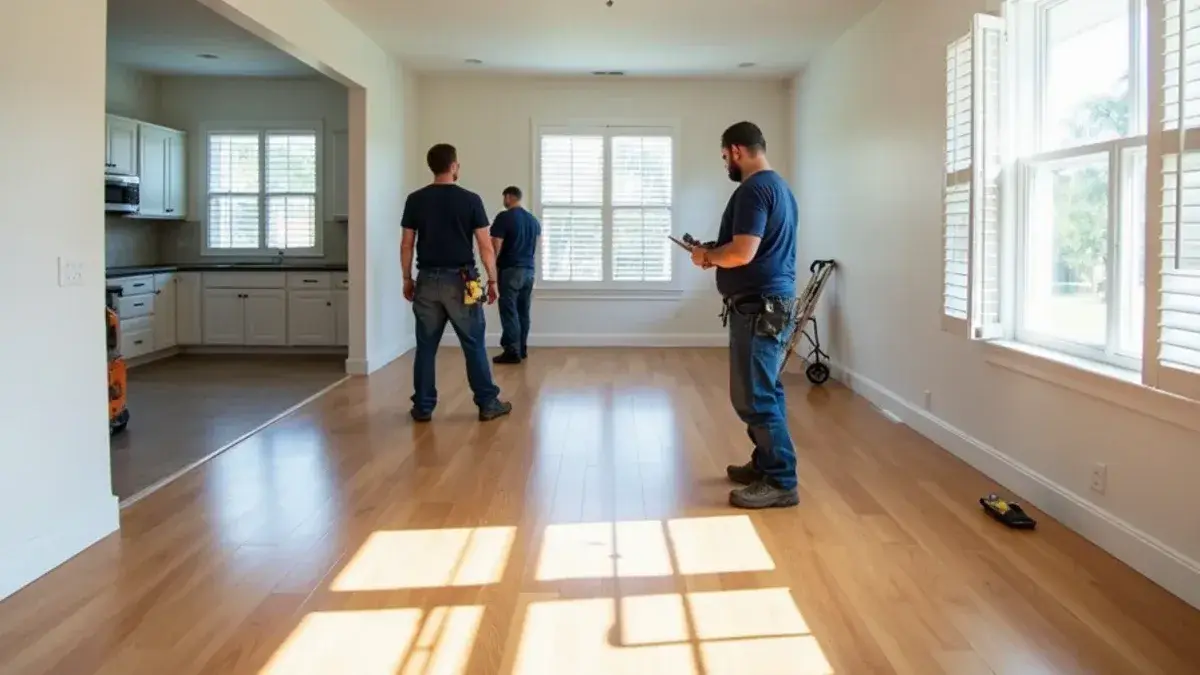
If you want real wood in a humid Jacksonville home, engineered hardwood is the steadier choice, because its cross-layered core moves less than solid boards. Laminate costs less and resists scratches, but its fiberboard core can swell if water sits on it. Both need a tested slab, proper acclimation and an expansion gap.
Walk into a Jacksonville house on a July morning and the air feels heavy even indoors. Your floor feels it too. If you are deciding between engineered hardwood and laminate, the real question is how each one behaves when the humidity swings, the slab breathes and someone spills a glass of water.
How does humidity move a wood or laminate floor?
Jacksonville averages about 76% relative humidity across the year, according to long-term World Data Center for Meteorology figures. Mornings average about 89%, and afternoons fall to about 58%. That daily swing is what a floor has to live with, on top of whatever the slab underneath is doing.
Wood takes on and gives off moisture with the air around it. When the bottoms of the boards hold more moisture than the tops, the edges rise and the board cups. A damp slab underneath or a leak is the usual cause. Laminate is not solid wood, but its core is made from wood fibers, so it moves too.
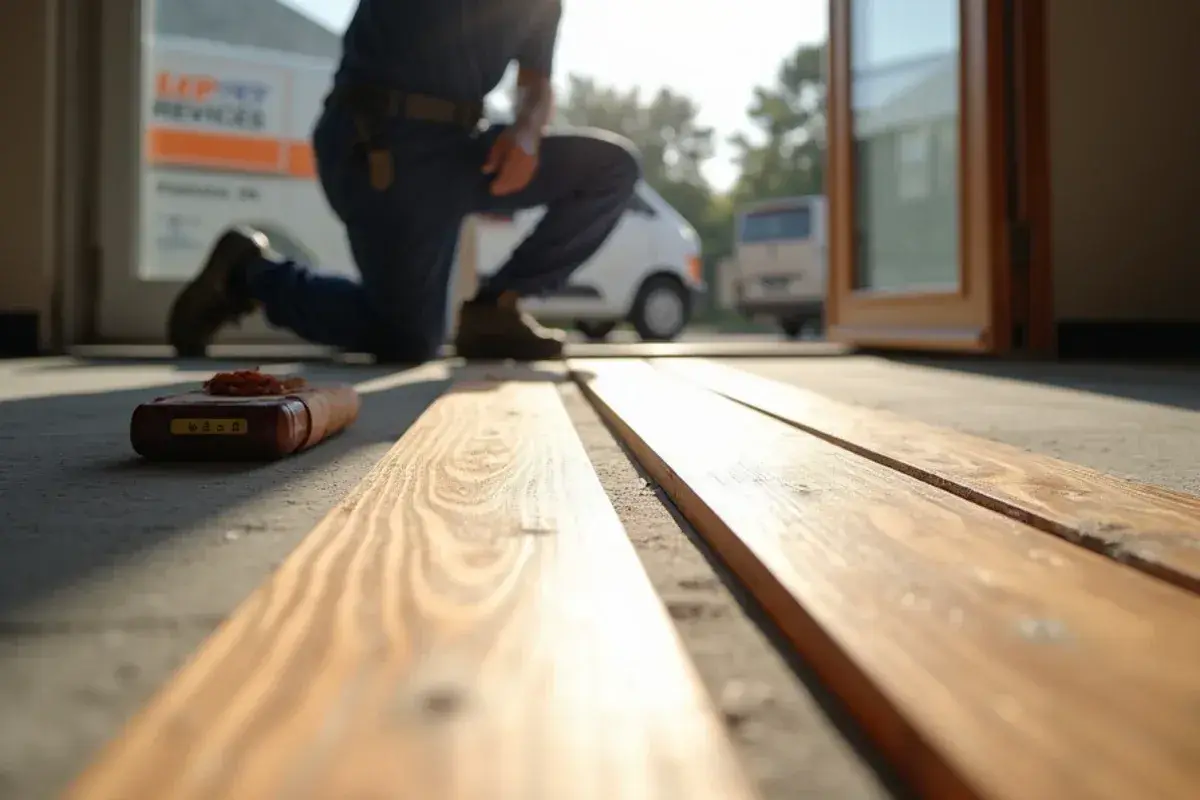
That is why both products are designed to float or flex a little, and why the gap at the walls matters as much as the planks.
How are engineered hardwood and laminate built?
They can look alike on a showroom board, but the layers underneath are very different.
| Engineered hardwood | Laminate | |
|---|---|---|
| Top layer | Real wood veneer (lamella) | Printed photographic layer under a clear melamine wear surface |
| Core | Plies or wood layers glued at 90° to each other | High-density fiberboard bonded with resin |
| Movement with humidity | Less than solid wood, per NWFA guidance | Expands and contracts; installed floating with a gap |
| Over a concrete slab | Suited to on-grade and below-grade slabs with the right barrier | Floats over an underlay with a vapor barrier |
| Water on the surface | Wipe up; standing water can cup the veneer | Wipe up; standing water can swell the core and edges |
| Refinishing | Possible if the wear layer is thick enough | Not possible; worn planks are replaced |
| Scratch resistance | Depends on the species and finish | Hard wear surface resists everyday scratches |
The cross-layered core is the reason engineered wood handles our climate better than solid boards. Each layer runs against the grain of the one above it, so the plank resists swelling and shrinking.
Which one handles water and a damp slab better?
Neither is a wet-area floor. Laminate's weak point is its core: water that sits on the surface can wick into the joints and swell the edges. Some brands add water-resistant coatings, and products can be tested under ANSI/NALFA LF-01, whose swell test soaks samples for a full 24 hours.
Engineered wood handles a quick spill but not a slow leak. The veneer is still real wood, and a wet slab beneath it will cup it just as it cups solid boards. FEMA's guidance on flood damage-resistant flooring lists tile, terrazzo, vinyl and concrete, but not standard wood flooring.
So in a laundry room, a full bath or a ground floor that has flooded before, consider a different floor. Our luxury vinyl plank flooring page covers the waterproof option many owners choose for those rooms.
Acclimation and moisture checks, step by step
Most humidity failures start before the first plank goes down. The National Wood Flooring Association asks installers to check the moisture of both the flooring and the subfloor, including concrete, and to acclimate the wood to its in-use conditions. Here is how that plays out on a slab home:
- Run the house normally. Air conditioning on, at the temperature you actually live at, before anything is measured.
- Test the slab. An ASTM F2170 in-situ humidity test shows what the concrete is doing inside, not just on top.
- Read the product's limits. One major laminate maker caps cement subfloors at 75% relative humidity; other products differ.
- Acclimate the boxes in the room. That same laminate guide calls for 48 hours in unopened boxes mid-room, or a week opened if humidity falls outside 30 to 75%.
- Lay the barrier. Floating floors on concrete typically need a vapor barrier, often 6-mil polyethylene, unless the underlay includes one.
- Leave the gap and let it float. Laminate should never be nailed, screwed or caulked down, and heavy kitchen islands go in first rather than sitting on top of the planks.
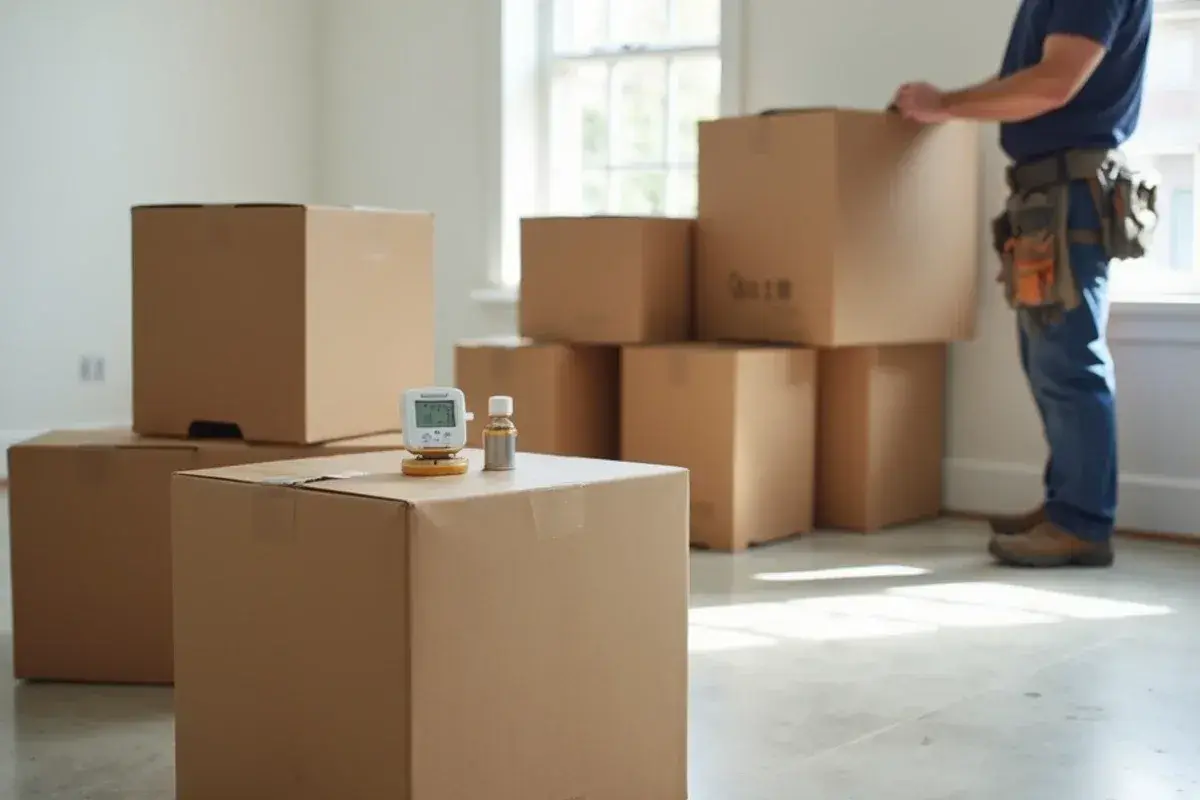
For solid wood over a plywood subfloor, NWFA guidance via Hardwood Floors magazine adds a numbers check. Strip flooring under 3 inches wide should be within 4 points of the subfloor's moisture content, and wider boards within 2 points.
A room-by-room way to decide
Most houses do not need one answer for every room. Use the room's water risk and traffic to pick.
Checklist
- Living and dining rooms: either works; engineered if you want real wood and a future refinish
- Bedrooms and offices: either works; laminate stretches the budget further
- Kitchen: laminate or engineered with mats at the sink and dishwasher, and quick wipe-ups
- Full baths and laundry rooms: skip both; choose tile or vinyl plank
- Rooms off a pool deck or patio: consider how often wet feet come through before choosing wood
- Ground floors that have flooded before: a flood damage-resistant floor such as tile is the safer bet
Trade-offs we weigh on river-area and golf-community jobs
In Fruit Cove, homes between the St. Johns River and Julington Creek often show cupped solid hardwood. When owners there replace a cupped floor, we start by finding the moisture source. A moisture-meter maker's guidance is to control the cause first and confirm moisture content with a meter before sanding, because sanding a cupped floor can leave it crowned later. Our buckled floor repair page explains that diagnosis.
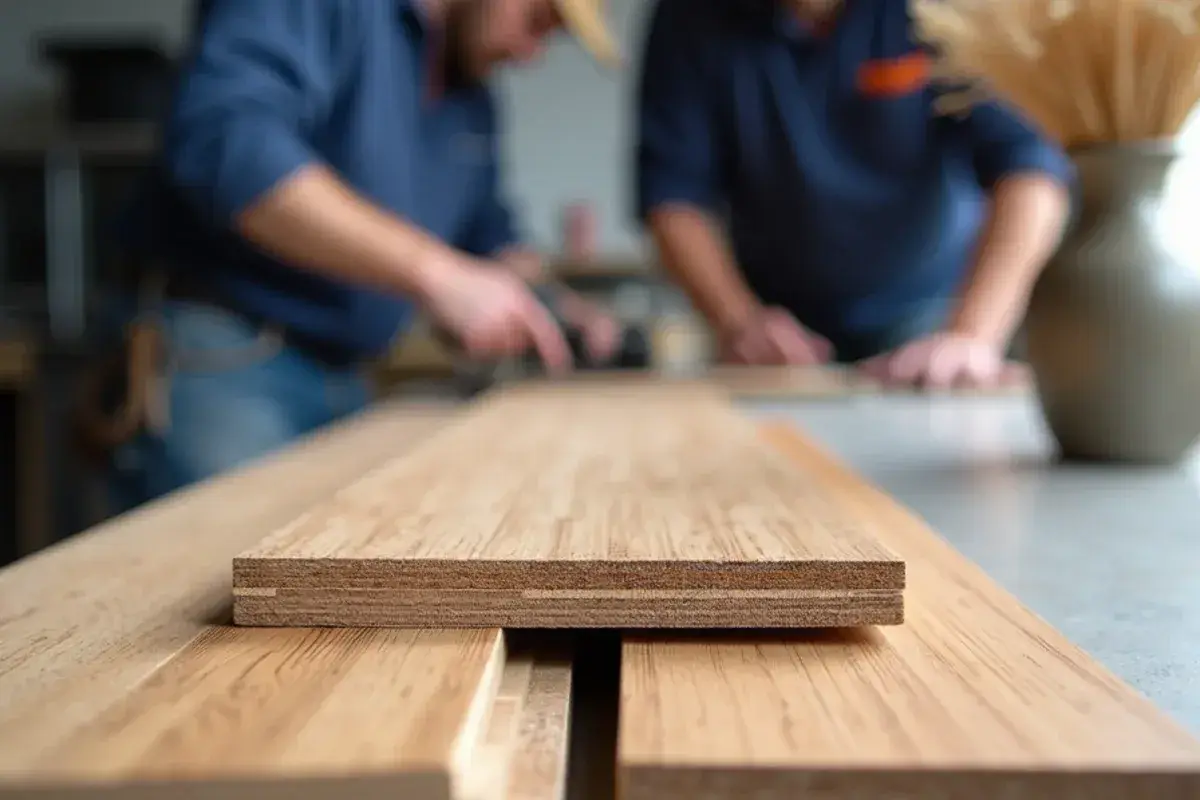
In World Golf Village, many homes built in the 2000s are ready for their second set of floors. The choice there is often between engineered wood and laminate for the main living areas. Engineered wins on real-wood character and the option to refinish, as long as the wear layer is at least 3/32 inch, as Hardwood Floors magazine advises. Laminate wins on price and scratch resistance, which counts with big dogs and grandkids.
The honest trade-off: laminate forgives scratches and punishes standing water, while engineered wood forgives a bit of humidity and shows dents. Our hardwood and laminate flooring page walks through species, finishes and installation on slabs.
Frequently asked questions
Is engineered hardwood waterproof?
No. The cross-layered core makes it more stable than solid wood, but the top layer is still real wood that absorbs moisture. A slow leak, standing water or a wet slab can cup or delaminate it. FEMA's flood damage-resistant list leaves out standard wood flooring, so homes with flood risk often pick tile or vinyl for the ground floor.
Can laminate go in a Florida kitchen or bathroom?
Yes, in a kitchen with care; bathrooms are riskier. Standing water can swell a laminate core, so the gap at the edges and a fast wipe-up habit matter. If you are comparing water-resistant products, ask for results from the ANSI/NALFA LF-01 swell test, which soaks samples for 24 hours. For full baths, vinyl plank or tile is the safer pick.
Can an engineered hardwood floor be refinished later?
Yes, if the wear layer is thick enough. Hardwood Floors magazine says a floor considered for sanding should have at least 3/32 inch of wear layer, and a normal sanding takes off under 1/32 inch. Thin-veneer products may allow only a maintenance recoat, so check the wear-layer spec before you buy if refinishing matters to you.
How long should new flooring acclimate in a Jacksonville house?
There is no single number; follow the product's guide. One major laminate maker asks for 48 hours in unopened boxes mid-room, or a week with boxes open if humidity falls outside 30 to 75 percent. NWFA guidelines aim to bring wood to the conditions it will live in, so the air conditioning should be running normally first.
Choose for the house you actually have
In a humid Jacksonville home, engineered hardwood is the better real-wood choice and laminate is the better budget, scratch-resistant choice. Neither belongs in a wet room, and neither survives a damp slab without testing and a barrier. Match the product to the room, read its acclimation rules and leave the gaps it asks for.
To have the slab tested and the room checked before you choose, call (904) 533-7260. We put the floor, the prep and the timeline in writing.
Talk to a Jacksonville floor crew
Questions about your own floor after reading this? Call (904) 533-7260 and describe what you're seeing.
JW Painting & Pressure Washing & Epoxy Flooring · Jacksonville, FL 32254 · (904) 533-7260
Mon–Sat 7am–8pm · Sun closed