Emergency
LVP Buckling or Peaking in Florida Humidity: Causes and Fast Fixes

By Jimmie Wilson, owner of JW Painting & Pressure Washing & Epoxy Flooring
More than 30 years of hands-on painting and finishing experience
Published · Updated
- 5.0 on Google · 82 reviews
- Based in Jacksonville, FL 32254
- Where Precision Meets Perfection
Short answer
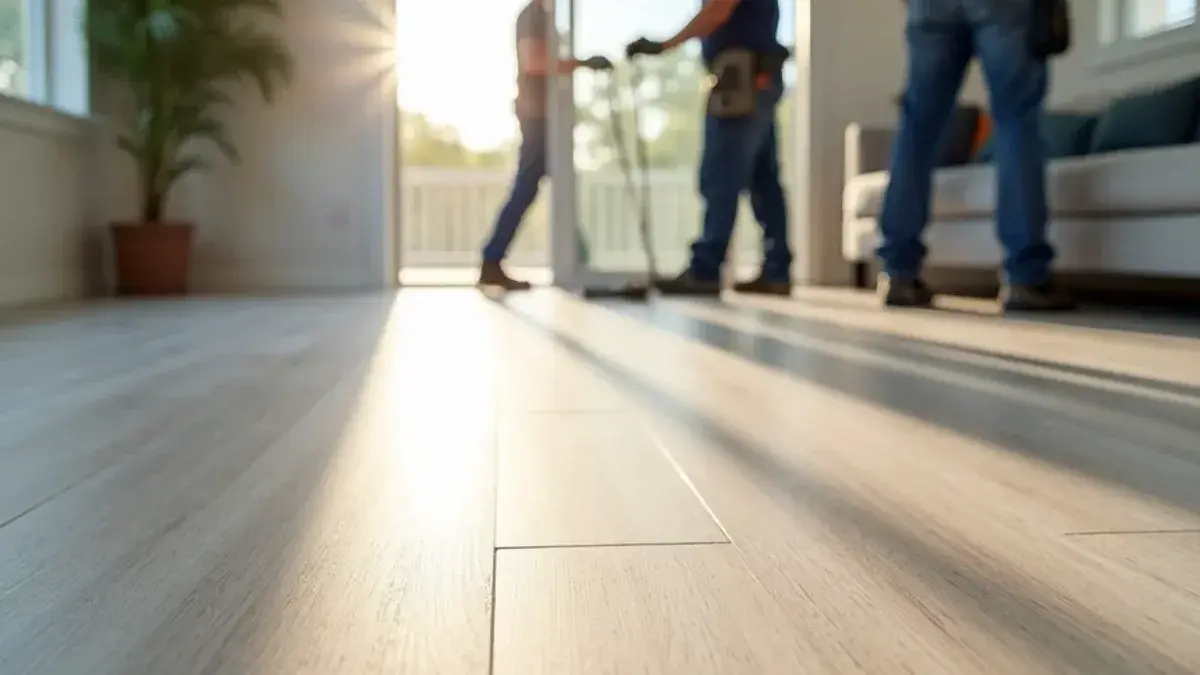
LVP that buckles or peaks in a Florida home is usually being squeezed, not soaked. Sun-heated planks by glass doors, missing expansion gaps, trim or cabinets pinning the floor, and moisture under the planks are the usual causes. Find the cause first, because relaying planks without fixing it brings the hump right back.
A hump in the hallway, a ridge where two planks meet, a click underfoot near the patio door. Luxury vinyl is sold as the worry-free floor for humid homes, so it is a shock when it lifts. The good news is that the cause is usually findable, and often fixable without a new floor.
Buckling, peaking or gapping: what is your floor doing?
The words get mixed up, but each one points to a different problem. Naming it correctly saves time.
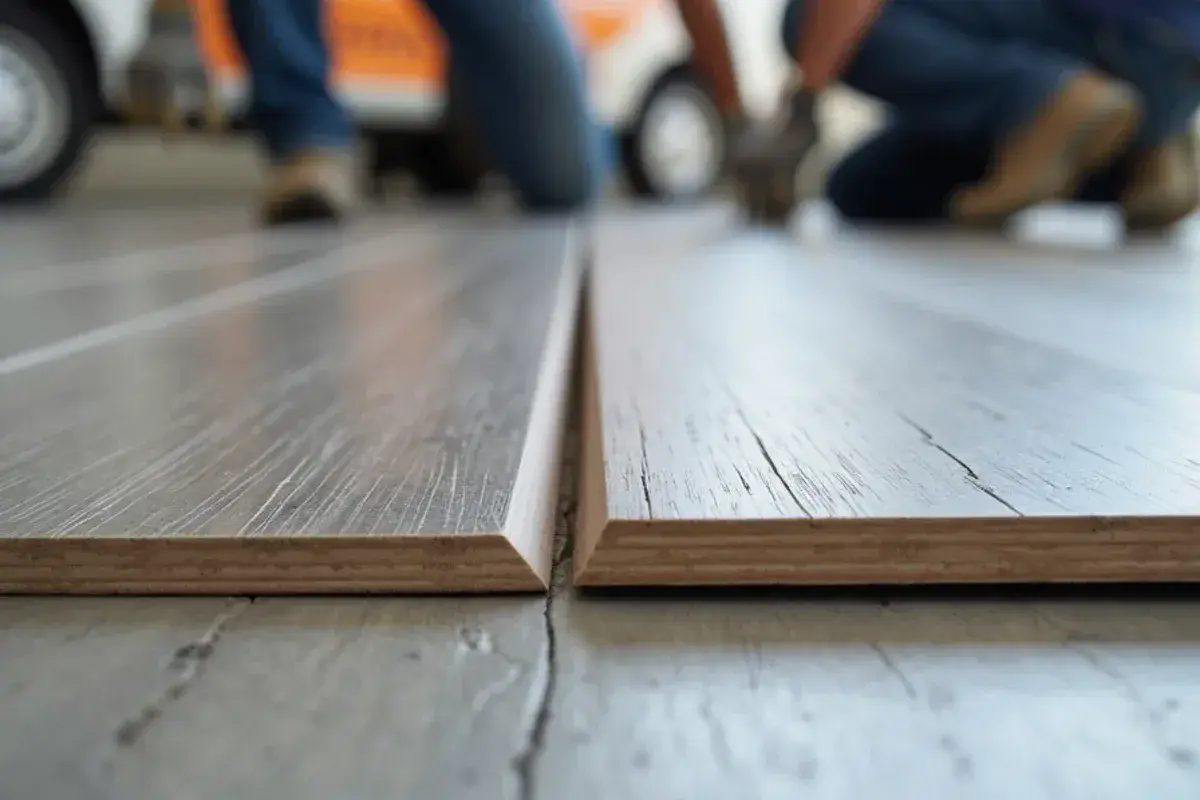
- Peaking is a ridge or tent where two planks meet. The floor grew, the edges pushed against each other, and the joint rose.
- Buckling is a wider hump or wave across several rows. The floor is pressing against something solid at the edge of the room.
- Gapping is the reverse: thin slots open between planks, usually after the floor shrank or a locking edge failed.
Peaking and buckling both mean the floor wants more room than it has. That pressure comes from heat, from something pinning the floor down, or from water reaching the planks.
Why does LVP buckle in a Florida house?
Florida gets blamed for the humidity, and it is real. Long-term climate tables put Jacksonville's average relative humidity near 76%, rising to about 89% in the early morning. But vinyl planks do not soak up humid air the way wood does. In most homes, heat and restriction do more damage than damp air.
Heat and sun. Floating vinyl grows a little when it warms. A strip of floor in front of a west-facing slider can get far hotter than the rest of the room. The 1991–2020 normals put Jacksonville's July average high near 92°F, and sunlight through glass adds more. COREtec's Stone installation guide warns that excess heat from direct sunlight can cause thermal expansion, and it recommends drapes or blinds during peak sun.
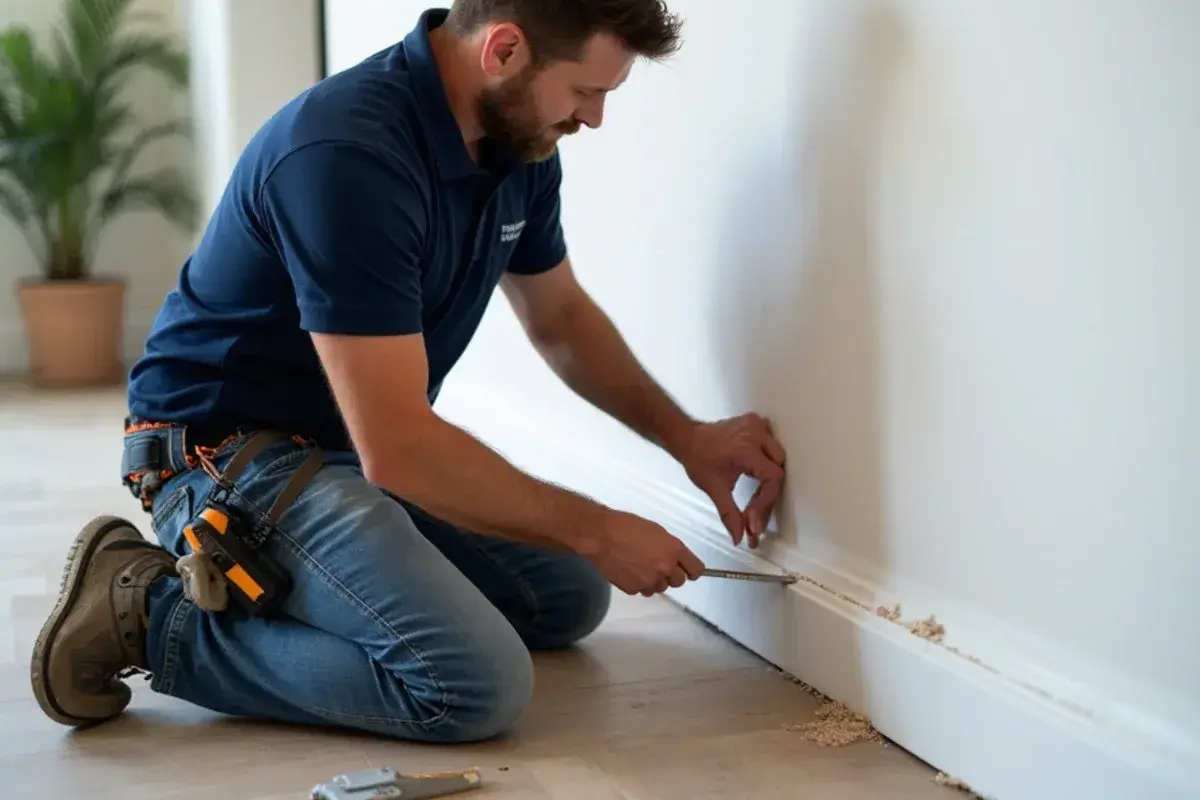
A pinned perimeter. A floating floor has to slide under its trim. COREtec's Stone guide calls for a 1/4-inch perimeter gap in areas under 2,500 square feet and 1/2 inch in larger ones. It also says not to fasten moldings or transition strips to the planks. Shoe molding nailed down through the floor, or a gap filled with caulk, locks the edge in place.
Cabinets and islands. Flooret, another plank maker, says cabinets set on top of a floating floor pin it in place and can cause buckling or joint failure over time. Its advice is to set cabinets first and leave 1/4 inch at the cabinet base. COREtec's Stone guide takes a different route: planks under cabinets and islands must be fully glued down, extending two feet past them.
Moisture from below. Water under a floor still causes trouble. A leaking supply line or a slab that is still drying can wet the underside and the pad. Floating LVP makers commonly require a moisture barrier on concrete, often 6-mil polyethylene, unless the pad includes one. Laminate is a different story, since its wood-fiber core can swell when wet, so confirm which floor you actually have.
A house left hot. COREtec's Stone guide asks for room temperatures between 55 and 85°F after installation. A listed home with the AC off, or a seasonal home closed for summer, can pass that easily.
Fast fixes you can do today
None of these repairs the floor, but they stop the problem from getting worse and help pin down the cause.
Checklist
- Close blinds or curtains on sun-facing doors and windows during the afternoon
- Run the AC so the room stays inside the product's stated temperature range
- Move heavy furniture, appliances and loaded shelving off the lifted area
- Look along the walls for shoe molding or baseboard nailed down into the planks
- Check doorways and slider tracks for caulk or tight trim touching the floor
- Look for water: a fridge line, dishwasher, water heater, or a damp exterior wall
- Find the product name and its installation guide, and photograph the damage
- Do not stomp or hammer a peaked joint flat, because the locking edge can snap
If the floor drops back a little by morning, heat is likely involved. If the hump stays put and the room is cool, look harder at trim, cabinets and water.
How a buckled vinyl floor gets fixed
The repair follows the cause. A crew that relays planks without finding it will be back in a month.
- Map the lift. Mark where the floor rises and where it is flat. A hump next to a slider says heat. A ridge along a kitchen island says pinning.
- Check for water. Use a meter on the planks, the walls and any plumbing nearby. If the slab is suspect, ASTM F2170 in-situ probes measure relative humidity inside the concrete.
- Free the perimeter. Pull baseboard or shoe molding, then cut back planks that touch walls, door casings or tile edges to restore the gap the guide calls for.
- Undo the pinch points. Trim planks back from cabinet bases, or follow the product's own rule for the area under them.
- Unclick and relay. Lift the affected rows, replace any boards with damaged locking edges, and relay them flat.
- Reset trim the right way. Fasten moldings to the wall, not the floor, and leave transitions free to move.
Our buckled floor repair page covers the same diagnosis for hardwood and laminate as well as vinyl.
What we see on the job in Clay and St. Johns County homes
Many calls come from bigger homes where builder carpet was swapped for vinyl plank. In Fleming Island, 1990s and 2000s golf and river homes often have long open runs through the living room, kitchen and out to a lanai slider. Long uninterrupted runs are where product limits matter most. Each brand sets its own maximum, so we read the guide before deciding whether a room needs a break.
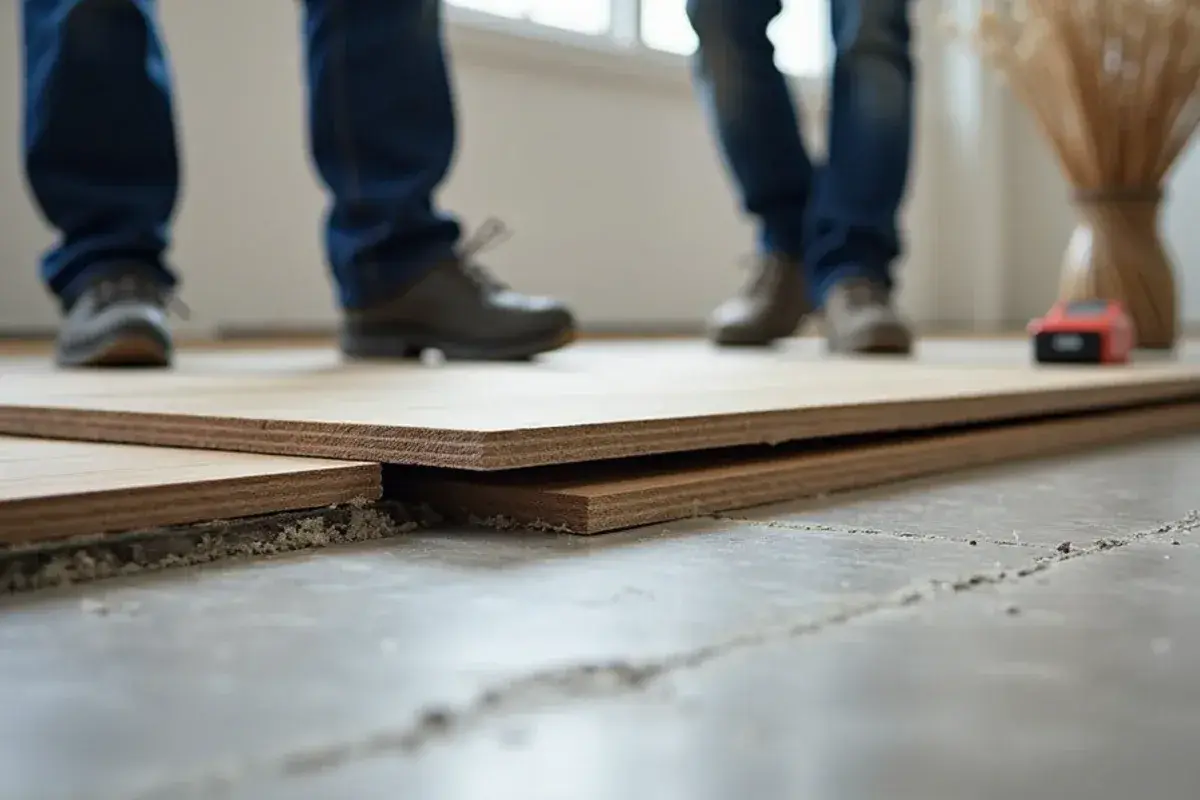
Newer homes bring a different pattern. Along CR-210 and Race Track Road in St. Johns, buyers often upgrade builder floors soon after closing. A slab only a few years old can still read high for moisture. We test it and lay a proper vapor barrier rather than trust the label on the box.
The honest trade-offs come up at the repair stage:
- Transition strips versus a continuous look. A T-molding at a doorway lets a long run move freely. Some owners dislike the strip, but removing it is a common reason floors peak in hallways.
- Repair versus replace. If locking edges are broken across a whole room, relaying costs nearly as much as new planks. If damage is local and spares exist, repair wins easily.
- Floating versus glue-down. Gluing a sunroom or an island area stops movement, but it changes the product rules, so we check the guide first.
If you are planning a new install rather than a repair, our luxury vinyl plank page explains how we set gaps, barriers and transitions from the start.
Frequently asked questions
Will LVP flatten back out on its own?
No, not usually. A plank that peaked because its edges are pinned stays up until the pressure is relieved. Some floors settle a little when the room cools at night, which is a strong hint that heat is the driver. The lasting fix is freeing the perimeter, cutting back planks where they touch walls or cabinets, and relaying the run that lifted.
Is buckled LVP covered by the manufacturer warranty?
No, often not, though it depends on the product. Installation guides set expansion gaps, room temperature ranges and rules for cabinets, and failures from restricted movement are commonly excluded. COREtec's Stone guide, for example, asks for room temperatures between 55 and 85°F after installation. Photograph the floor and read your product's warranty before anyone pulls planks.
Should I keep the AC on in a vacant house with LVP?
Yes. Floating vinyl floors are designed to live in a conditioned room, and COREtec's Stone guide asks for post-installation temperatures between 55 and 85°F. A closed house during a Jacksonville summer, with sun on the glass, can easily pass that. Keep the thermostat set inside the product's range and close blinds on sun-facing doors while the home sits empty.
Can a few lifted planks be replaced without redoing the room?
Yes, in many cases. Click-lock planks come apart from the nearest wall, so a crew can unclick back to the damaged area, swap boards and relay them. Keep a box of spares from the original install, because colors shift between production runs. If the slab is wet underneath, that moisture has to be dealt with before any boards go back down.
The bottom line
When vinyl plank lifts, the planks are rarely the problem. Heat, a pinned edge, cabinets on top or water underneath gives the floor nowhere to go. Fix that first, then relay the boards, and the floor should stay flat through summer.
If your floor is peaking, buckling or clicking underfoot, call (904) 533-7260. We find the cause, show you what we found, and put the repair in writing.
Related
Services and areas from this article
Talk to a Jacksonville floor crew
Questions about your own floor after reading this? Call (904) 533-7260 and describe what you're seeing.
JW Painting & Pressure Washing & Epoxy Flooring · Jacksonville, FL 32254 · (904) 533-7260
Mon–Sat 7am–8pm · Sun closed