Core service
Found Terrazzo Under Your Carpet? Restore It, Tile Over It, or Go LVP

By Jimmie Wilson, owner of JW Painting & Pressure Washing & Epoxy Flooring
More than 30 years of hands-on painting and finishing experience
Published · Updated
- 5.0 on Google · 82 reviews
- Based in Jacksonville, FL 32254
- Where Precision Meets Perfection
Short answer
You have three real options. Restoring means grinding, patching and sealing the terrazzo, which brings back a floor built to last but rarely hides every patch or stain. Tile over it is permanent once thin-set bonds. Floating LVP covers it quickly and leaves the terrazzo intact for a future owner to uncover.
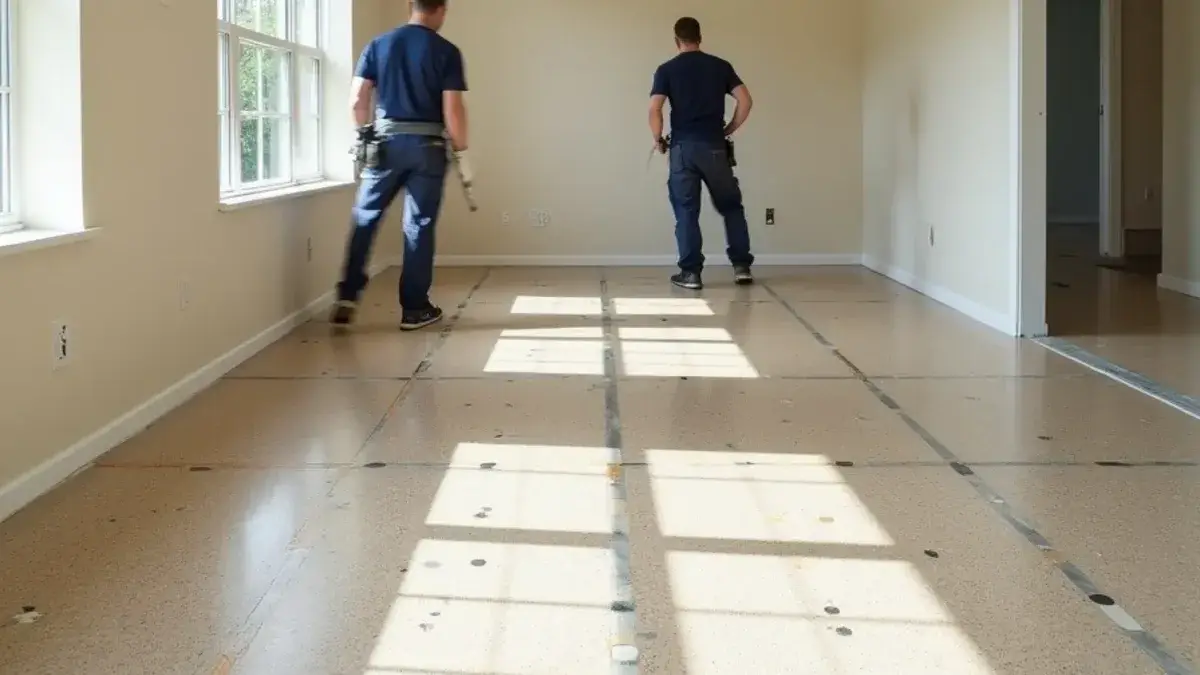
You pulled back a corner of old carpet and found a speckled stone floor with thin metal lines running through it. That is almost certainly terrazzo, and it changes the flooring plan. This guide walks through the three realistic paths, what each involves, and what it means for the next person who owns the house.
Is it really terrazzo, and what shape is it in?
Terrazzo is chips of marble, quartz, granite or glass set in a cement or resin binder, then ground flat and polished. The thin metal divider strips are the giveaway. They split the floor into panels and let the material expand and shrink without random cracks.
Before choosing anything, roll the carpet back in a few rooms and look for:
- Rows of tack strip nail holes along every wall
- Pad residue, glue spots or paint drips
- Cracks, and whether they run through the chips or follow a divider strip
- Patches of plain concrete where walls were moved or plumbing was cut in
- Any rooms finished in old vinyl tile instead, which the EPA says should be tested for asbestos before anyone scrapes or sands it
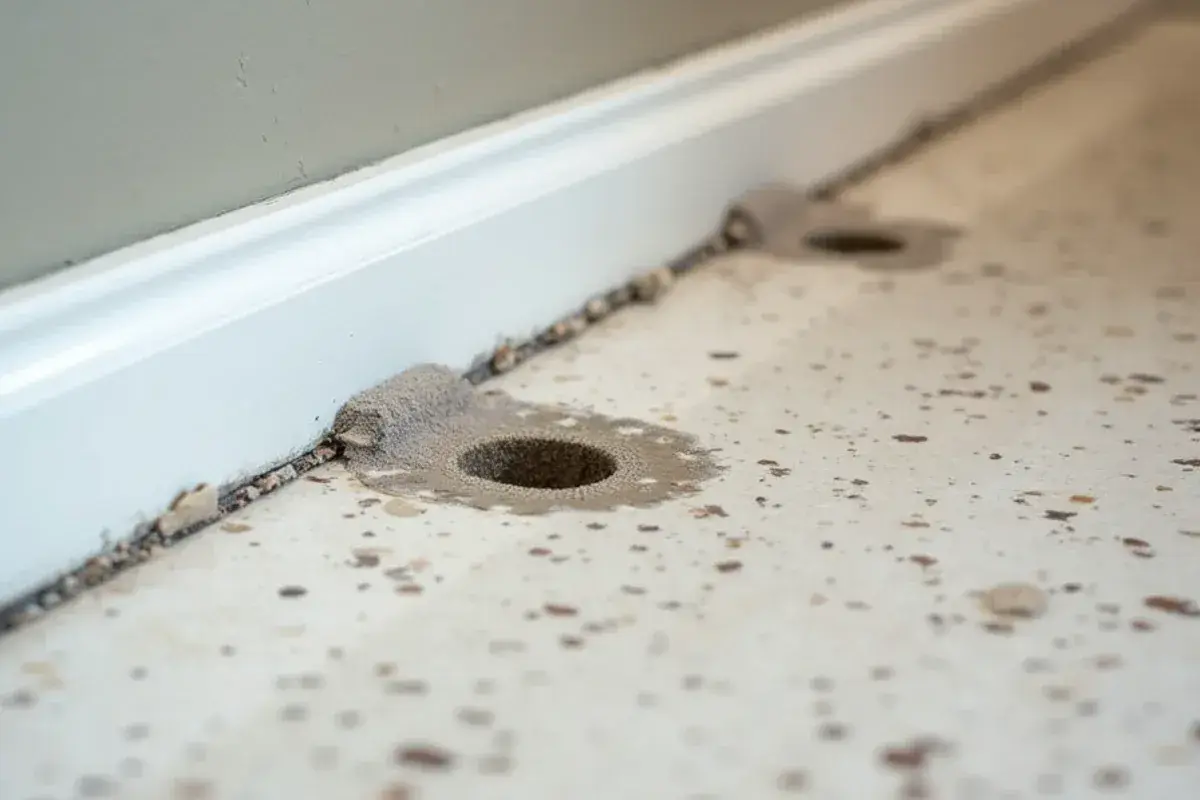
Cracks deserve a second look. Terrazzo cracking is often caused by the slab or structure under it, not by the terrazzo itself. A crack that has telegraphed up from the slab will keep doing so under any new floor.
What does restoring terrazzo involve?
Restoration is a grinding job. The National Terrazzo and Mosaic Association publishes a guide specification, and the sequence looks like this:
- Map the damage. Owner and contractor walk the floor and label each crack: leave it, repair it, or replace that section.
- Repair cracks and holes. Clean them out and fill with resin colored to the existing matrix, adding chips where a crack is wider than a quarter inch.
- Replace bad sections. Cut out from one divider strip or break to the next and refill with matching matrix and aggregate.
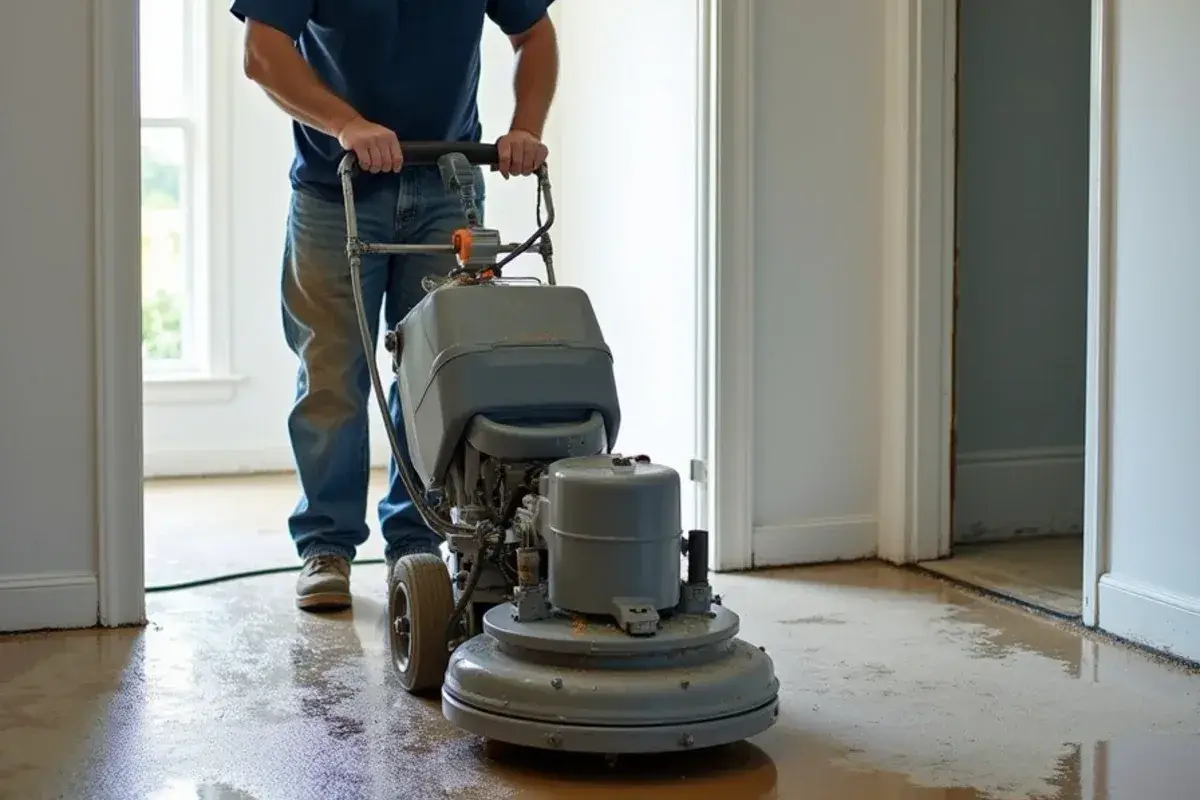
- Grind. Diamond tooling takes off the worn top, then the floor is wet ground and grouted to fill pinholes.
- Cure and fine grind. The grout cures at least 12 hours before a fine grind with 120-grit carborundum or 200-grit resin-bond diamonds.
- Clean and seal. The floor is rinsed, dried and sealed following the sealer maker's directions, then cleaned with pH-neutral products from then on.
Two honest caveats come straight from that guide. Color matching may not be exact, because the chips are mined materials. And some old stains may never come out. If the floor only needs a deep clean and protection rather than a full grind, a sealer or clear coat may be enough; our floor sealing and clear coat page explains what those coatings do.
Can you tile over terrazzo?
Yes, and it is a solid choice if you want a new look with the hardness of stone. Terrazzo is dense, flat and usually well bonded, which tile likes. The prep is the part to get right.
Polished or sealed terrazzo is too slick for thin-set to grip, so the surface gets cleaned and abraded first. Any crack in the terrazzo can push through to the new tile, so we lay a crack-isolation or uncoupling membrane over problem areas. TCNA Handbook EJ171 also calls for movement joints at the perimeter and in the field, the detail that keeps tile from tenting.
Two trade-offs to weigh. Tile plus mortar adds height, which can catch doors and leave a step at the transition to rooms you are not changing. And once thin-set bonds, the terrazzo is gone for practical purposes. See tile flooring installation for how we lay tile on older slabs.
Is LVP over terrazzo a smart middle path?
For many houses, yes. Luxury vinyl plank floats: the planks click together over an underlay and are not glued or nailed to the floor beneath. Terrazzo makes a flat, stable base for that.
The floor still needs the basics. Floating plank makers commonly require a moisture barrier on concrete, often 6-mil polyethylene, unless the pad includes one. They also set an expansion gap at the walls. Deep tack strip holes or chipped spots get filled so they do not show through. Our luxury vinyl plank flooring page covers how we handle barriers on slabs.
The appeal is reversibility. LVP goes in quickly, feels softer and warmer underfoot, and the terrazzo stays underneath. If you or a future owner wants it back, the planks come up.
Restore, tile or LVP side by side
| Restore terrazzo | Tile over it | LVP over it | |
|---|---|---|---|
| Look | Original mid-century floor | Any tile style you choose | Wood or stone look |
| Main prep | Crack mapping, patching, grinding, sealing | Clean, abrade, membrane, movement joints | Fill holes, moisture barrier, expansion gap |
| Height added | None | The most | Low |
| Can you go back? | Already original | Not realistically | Yes, planks lift out |
| FEMA flood list | Terrazzo is listed as flood damage-resistant | Tile set in thin-set on a slab is a flood damage-resistant assembly | Vinyl tiles and sheets are on the list |
| Upkeep | pH-neutral cleaning, periodic resealing | Grout care | Sweep and damp mop |
Trade-offs we talk through in mid-century beach ranch homes
Around Beaches Town Center, many 1950s and 1960s ranch homes in Neptune Beach still have their original terrazzo under wall-to-wall carpet. Owners often start out wanting it restored and then see the wall lines and patched trenches from years of remodeling. That is the moment to decide whether you want the history or a clean, even look.
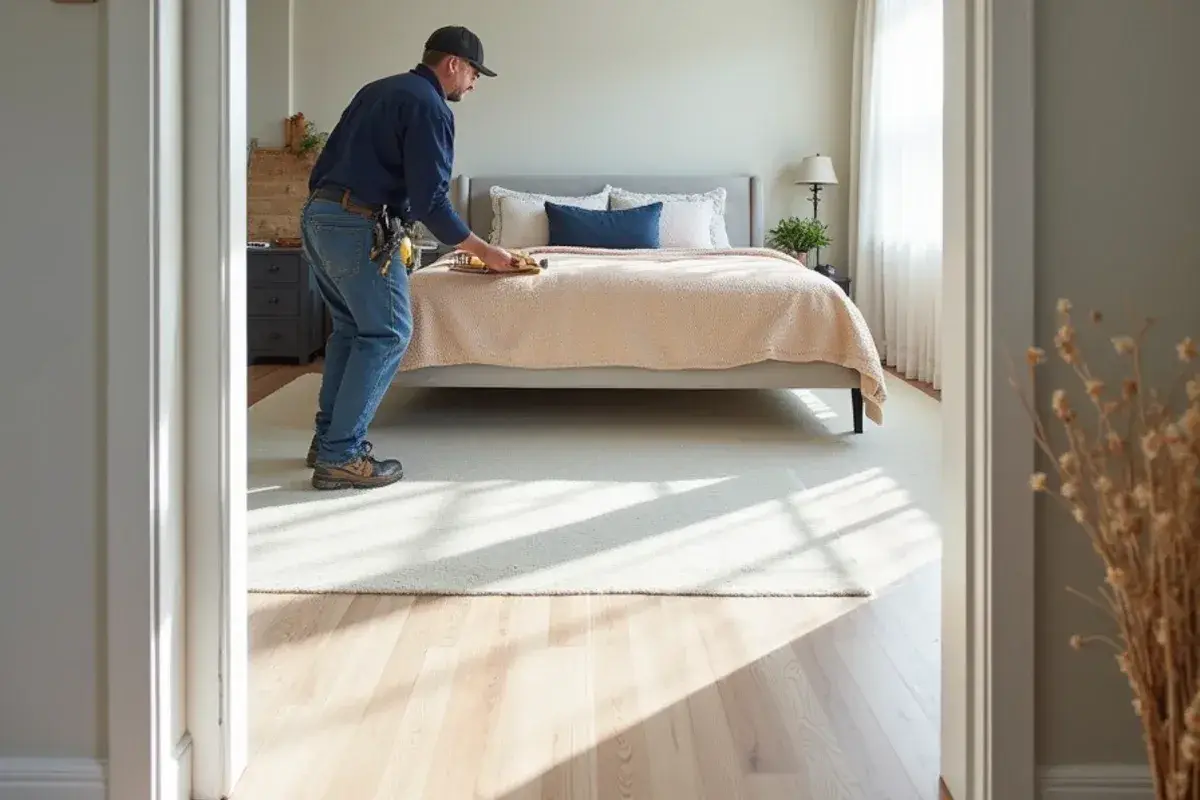
Mixed answers are common and often smart. Restore or seal the living room where the terrazzo is in good shape, and float LVP in bedrooms where the damage is worse. Thresholds need planning so the heights meet cleanly.
Flood risk tilts the math near the coast. Terrazzo, tile and vinyl all appear on FEMA's list of flood damage-resistant flooring, while standard wood finish flooring does not. So whichever path you pick, avoid putting solid wood back over that slab.
The last trade-off is honesty about patches. A restored floor with visible repairs has character to some owners and looks unfinished to others. We would rather you see a sample patch before deciding than be surprised after the grind.
Frequently asked questions
Is terrazzo under carpet worth saving?
Yes, often, if most of it is intact. The National Terrazzo and Mosaic Association says terrazzo is designed to last as long as the building. The questions are how many cracks, holes and old wall lines it has, and whether you can live with patches that will not match perfectly. A walk-through with the carpet pulled back answers that before you spend anything.
Can the tack strip holes and cracks be patched?
Yes. The NTMA restoration guide fills cracks with resin matched to the existing matrix and adds aggregate where a crack is wider than a quarter inch. Damaged sections are replaced from one divider strip or break to the next. Matching is the catch: the chips are mined stone and glass, so a patch is close, not invisible.
Will floating LVP damage the terrazzo underneath?
No, not if it truly floats. A floating plank floor clicks together over an underlay and is not glued or nailed to the terrazzo. Trim and transitions fasten at the edges, which leaves small holes to patch later. The bigger risk is moisture trapped under the planks, which is why the maker's barrier or underlay goes down first.
Do I need a permit to cover terrazzo with tile or LVP?
No, not usually. Florida building codes based on FBC-Residential R105.2 generally exempt finish flooring such as tile and carpet from building permits, as the local building official decides. Homes in flood zones can face separate substantial-improvement rules on bigger remodels, so confirm with your city's building department if the floor is part of a larger project.
Pick the path that fits the floor you found
Terrazzo under carpet is a good problem to have. Restore it if most of the floor is sound and you love the look. Tile over it if you want a permanent new surface with stone's toughness. Float LVP if you want speed, comfort and the option to change your mind later. Whatever you choose, start by pulling back enough carpet to see what you really have.
To talk through your floor and get the option you choose priced in writing, call (904) 533-7260.
Related
Services and areas from this article
Talk to a Jacksonville floor crew
Questions about your own floor after reading this? Call (904) 533-7260 and describe what you're seeing.
JW Painting & Pressure Washing & Epoxy Flooring · Jacksonville, FL 32254 · (904) 533-7260
Mon–Sat 7am–8pm · Sun closed