Cost & Insurance
Does Homeowners Insurance Cover Water-Damaged Floors in Florida?

By Jimmie Wilson, owner of JW Painting & Pressure Washing & Epoxy Flooring
More than 30 years of hands-on painting and finishing experience
Published · Updated
- 5.0 on Google · 82 reviews
- Based in Jacksonville, FL 32254
- Where Precision Meets Perfection
Short answer
Often, if the water came from something sudden and accidental inside the house, such as a burst supply line. Slow leaks over weeks are commonly excluded, and rising floodwater is excluded from standard homeowners policies. Flood damage is covered by a separate NFIP or private flood policy. Your policy wording decides, so confirm with your insurer or agent.
Water on the floor brings two questions at once: what will it take to fix, and who pays for it. The answer depends less on how bad the floor looks and more on where the water came from, how long it ran and what your policy says.
This guide explains the distinctions adjusters work from, the Florida deadlines that matter and how to document a floor claim. It is general information, not legal advice. Your insurer or agent can tell you what your own policy covers.
Does insurance cover water-damaged floors in Florida?
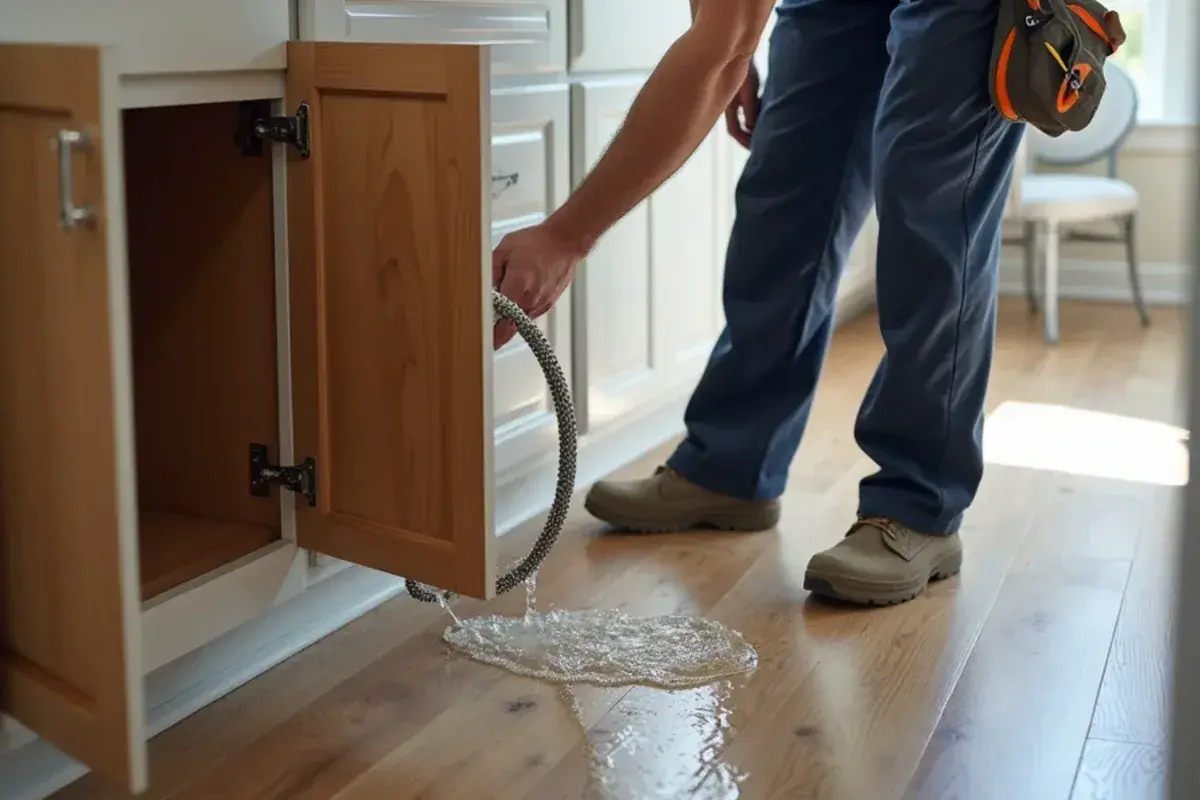
Sometimes. Most homeowners policies are written around sudden and accidental water damage. A burst supply line, a failed water heater or a dishwasher hose that lets go are the textbook cases.
Three situations usually go the other way. Slow leaks that ran for weeks are commonly excluded. Flooding from outside is excluded from standard homeowners policies. Damage from poor maintenance, such as a shower pan that leaked for a year, is often treated as wear rather than a sudden loss.
Sudden versus gradual: the line most floor claims turn on
Adjusters start by asking when the water started and how fast it came. A pipe that split overnight produces a clear date and a clear cause. A toilet seal that dripped into the subfloor for months does not.
Many homeowner policies exclude continuous or repeated seepage or leakage of water. A common version sets the line at 14 days or more. Florida's Fifth District Court of Appeal held in 2018 that one such clause did not clearly exclude the first 13 days of a leak. The exact wording in your policy is what counts.
The floor itself often tells the story. Fresh water damage shows as wet planks and a damp slab. Long-term leaks leave dark staining, soft or rotted plywood and cupped boards that have dried and re-wetted many times. That is why photos of the subfloor matter as much as photos of the finish floor.
If a slow leak has already cupped a wood floor or made vinyl peak, our buckled floor repair page explains how the source is traced before repairs.
Why flood is a separate policy
FEMA states plainly that most homeowners insurance does not cover flood damage. Water that rises from outside, such as storm surge, an overflowing creek or a street that fills during a downpour, needs flood insurance. That comes from the National Flood Insurance Program, sold through the same agents who sell home policies, or from a private flood carrier.
Timing matters here. FEMA says there is typically a 30-day waiting period before a new NFIP policy takes effect, with exceptions such as a policy required by a lender. Buying coverage when a storm is already in the forecast is usually too late.
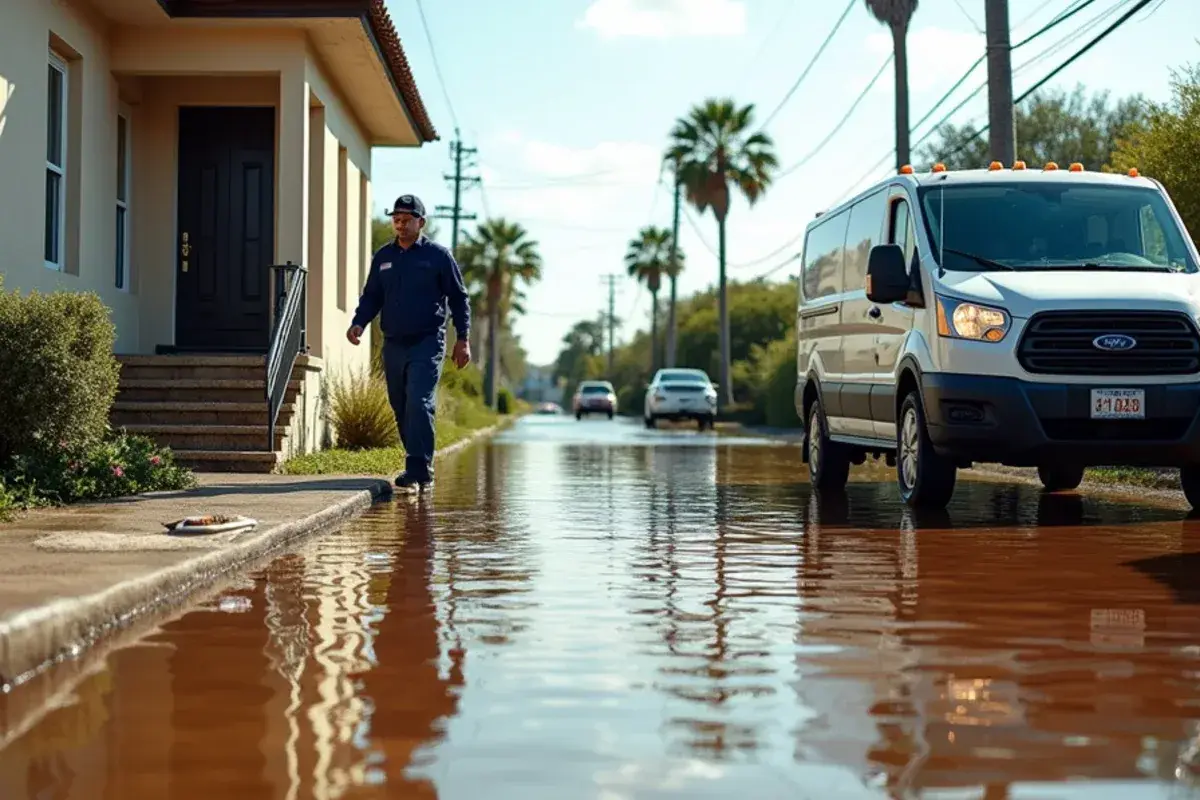
The difference is not academic in Northeast Florida. The City of St. Augustine says about 90% of its residents live in a floodplain, and that Hurricane Matthew in 2016 flooded Davis Shores, Lincolnville and the historic districts. Irma flooded many of the same streets the next year. Homes in St. Augustine and low-lying parts of Duval County often need both policies.
Rain is different again. Water that comes in through a roof or window the storm damaged is a separate question from water that rose from outside, and adjusters look at the two separately. Ask your agent how your policy treats each.
Florida rules and deadlines worth knowing
Florida law sets several clocks on property claims. These are the ones that touch a floor claim most often.
| Rule | What it says | Source |
|---|---|---|
| Claim notice | New or reopened claims must be noticed within 1 year of the date of loss; supplemental claims within 18 months | s. 627.70132, F.S. |
| Hurricane date of loss | The date the hurricane made landfall, or the date NOAA verifies the weather event | s. 627.70132, F.S. |
| Acknowledgment | Insurer must acknowledge a reported claim within 7 days | s. 627.7142, F.S. |
| Payment or denial | Within 60 days: full settlement, the undisputed portion, or a denial | s. 627.7142, F.S. |
| Matching | Reasonable repair or replacement of adjoining areas when replaced items do not match | s. 626.9744, F.S. |
| Flood proof of loss | NFIP policyholders submit a Proof of Loss within 60 days of the loss | FEMA |
The same Homeowner Claims Bill of Rights notes that most disputed claims can go to mediation through the Florida Department of Financial Services at no cost to you. A policy may have its own shorter duties, such as prompt notice, so read the conditions section.
Matching: when undamaged rooms get new flooring too
Flooring is where the matching rule earns its keep. LVP and laminate often run unbroken from the kitchen through the living room and hall. Replace only the wet kitchen, and the new planks may not match the old ones in color, gloss or locking profile.
Under s. 626.9744, Florida Statutes, when replaced items do not match in quality, color or size, the insurer must make reasonable repairs or replacement of items in adjoining areas. The insurer may weigh the cost of replacing undamaged areas, how uniform the result can be without that cost and the remaining life of the undamaged floor. The rule applies to homeowners policies that settle on a repair or replacement cost basis, unless the policy says otherwise.
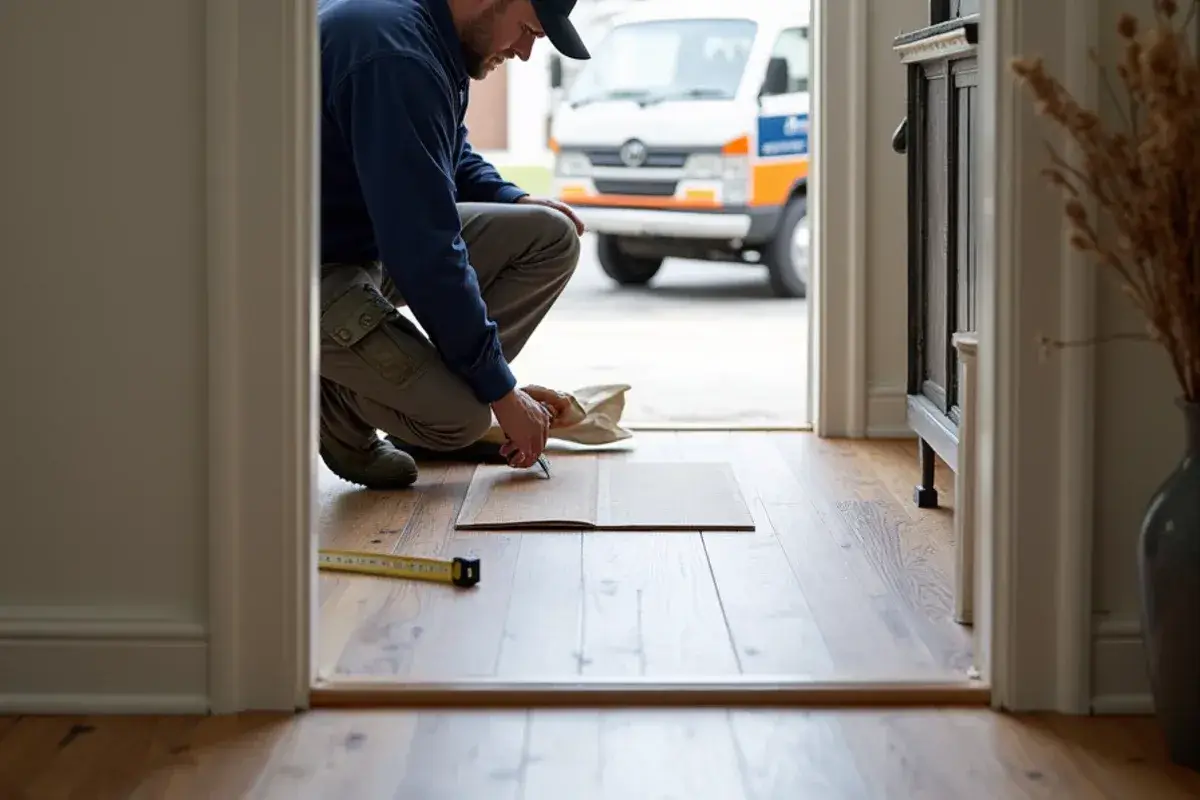
Practical help for a matching question comes from details. Keep any leftover boxes, because the label shows the maker, collection and color. If the product has been discontinued, say so in writing with the date you checked. Our water-damaged floor replacement service starts with identifying the existing floor before any new material is ordered.
How to document a water-damaged floor claim
Florida's Department of Financial Services tells flood claimants to photograph damage before moving, removing or discarding anything. That advice works for any floor claim.
Checklist
- Wide photos of every affected room, then close-ups of buckled, cupped or lifted areas
- The source of the water: the failed line, fitting or appliance, kept if possible
- A sample of each flooring type and pad, with any leftover box labels
- Moisture readings and drying logs from the restoration company
- Photos of the slab or subfloor once flooring is lifted
- Receipts for fans, dehumidifiers and emergency work
- A list of rooms with continuous flooring, with square footage
- Your claim number and every adjuster contact, with dates
Many Florida policies now include a separate provision for reasonable emergency measures to prevent further damage, often with its own spending limit. Ask your insurer what that limit is before large mitigation work starts.
What we see on the job with insurance floor claims
Adjusters and homeowners get the best result from a scope that matches what is actually under the floor. On our visits, we measure every connected room, moisture-test the slab or subfloor and write down the product that is installed. That gives the adjuster something specific to compare with their own estimate.
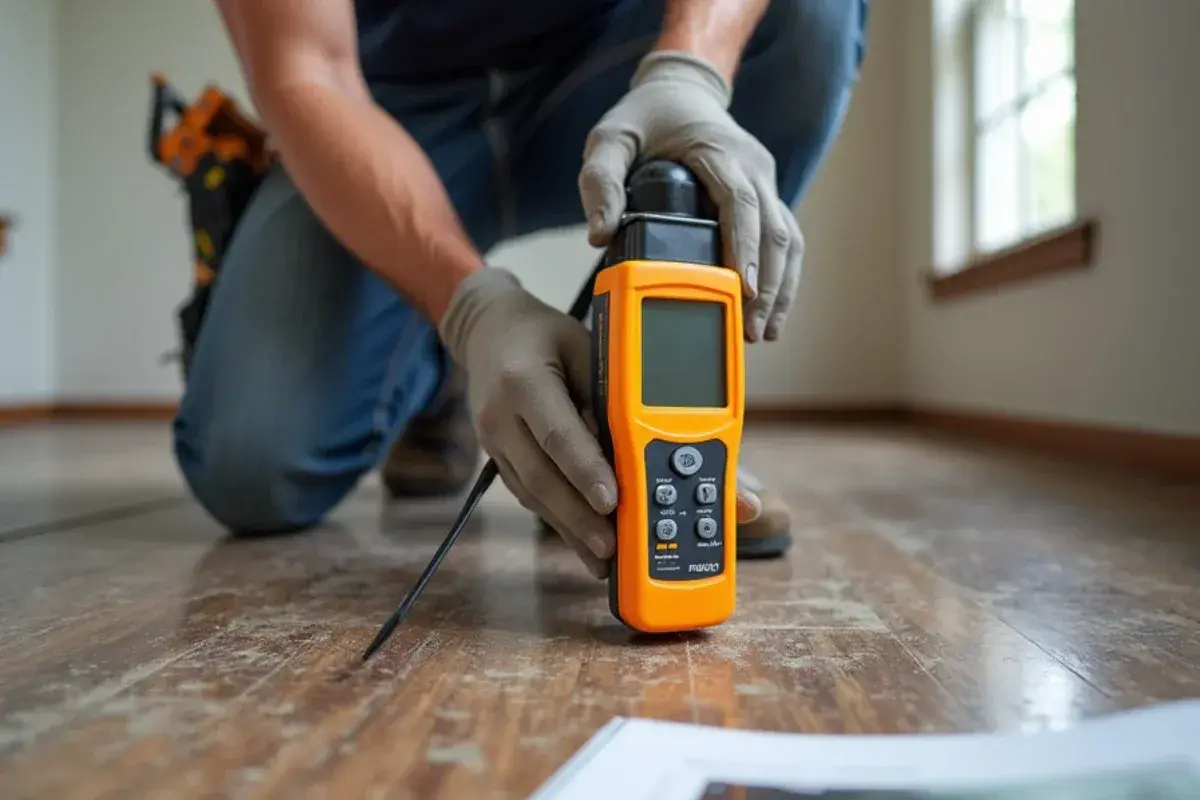
Timing causes more friction than coverage. Floors torn out before anyone photographs them are hard to price. Floors replaced before the slab is dry tend to fail a second time, and that second failure is rarely covered. We wait for moisture readings before installing, even when everyone wants the house back.
Tile is the slow one. Tile on a concrete slab often survives a leak, then loosens weeks later as the tile and slab settle back at different rates. If that happens, report it to your insurer as part of the same loss rather than assuming it is new.
What we do not do is tell anyone what their policy covers. That is between you, your agent and your insurer.
Frequently asked questions
Does homeowners insurance cover a slow leak under the floor?
No, usually not, if the leak ran for weeks. Many policies exclude continuous or repeated seepage or leakage, often written as 14 days or more. A leak that started recently may be treated differently, and at least one Florida appeals court has read that wording narrowly. The policy language controls, so ask your insurer or agent. On the job, we note what the slab and subfloor show so the record is clear.
How long do I have to report a property claim in Florida?
Under s. 627.70132, Florida Statutes, notice of a new or reopened property claim must reach the insurer within one year of the date of loss. Supplemental claims have 18 months. For hurricanes and windstorms, the date of loss is the landfall date or the date NOAA verifies the event. Report sooner than that, because delays make the cause of damage harder to prove.
Will insurance replace flooring in rooms that were not damaged?
No, not automatically, but it can happen. Section 626.9744, Florida Statutes, says that when replaced items do not reasonably match in quality, color or size, the insurer must make reasonable repairs or replacement in adjoining areas. The insurer weighs cost, uniformity and remaining life, and the policy can say otherwise. Continuous LVP running through an open floor plan is the classic case.
Should I tear out wet flooring before the adjuster comes?
No, not before you photograph it and keep samples. Florida's Department of Financial Services advises documenting damage before moving or discarding anything. Removing soaked carpet or pad to stop further damage is usually expected, but full demolition of a floor is better done after the adjuster sees it or approves it. Keep a written log of what was removed and why.
The bottom line
Homeowners insurance often covers floors damaged by sudden, accidental water inside the house. Long-term leaks are commonly excluded, and flood needs its own NFIP or private policy. Florida gives you one year to report most claims, and matching rules can bring undamaged rooms into the scope. Before you decide anything, call your insurer or agent and read the policy.
When you need the flooring side measured, tested and written up, call (904) 533-7260. We give you a written scope and price you can share with your adjuster.
Talk to a Jacksonville floor crew
Questions about your own floor after reading this? Call (904) 533-7260 and describe what you're seeing.
JW Painting & Pressure Washing & Epoxy Flooring · Jacksonville, FL 32254 · (904) 533-7260
Mon–Sat 7am–8pm · Sun closed